
Tomio-Maruyama Kofun: Japan's Largest Circular Burial Mound
A fourth-century burial mound on Nara's western edge, about 110 metres across and associated with discoveries including a sinuous iron sword, shield-shaped mirror and wooden coffin.
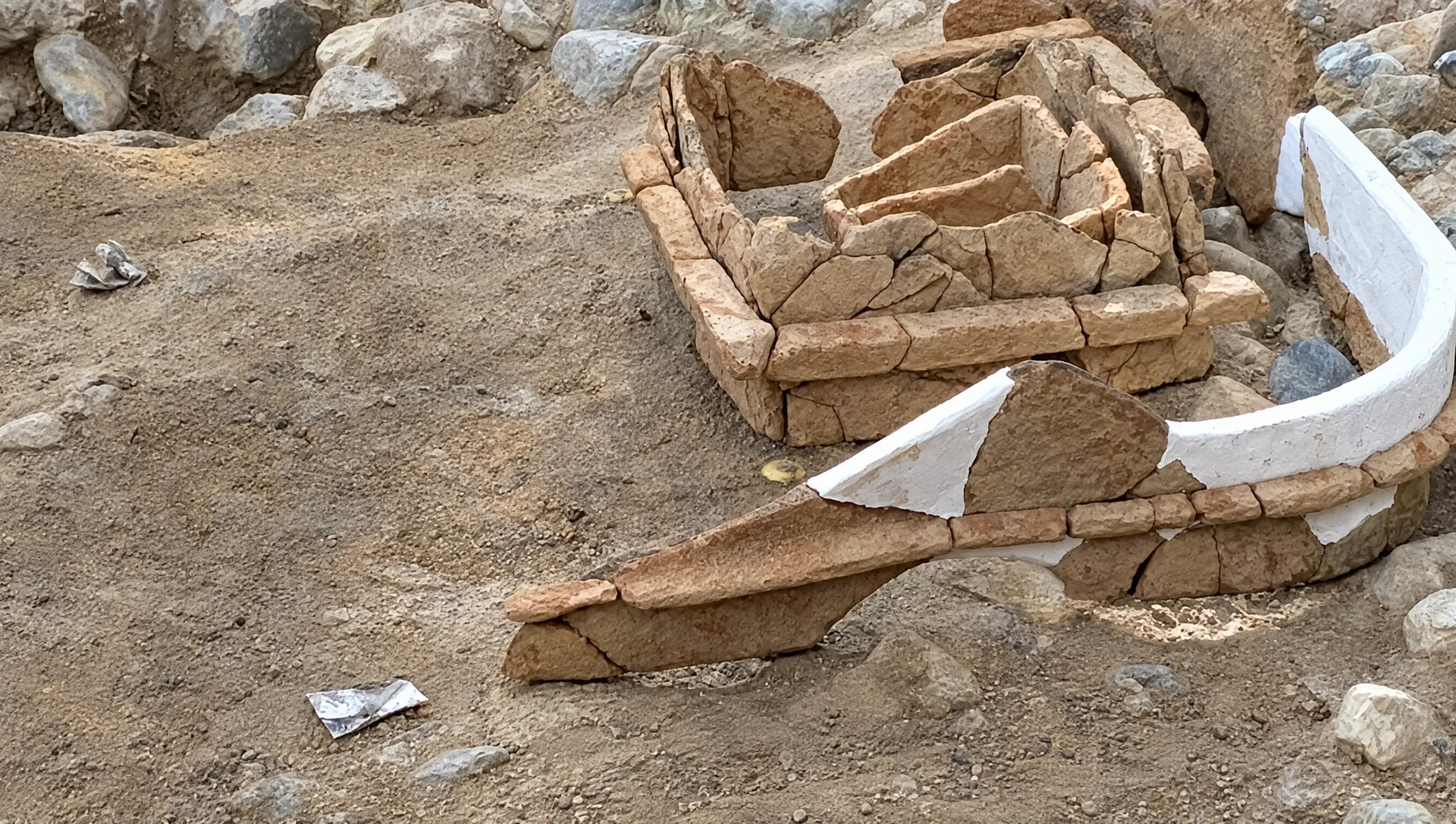 AI-generated visual study · not a documentary photograph
Discover Tomio-Maruyama Kofun: Japan's Largest Circular Burial Mound
Tomio-Maruyama Kofun is an archaeological site in western Nara City whose scale becomes striking when read against the suburban streets around it. Built in the latter half of the fourth century, Nara City reconstructs the circular mound at about 110 metres across and identifies it as Japan's largest circular tumulus. Successive excavations have revealed different parts of its story: a sinuous iron sword and shield-shaped bronze mirror were recovered from a clay-covered burial facility, while the seventh survey uncovered a wooden coffin with mirrors and a comb. These finds have separate archaeological contexts and are being conserved and studied; visitors should not expect them to be on display at the mound or to find an open excavation trench there.
Read the scale of a circular tomb
Nara City's cultural-property account places the mound in Maruyama No. 1 Green Space and describes a three-tiered circular form about 110 metres in diameter. That measurement is easy to miss at ground level: this is a broad, low archaeological landscape rather than a dramatic stone monument. A small projecting platform, called a tsukuridashi, extends from the north-eastern side. The city's excavation reporting distinguishes it from the main mound and documents a burial facility there. The approximate map point on this page is for orientation only; it is not a surveyed public entrance.
Understand why the finds made news
Excavation of the projecting area revealed a wooden coffin protected within a clay-covered burial facility. Nara City's reporting describes mirrors and a comb inside the coffin; the Nara Prefectural Archaeological Institute's technical paper explains that the sinuous iron sword and shield-shaped bronze mirror were found outside the coffin within the covering clay. The city reports that the coffin is 5.54 metres long and about 70% survives. Its April 2026 plan places the coffin at the Nara National Research Institute for Cultural Properties for joint conservation: PEG impregnation was due to begin in April, finish in November, and be followed by freeze-drying through February 2027 and surface finishing in March. These are the published project milestones, not a confirmed completion update or a public viewing schedule; the city's longer-term aim to exhibit the coffin has no announced date. Keeping the find contexts separate matters: the objects were not all arranged together inside the coffin. The buried person's identity remains unknown.
Set the mound in its fourth-century landscape
The Nara Prefecture tourism article explains the site's position near the Tomio River and the old route toward the Osaka plain and the Nara basin. This helps explain why a huge monument could matter beyond its immediate neighbourhood: waterways, routes and visible earthworks all shaped how authority could be experienced. That is an interpretation offered in the prefectural feature, not a proven identification of the person buried here. The safest way to read the site is to separate the archaeological evidence from broader historical hypotheses.
Check how much of the site is publicly visible
Nara City's visitor information points to Wakakusa-dai Chuo bus stop and says there is no parking lot at the kofun. The city continues research and conservation, so conditions may change. Stay on public roads or clearly designated public paths, obey current barriers and signs, and do not climb the mound or enter a work area. If you want an on-site explanation, check for a current guided viewing event instead of assuming one is available every day.
Plan around the nearby information hub
Nara Prefecture identifies Crossway Nakamachi, a roadside station just southwest of the kofun, as a local information hub for the mound and western Nara. Its tourist-information desk is listed as open 09:00–17:00; the public toilet and nursing room are listed as available 24 hours. These facilities belong to the roadside station, not the kofun. They do not establish an approach across private land or permission to park at the archaeological site. Check the roadside station's current notices before relying on its visitor services.
What to look for
An immense circular earthwork
At about 110 metres across, the mound is recognised by Nara City as Japan's largest circular tumulus.
Unusual fourth-century grave goods
Excavations found a sinuous iron sword, shield-shaped mirror, wooden coffin, mirrors and comb; contexts differ and the identity of the buried person is unknown.
A living research site
Read the landscape respectfully and check for official guided openings; routine access across the mound is not confirmed.
Photo notes
No MyNara-licensed photograph is attached. Use only a public viewpoint and obey current site signs. Do not photograph active excavation areas, workers or nearby residents without permission; do not reuse municipal or tourism-directory photographs without the relevant licence.
Make a day of it
Explore guides close to this map point, then check the actual route before travelling. Distances below are straight lines, not walking distances or travel times; map points may not be entrances.
Sources & editorial status
Original MyNara draft based on the linked sources. Sources reviewed 24 October 2026. Opening arrangements, prices and offers may change; use the operator's current information before travelling.
- Nara City — tomb form, approximate location, bus stops and no-parking notice
- Nara City — 2025–2026 excavation updates and research context
- Nara City — April 2026 joint conservation and research project for the recovered wooden coffin
- Nara Prefecture — current Crossway Nakamachi tourist-desk hours and 24-hour toilet/nursing room; station described as just southwest of the kofun
- Nara Prefecture tourism feature — landscape interpretation and Crossway Nakamachi visitor hub (information dated July 2025)
- Nara Prefectural Archaeological Institute — technical interpretation of the sinuous sword and burial contexts
- Nara Prefecture — Crossway Nakamachi tourist-desk services and local access context