
Gojo Shinmachi Machiya-kan
Step into a restored merchant house to understand how the Shinmachi streetscape worked indoors.
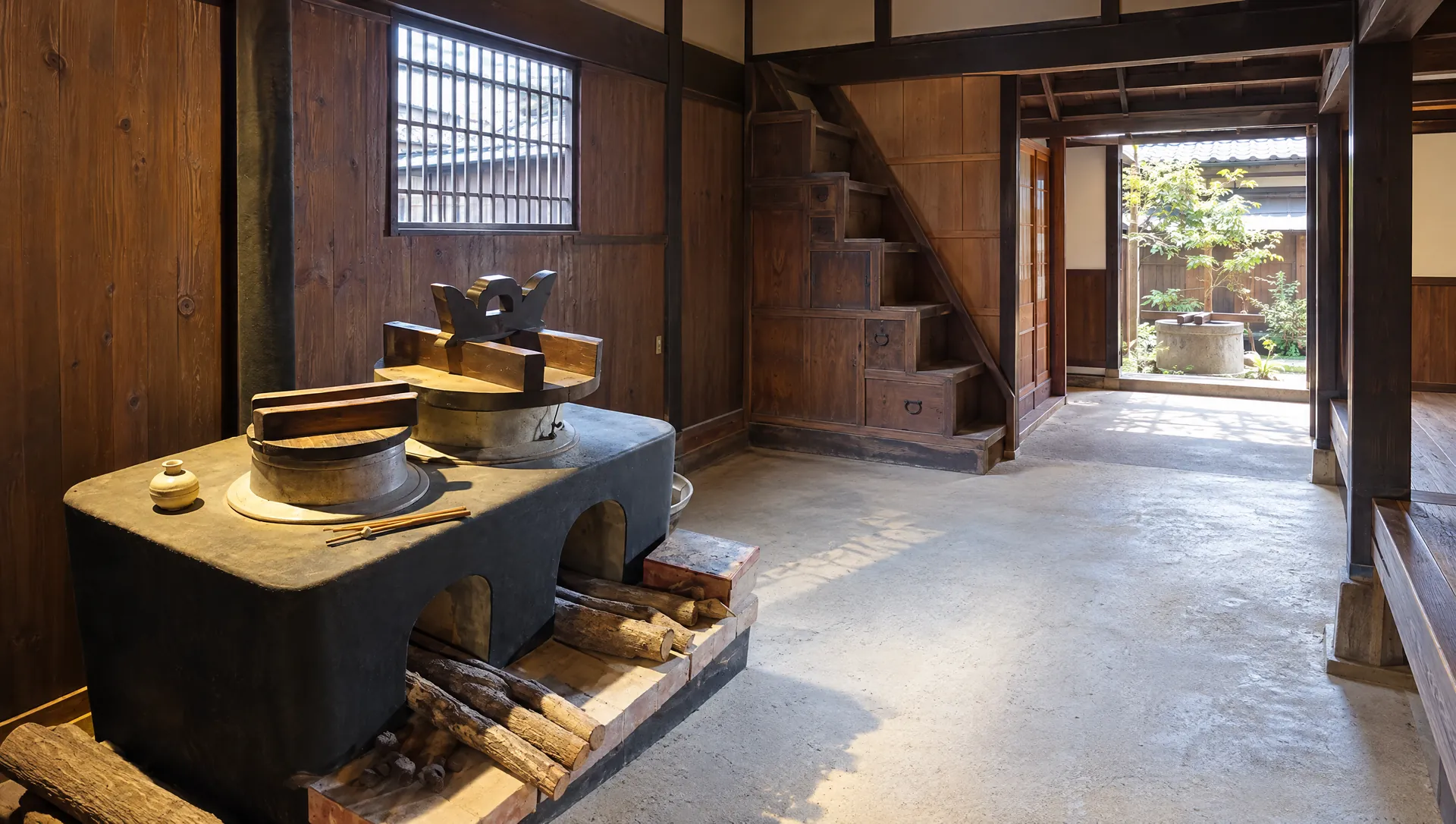 AI-generated visual study · not a documentary photograph
Discover Gojo Shinmachi Machiya-kan
Machiya-kan is a useful counterpoint to Gojo's exterior street walk. The old Tsuji family home became a public house museum after restoration, preserving the proportions and materials of an Edo-period town house. Instead of promising an elaborate collection or a meal service, the visit is about the building itself: the domestic layout, well, cooking area and box stair show how people used narrow street-front space.
Look at the house rather than a themed display
Gojo City describes the former Tsuji residence as the principal exhibit. The main house likely dates from the late Edo period, but its precise construction year is not established by the city's explanation. A well, kamado hearth and box stair have been restored to interpret domestic use; distinguish reconstructed fittings from an untouched original interior.
Read a bend in the street inside the plan
The house stands on the north side of a slight turn in Shinmachi-dori, leaving an irregular shape in rooms along the road. Its tiled gabled roof, plastered exterior and attached corner room provide details to compare with neighbouring houses. The museum lets you connect what the city calls a curving Gojo plot with a real indoor arrangement.
Find Kimura Tokutaro's local story
A corner presents materials about Kimura Tokutaro, who was born at this house and later became a public figure. The city's page calls the building his birthplace, not a preserved room exactly as it looked during every stage of his life. Treat that display as a second layer after the architectural visit.
Pick a day that differs from the other public building
Machiya-kan opens 10:00–16:00 and closes Mondays and Thursdays, with next-weekday substitutions when those days are holidays, plus 25 December–5 January. Admission is free. Those are Machiya-kan's rules; the older Machinami Denshokan has different listed days and is the subject of a new reuse proposal, so do not treat the two buildings as interchangeable.
Fit it into the JR street walk
The city estimates about fourteen minutes on foot from JR Gojo Station or thirteen from JR Yamato-Futami. The museum is at 2-6-6 Honmachi, so it can sit between an outward look at the protected street and a return to either station. Check the JR Wakayama Line's return service before a late-afternoon visit.
What to look for
Restored well, hearth and box stair
Late-Edo machiya plan shaped by the road
Kimura Tokutaro interpretation corner
Photo notes
The municipal visitor pages do not grant a right to publish interior photographs or reproduce the city's images. Ask staff before taking pictures indoors, respect any exhibit signs and obtain separate permission for editorial or commercial use. MyNara has no licensed image of this house.
Make a day of it
Explore guides close to this map point, then check the actual route before travelling. Distances below are straight lines, not walking distances or travel times; map points may not be entrances.

Sources & editorial status
Original MyNara draft based on the linked sources. Sources reviewed 20 October 2026. Opening arrangements, prices and offers may change; use the operator's current information before travelling.