Busshoe: Buddha's Birthday Flower Festival at Todaiji
A quiet April 8 ceremony marks the Buddha's birth with flowers, a small statue and sweet tea offered to visitors.
 Verified site photographs are being prepared.
Discover Busshoe: Buddha's Birthday Flower Festival at Todaiji
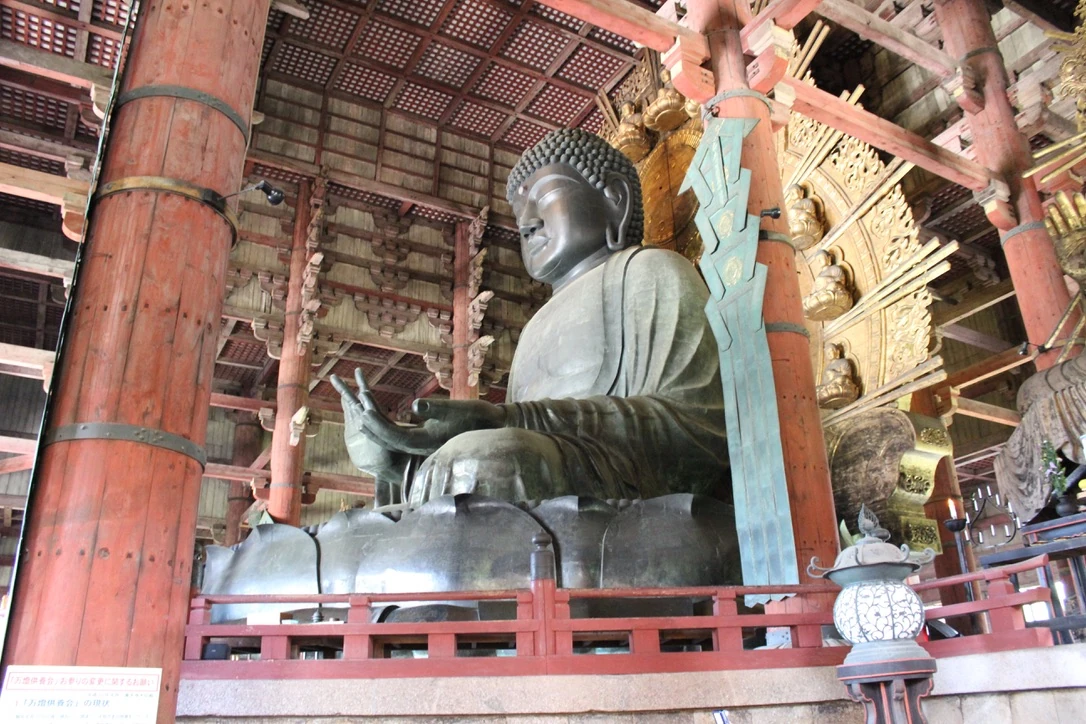
Todaiji observes Busshoe, the Buddhist celebration of Shakyamuni's birth, at the Great Buddha Hall on April 8. It is a more intimate visit than the temple's best-known image of the Great Buddha: the day centres on a flower pavilion and the small figure of the infant Buddha, while the morning service gives the date a liturgical setting. The ceremony belongs to a wider Japanese Buddhist observance called Kanbutsue, but the temple's own programme and setting are specific to Todaiji.
What the flower pavilion represents
The temple places an image of the newborn Buddha in a flower-decorated pavilion. Visitors may pour sweet amacha tea over the statue, a gesture recalling the traditional story of bathing the infant Buddha at birth. Todaiji also offers the tea to visitors. This is a devotional act at a temple ceremony, not a tasting event or a performance staged for an audience.
A ceremony within a living temple
Todaiji's current annual calendar lists a morning service from 8:00 to about 9:00, followed by public access to the flower pavilion and sweet tea from shortly after 8:00 until 17:00. Arriving later allows time for the devotional display but misses the service. The Great Buddha Hall is open by paid admission: the current individual rate is ¥800 for adults and school students in junior high or above, and ¥400 for elementary pupils; payment is cash only. The ceremony page does not list a separate Busshoe ticket. Confirm the annual programme and admission before travelling.
Plan around the Great Buddha Hall
The ceremony is held at the Great Buddha Hall, within Todaiji's large temple precinct. The hall is a major paid-entry building; the temple's general admission page lists a separate entrance fee and cash-only payment, but does not describe a separate Busshoe ticket. Confirm the current admission arrangement at the gate. If the hall is busy, leave room for worshippers and avoid treating the ritual objects as props.
Reach the temple on foot
The Official Nara Travel Guide gives about a 20-minute walk from Kintetsu Nara Station to the event location. The temple grounds are extensive, so allow extra time from the park entrance to the Great Buddha Hall. From JR Nara Station, use a local bus toward the Nara Park and Great Buddha Hall area, then follow signs through the precinct; check current bus routing and service times before departure.
Use the temple's multilingual audio guide
Todaiji rents an audio guide for ¥500 per person near the Great Buddha Hall entrance. The current visitor page lists Japanese, English, Chinese, Korean, French, German, Spanish, Italian and Vietnamese. Individual visitors do not need to reserve; availability can be affected by weather or demand. It covers temple history and buildings as well as the Buddha Hall, so treat it as a separate optional service rather than part of the ceremony.
A useful spring visit for families and culture-minded travellers
Busshoe offers a simple way to understand how religious practice is woven into an ordinary calendar date. The visual focus is small in scale compared with the Great Buddha, which makes it useful to slow down and notice the ritual gesture, seasonal flowers and tea. Visitors should observe any barriers and staff directions, speak quietly inside worship spaces and ask before photographing worshippers or ceremony details.
What to look for
April 8 Buddhist observance at Todaiji's Great Buddha Hall
A flower pavilion and a chance to pour sweet tea over the infant Buddha
A short morning service followed by a longer public viewing window
Photo notes
No event-specific photography licence or blanket commercial filming permission was found in the checked sources. Follow signs and staff directions inside the hall, do not photograph worshippers or ritual activity at close range without consent, and obtain permission before reusing images from Todaiji or tourism sites.
Make a day of it
Explore guides close to this map point, then check the actual route before travelling. Distances below are straight lines, not walking distances or travel times; map points may not be entrances.
Sources & editorial status
Original MyNara draft based on the linked sources. Sources reviewed 20 October 2026. Opening arrangements, prices and offers may change; use the operator's current information before travelling.