
Kashihara Jingū: A Meiji Shrine Beside Mount Unebi
Walk a broad wooded approach to a shrine founded in 1890 around the story of Japan's first emperor.
 AI-generated visual study · not a documentary photograph
Discover Kashihara Jingū: A Meiji Shrine Beside Mount Unebi
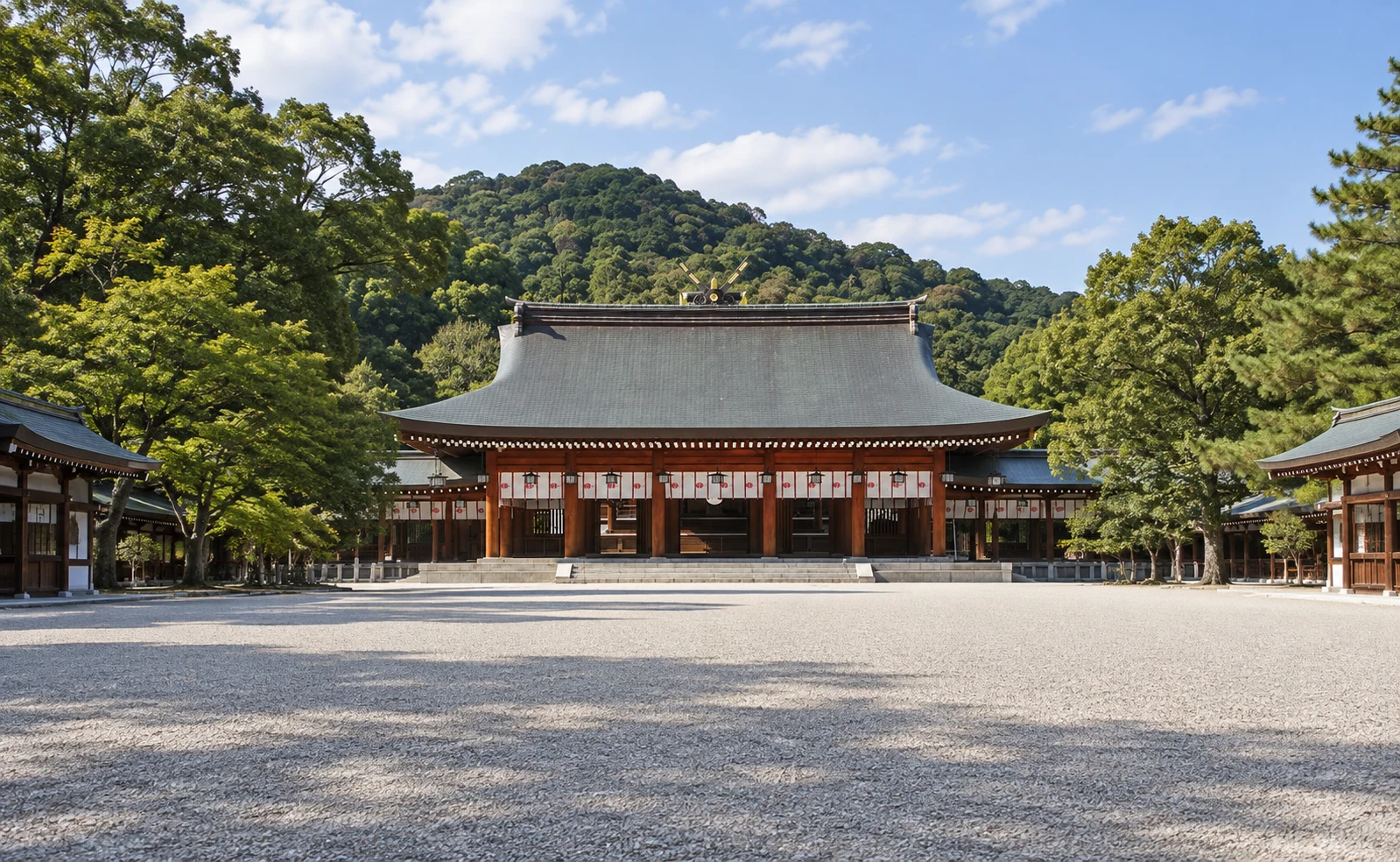
Kashihara Jingū stands southeast of Mount Unebi and enshrines Emperor Jimmu and Empress Hime-tatara-isuzu-hime. Its meaning starts with a distinction: the chronicles place Jimmu's legendary accession at Kashihara, while the shrine itself was founded in 1890 during the Meiji era. The original imperial palace has not been excavated here as a visitor building. What travellers can visit is a living Shinto precinct of long approaches, gates and the outer worship hall, with a wooded setting and occasional ceremonies. The main sanctuary and inner worship hall are not part of an ordinary self-guided circuit.
Read the shrine's layers of time
The shrine operator dates its foundation to 2 April 1890, after people petitioned to honour the account of Emperor Jimmu in the classical chronicles. The shrine enshrines Jimmu and Hime-tatara-isuzu-hime. Kashihara City identifies the main sanctuary and Bunkaden as Important Cultural Properties: the sanctuary is the former Naishidokoro from Kyoto Imperial Palace, built in 1855 and transferred here, while Bunkaden was a former Oda-family residence. These are historic buildings from later centuries, not surviving structures from the traditional 660 BCE accession story. Keeping the chronicle's sacred tradition distinct from the documented 1890 shrine foundation makes the place easier to understand.
Notice what an ordinary visit can reach
The long approach leads through torii and the South Gate to the outer worship hall. From its forecourt, visitors can pray and see the inner roofs and the gold-coloured chigi and katsuogi details above them. The shrine dates both worship halls to 1939, built for the 2,600th anniversary celebrations, and describes the inner hall as a setting for major rites and formal visits. Ordinary visitors should plan to worship from the public outer hall rather than expect access to the inner hall or main sanctuary. The approach from the first torii to the outer hall is paved and has ramps; the operator says wheelchair and stroller users can make this visit. Wheelchairs are available to borrow, and a nursing room is in the prayer-reception building. The broad shrine grounds also include the Forest Garden, an open area created from the former outer precinct and open to visitors since 1954.
Plan around the calendar and the museum
Gate hours change by month: opening ranges from 05:30 in June–July to 06:30 in winter; October and November are 06:30–17:30. Closing ranges from 17:00 to 18:00, and ceremonies or 31 December–7 January can change the schedule. The prayer counter is generally open 09:00–16:00. General precinct worship has no admission charge listed. The Treasure Museum is a separate visit in the shrine's visitor-services building, alongside Yōseiden and Café Kashinomori. The operator lists weekday hours 10:00–15:00, weekends and holidays 09:00–16:00, adult admission ¥700 and free entry for primary-school age and younger. It estimates about 20 minutes inside, but warns of temporary closures and rotating special exhibitions. Check the live notice on the day you plan to go.
Arrive by rail, or leave time for the wide grounds
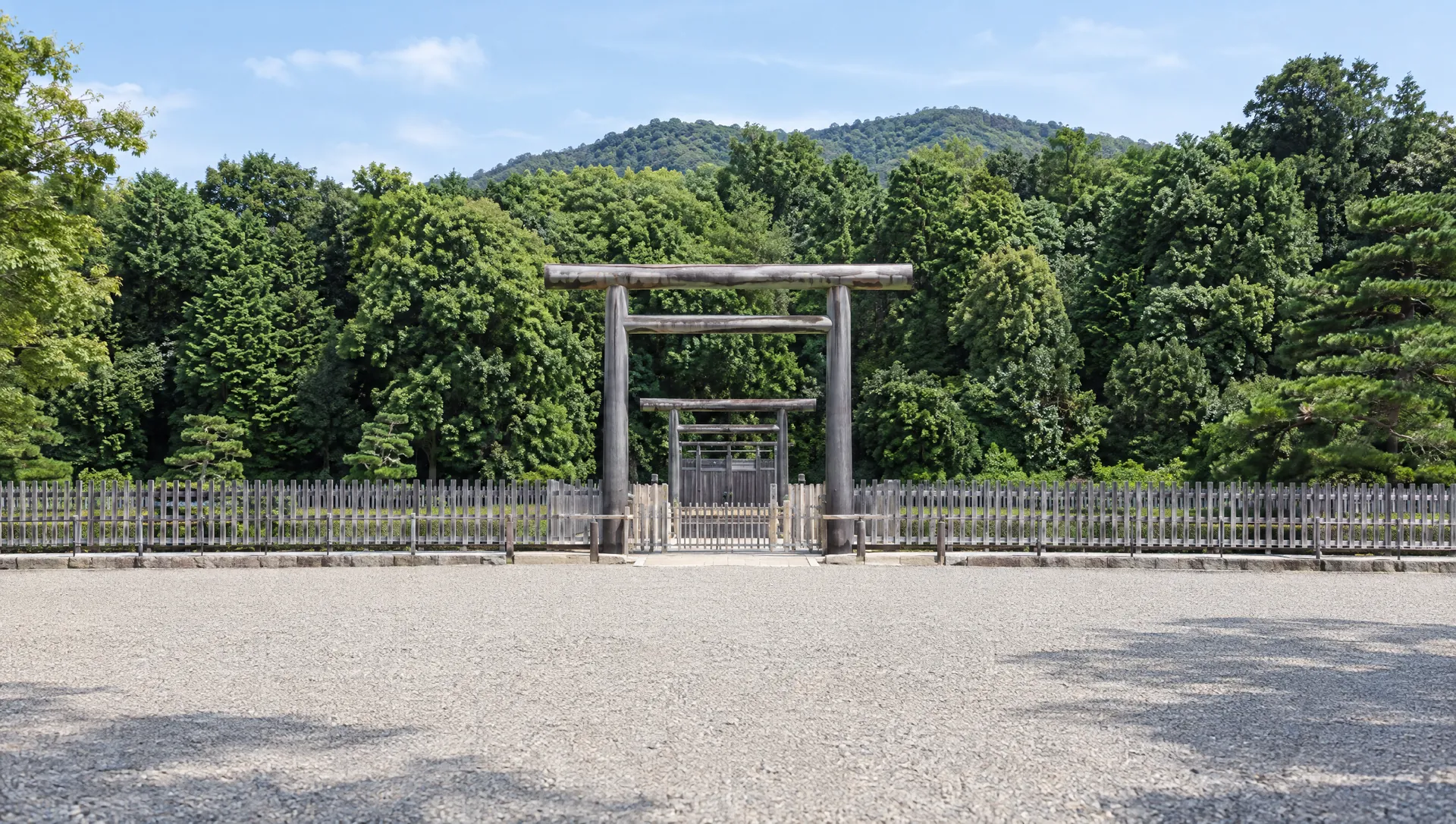
Kintetsu Kashiharajingū-mae Central Exit is about a ten-minute walk by the shrine's directions. The shrine lists about 800 parking spaces, with ordinary cars at ¥500 per day, medium vehicles at ¥1,000 and large vehicles at ¥2,000; New Year and festivals can have different prices and traffic arrangements. The forecourt, outer hall, wooded approach and Forest Garden make a rewarding short visit without entering the museum. Mount Unebi's trailhead is also by the north approach, but the summit walk takes about 30 minutes each way and is a separate hike. Jimmu's mausoleum lies north of the shrine and is a distinct Imperial Household Agency site with its own rules.
What to look for
Long approach, torii and outer worship hall against Mount Unebi
1890 foundation and transferred Kyoto imperial building
Accessible paved approach from the South Gate
Photo notes
No shrine image is licensed for MyNara. The operator permits family commemorative photography in the grounds, but prohibits photography while waiting for or receiving prayers. Commercial filming and photography require advance application; do not obstruct worshippers, ceremonies or wedding parties, and follow staff directions and posted restrictions.
Make a day of it
Explore guides close to this map point, then check the actual route before travelling. Distances below are straight lines, not walking distances or travel times; map points may not be entrances.
Sources & editorial status
Original MyNara draft based on the linked sources. Sources reviewed 20 October 2026. Opening arrangements, prices and offers may change; use the operator's current information before travelling.
- Kashihara Jingū — foundation and enshrined figures
- Kashihara Jingū — current monthly gate, rail and parking guidance
- Kashihara Jingū — public outer and ceremonial inner halls
- Kashihara Jingū — Treasure Museum current fee and arrangements
- Kashihara Jingū — accessibility, wheelchair loan, parking and current facility guidance
- Kashihara Jingū — South Gate, North Gate and accessible approach
- Kashihara Jingū — Forest Garden history and public access
- Kashihara Jingū — Mount Unebi and trail access
- Kashihara Jingū — commercial filming and publication permission
- Kashihara City — Meiji foundation and designated buildings
- Kashihara City — main sanctuary construction and cultural-property detail
- Official Nara Travel Guide — A00520 identity; older museum fee conflicts