Haseji: Garden Dining in a Registered Historic House
Pause for a meal in Hase's temple-town streets, inside a former sake merchant's historic property.
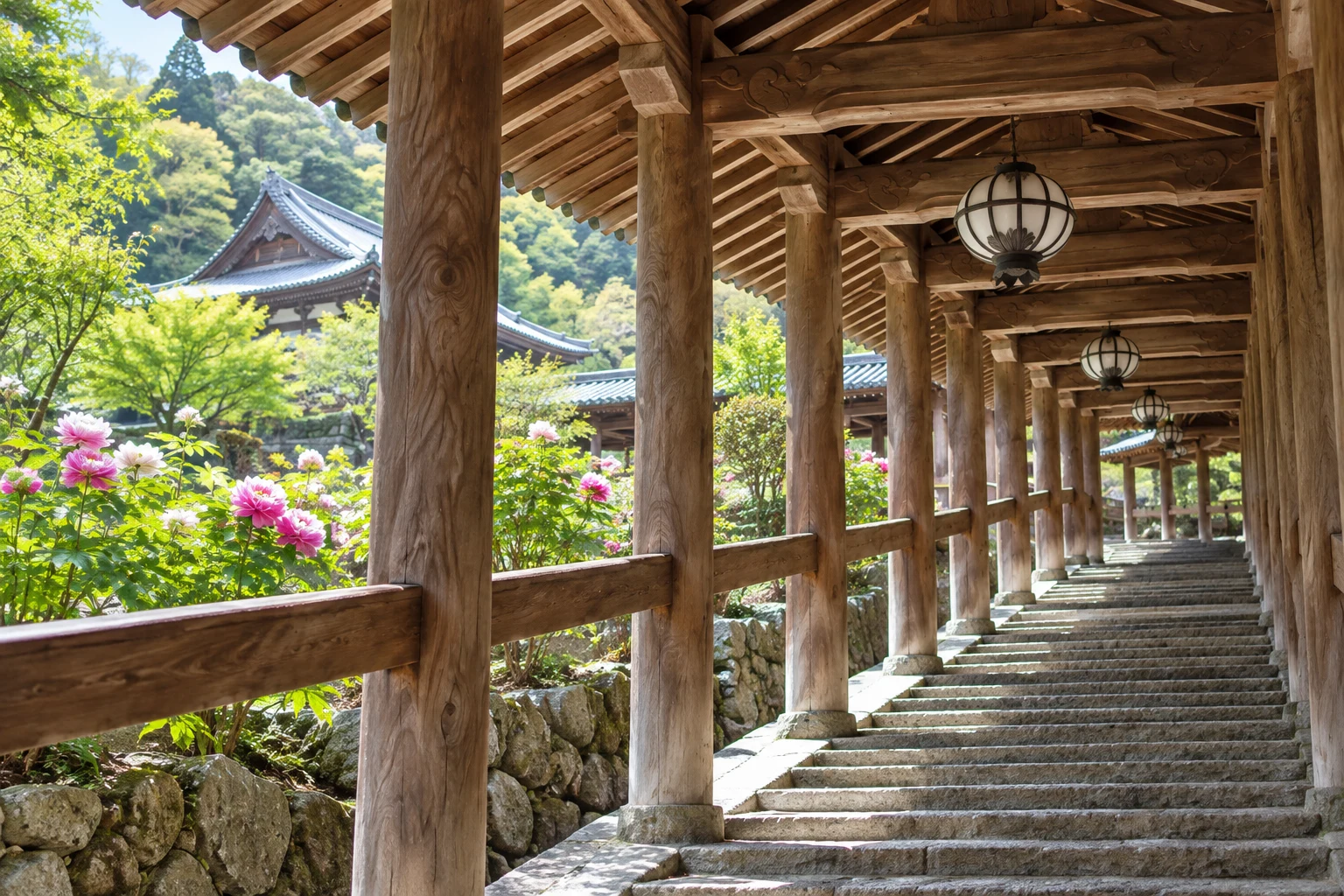
 Verified site photographs are being prepared.
Discover Haseji: Garden Dining in a Registered Historic House
Haseji is a restaurant and tea room on the approach to Hasedera. Its setting is part of the visit: the National Cultural Heritage Database records the attached teahouse as an early-20th-century wooden building, built in the Taisho period and valued for its contribution to the historic streetscape. The same site is associated with Yamada Sake Shop, whose main house and tea-room spaces form a small historic ensemble. Visitors come for a quiet break between the station and temple, where a garden-facing room offers a different view of Hase from the stone-and-shop approach outside.
Look beyond the menu to the building
The Agency for Cultural Affairs lists the teahouse attached to Yamada Sake Shop as a registered tangible cultural property. Its record dates the small wooden structure to the early Taisho period (1912–1925) and describes a three-mat tea room opening toward an inner garden. This designation applies to the recorded building, not automatically to every feature or object on the property. Treat it as a historic working place: enjoy the room as a guest, follow staff directions and avoid touching architectural details.
Make it a rest stop on the Hasedera walk
The restaurant sits at 857 Hase, along the approach between Kintetsu Hasedera Station and the temple. Sakurai City's tourism listing gives a 10-minute walk from the station; the exact time depends on pace and the route. It can work as a meal stop before climbing toward Hasedera or as a pause on the return. The town's narrow street and uneven approach are part of the setting, so allow more time if walking slowly or travelling with mobility needs.
Plan for Haseji's seasonal operating window
The Sakurai City Tourism Association's November 2025 food guide lists Haseji as operating around mid-March to mid-July and mid-September to mid-December, generally 11:00–15:00. It gives a sample nyumen set from ¥1,100, while its older web listing says only 'from 11:00' and irregular closure. The same sources differ on seating (16, 20 or about 30 places). Treat the season and menu price as dated planning clues, not a promise that the restaurant is open today; call 0744-47-7047 to confirm the date, last order, menu, dietary needs, payment and parking.
Keep the shop and restaurant distinct
Yamada Sake Shop and Haseji share the address and historic setting, but they are distinct visitor activities: one is a shop and the other serves food and tea. The shop's own opening hours and product selection were not independently confirmed for this guide. If you want to buy local sake, check whether the shop is open before making a special trip; do not assume restaurant service means the retail counter is open.
What to look for
Taisho-period teahouse recorded as a registered cultural property
Seasonal nyumen stop on the Hasedera approach; confirm service dates
Garden-facing historic setting near the temple-town walk
Photo notes
No photograph has been licensed to MyNara. Do not reuse images from the restaurant, directory or user-review sites. Ask staff before photographing the interior or garden, and avoid photographing other diners without permission.
Make a day of it
Explore guides close to this map point, then check the actual route before travelling. Distances below are straight lines, not walking distances or travel times; map points may not be entrances.
Sources & editorial status
Original MyNara draft based on the linked sources. Sources reviewed 27 October 2026. Opening arrangements, prices and offers may change; use the operator's current information before travelling.
- Agency for Cultural Affairs — Yamada Sake Shop (Haseji) teahouse cultural-property record
- Sakurai City Tourism Association — Haseji address, contact and visitor details
- Sakurai City Tourism Association — 2025-26 food guide with seasonal service window and nyumen example
- Sakurai City — Hase Tourism Center and town visitor facilities
- Official Nara Travel Guide — Haseji directory identity
- Tabelog — separate, changeable restaurant listing used to identify operating-hour conflict