
Nara Prefecture Complex of Man'yo Culture
Discover poetry, modern Japanese painting and the ancient workshop below this Asuka museum.
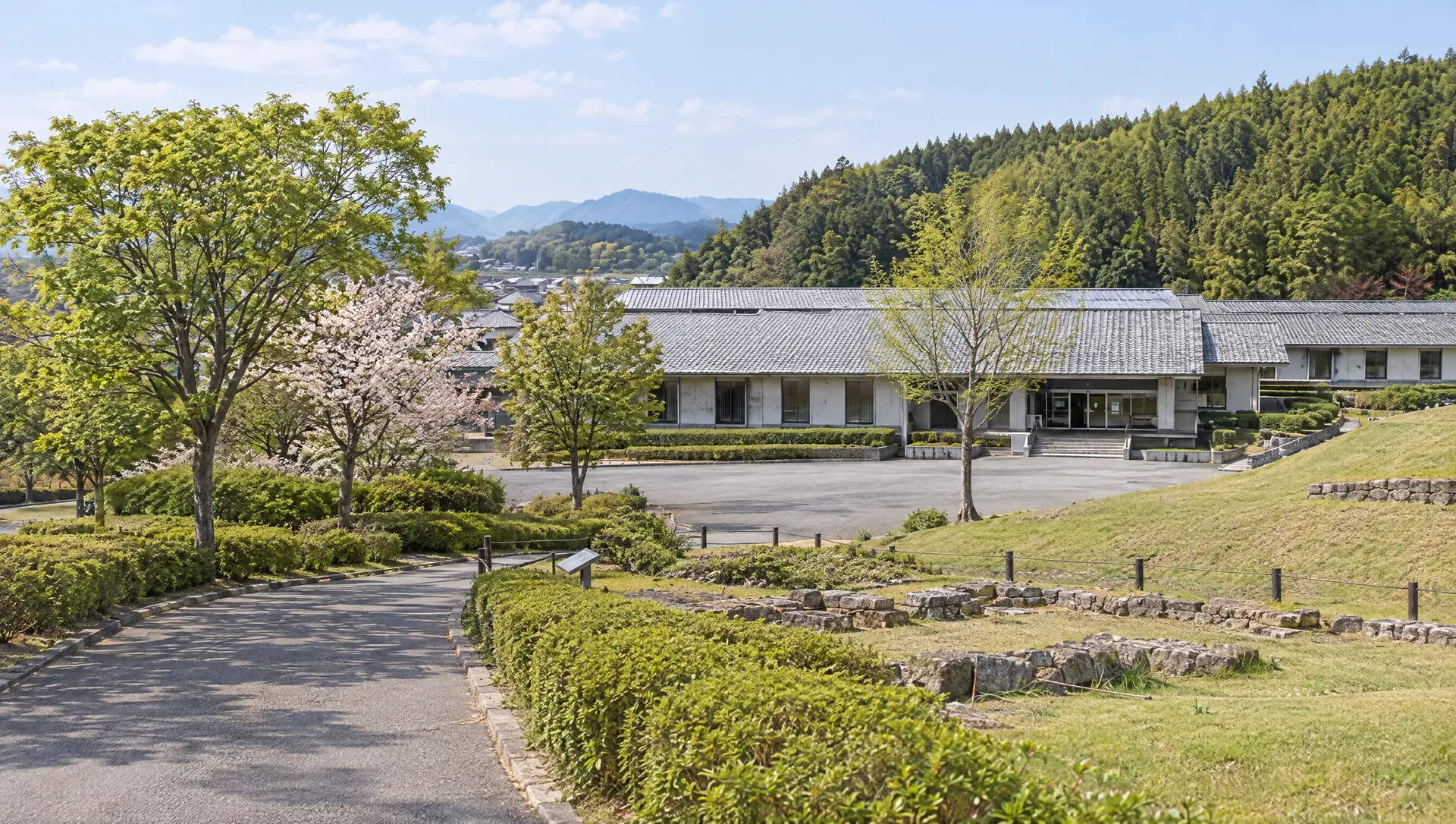
 AI-generated visual study · not a documentary photograph
Discover Nara Prefecture Complex of Man'yo Culture
The Man'yo Culture museum offers more than an introduction to Japan's oldest surviving poetry anthology. Its free interpretation rooms use theatre, sound and reconstructed settings to make the voices and everyday world of the Man'yoshu approachable. Upstairs, exhibitions of modern Japanese paintings respond to individual poems; these require a separate ticket. Under the building, the excavated Asukaike workshop gives the site an archaeological story of its own. Separating the free and paid areas makes this a flexible stop even on a short Asuka route.
Enter the poems through sound and performance
The basement's Man'yo Theatre uses puppets, moving images and music to introduce poets including Nukata no Okimi, Kakinomoto no Hitomaro and Otomo no Yakamochi. A recreated ancient market and other interactive rooms explore sung verse, written verse and daily life. Programmes and screening times may change, so treat the theatre as interpretation rather than a fixed-language performance schedule.
See the painting gallery as a separate visit
The first-floor Japanese-painting gallery shows exhibitions drawn from works inspired by Man'yoshu poems, including paintings by leading modern artists. Its display and charge change with each exhibition. Entry to the building and its general and special interpretation rooms is free; a Japanese-painting exhibition is ticketed. Check the current exhibition before travelling for a particular painting.
Find the workshop beneath the museum
The building stands above the Asukaike workshop site. In the courtyard, a full-size reconstruction marks excavated furnace remains; the basement interprets finds associated with metal and craft production, including Fuhonsen coins. These are reconstructed and displayed traces of the ancient workshop, not a promise of an open excavation trench or unrestricted access to original finds.
Use the new guidance corner before walking
A first-floor guidance corner uses models, panels and video to explain the palace, temple and tomb landscape across Asuka, Fujiwara and neighbouring Sakurai. It is useful before the scattered outdoor stops, especially Asuka-dera and Amakashi Hill. The prefecture reports around 19,000 books in the Manyo Library and an indexed Manyo Hyakka system for searching poems and people; check the room’s current service hours before planning research time. A museum shop adds books and local materials, while the café is a separate business whose menu and hours can change.
Check the day, then the bus back
The museum is at 10 Asuka. The prefecture lists the Akakame sightseeing bus from Kashiharajingu-mae East Exit or Asuka Station to Manyo Bunka-kan Nishiguchi (about 20 minutes), and a Nara Kotsu bus from Sakurai South Exit to Manyo Bunka-kan (about 25 minutes). These are estimates, not live departure guarantees. The museum closes on Mondays or the next weekday when Monday is a public holiday, as well as year-end and exhibition-change days. Confirm the return bus and annual calendar before an afternoon visit.
Separate the permanent free experience from the changing ticketed show
The prefecture lists the general interpretation floors and special interpretation rooms as free. The Japanese-painting gallery has a separate changing exhibition ticket. On 20 October 2026, the current show is Takaterasu Miyako, running 17 October–6 December 2026; the listed price is ¥1,200 for adults, ¥500 for high-school/university students and ¥300 for elementary/junior-high students, with a 20-person group rate. The prefecture says domestic under-18 visitors and domestic school pupils are exempt; do not assume that exemption applies to overseas visitors without checking.
What to look for
Free poetry theatre and interpreted ancient-life rooms
Ticketed Man'yoshu-inspired Japanese painting exhibitions
Asukaike workshop furnace reconstruction and Fuhonsen story
Photo notes
The prefecture requires an application for exterior/interior facility photographs and a separate application for photographing or publishing collection objects. It asks applicants to apply about two weeks ahead, says image provision has no fee, and restricts use to the approved purpose; collection images need nearby work/artist/owner credits and generally cannot be cropped or overlaid. No image rights have been obtained for MyNara. Follow gallery signs for personal photography and do not reproduce operator images without permission.
Make a day of it
Explore guides close to this map point, then check the actual route before travelling. Distances below are straight lines, not walking distances or travel times; map points may not be entrances.
Sources & editorial status
Original MyNara draft based on the linked sources. Sources reviewed 20 October 2026. Opening arrangements, prices and offers may change; use the operator's current information before travelling.
- Official Nara Travel Guide
- Museum operator — opening, admission, closures and parking
- Museum operator — first-floor art, guidance corner and workshop
- Museum operator — basement theatre and archaeological displays
- Museum operator — 2026 current special exhibition
- Museum operator — 2026 annual calendar
- Museum operator — address and bus approaches
- Museum operator — image permissions