
Sakuramotobō: Temple Treasures and Hands-on Practice
Visit a Yoshino Shugendō temple and, by arrangement, join sutra copying, drawing or a morning service.
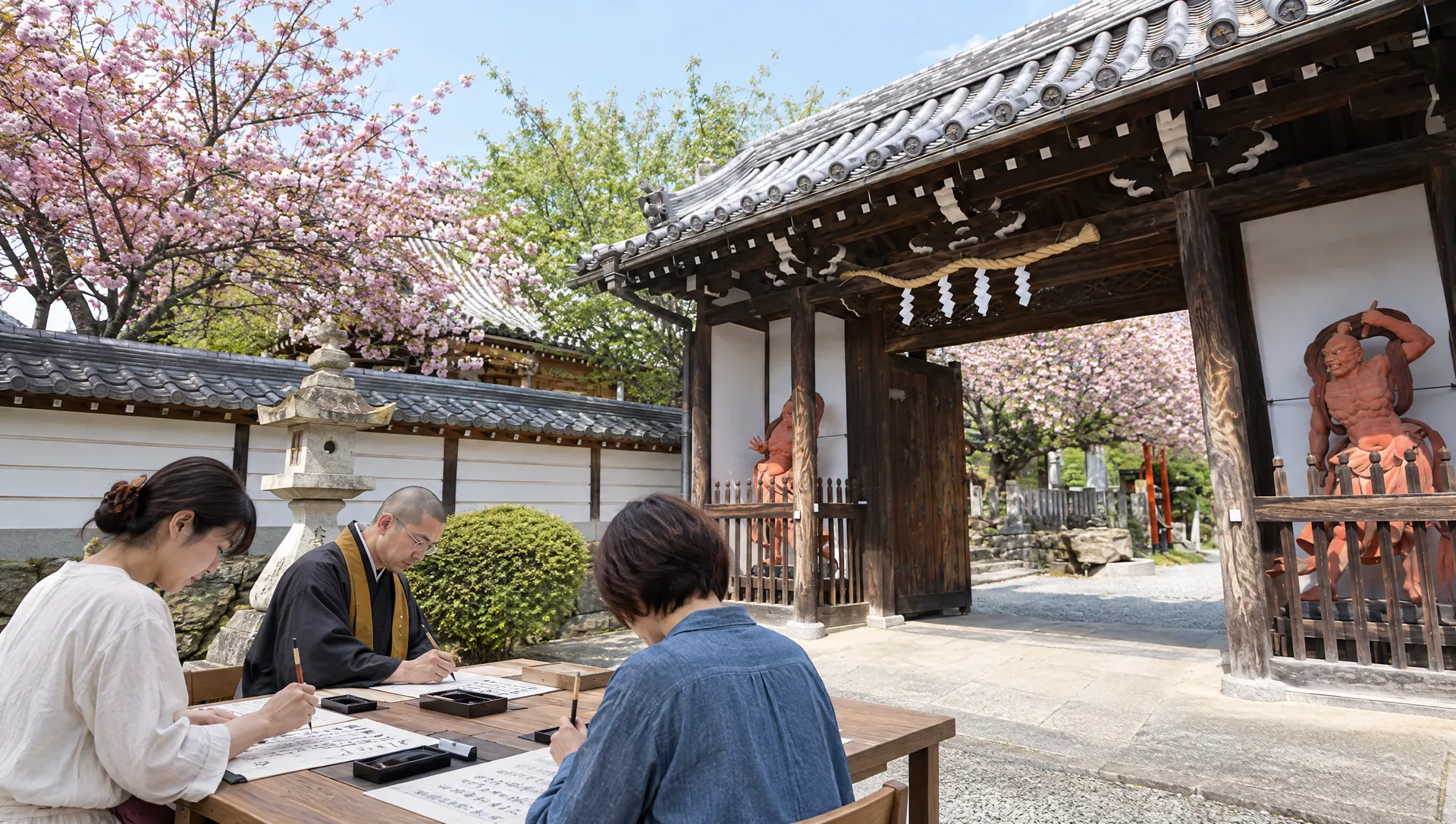 AI-generated visual study · not a documentary photograph
Discover Sakuramotobō: Temple Treasures and Hands-on Practice
Sakuramotobō is both a place of worship and a temple that describes concrete ways for visitors to participate. Its origin story links a propitious dream of Prince Ōama, the later Emperor Tenmu, to a foundation on Yoshino Mountain. The temple's current identity is a site of Shinbutsu-shūgō, the intertwining of kami and Buddhist practice in Shugendō. Statues designated as Important Cultural Properties, regular services and seasonal special openings are distinct parts of that identity. Ordinary admission should not be mistaken for access to every treasure or to a booked practice session.
Encounter a living temple rather than a static collection
The temple names an En no Gyōja image as its principal object and identifies a seated Shakyamuni and a seated Jizō among its Important Cultural Properties. The local association also describes the temple's Shōten worship and special opening associated with October 1. These objects and traditions do not imply that every statue is displayed daily. The prefectural English listing describes a treasure hall opening in April and November, but exact days and eligible objects must come from the temple's current notices before a visitor makes a special trip.
Choose a practice with its own cost and timing
The operator advertises sutra copying or Buddhist-image tracing at ¥2,000 in addition to the normal temple admission, normally around ninety minutes with last reception at 14:00. It advises booking because rites can displace the session. A roughly forty-minute seated meditation option is also ¥2,000 plus admission but requires consultation, and a water-purification practice is summer-only, ¥4,000 plus admission, and requires booking and suitable clothes. An ordinary temple visit does not automatically include these activities. Ask directly about language support and suitability for children or mobility needs.
Understand a morning service before arriving
The temple describes a morning service from about 07:00 lasting forty minutes. Participation has no extra practice fee but normal temple admission remains payable. It cautions that ceremonies or off-site duties can prevent public participation and recommends prior enquiry. The operator's page asks all experience applicants to arrange the date by phone and to contact it before the preceding day's noon for ordinary changes. No-show or major same-day group reductions may incur a full cancellation charge. These are practical booking terms, not a promise that an unscheduled visitor can enter the main hall at dawn.
Resolve the price and approach discrepancy
The temple's own experience page and local association both list ¥500 normal adult admission and ¥1,000 in special-opening periods. Visit Nara's English directory says free, which conflicts with the current operator; use the operator's terms and recheck the chosen date. The association gives 08:30–16:00 and about twenty minutes from the upper ropeway station. The temple's route page instead describes around fifty minutes' walking after taking the cable and three minutes from an onward bus; its estimates may refer to different paths. Check current cable, mountain bus and road controls, and never treat a seasonal special bus as a regular year-round connection.
What to look for
Shugendō temple with designated Buddhist images
Bookable sutra copying and image tracing
Morning service with prior date confirmation
Photo notes
No interior, statue, participant or ceremony photograph is licensed to MyNara. Ask the temple before taking photos in halls or during a practice, and obtain consent from people shown. A temple web photograph is not available for reuse without permission.
SEASONAL CALENDAR
Events connected with Sakuramotobō: Temple Treasures and Hands-on Practice
These records are shared with MyNara’s event calendar, so dates and notices have one source. Recurring patterns are not confirmed dated editions; check the organizer’s latest guidance.
Sakuramotobō Special Opening of the Tenmu Emperor Image 2026
For this nine-day annual opening, visitors can see the normally hidden image of Emperor Tenmu in the main hall and enter Hōjū-dō, the normally closed treasure hall. The temple's current autumn notice lists 08:30–16:00 viewing, ¥1,000 for adults, ¥800 for junior and senior high school students, and free entry for elementary-school children and younger. Yoshino Mountain Tourism Association also highlights the November opening. Reconfirm hours, fees and any worship-time restrictions before visiting.
Check organizer informationMake a day of it
Explore guides close to this map point, then check the actual route before travelling. Distances below are straight lines, not walking distances or travel times; map points may not be entrances.

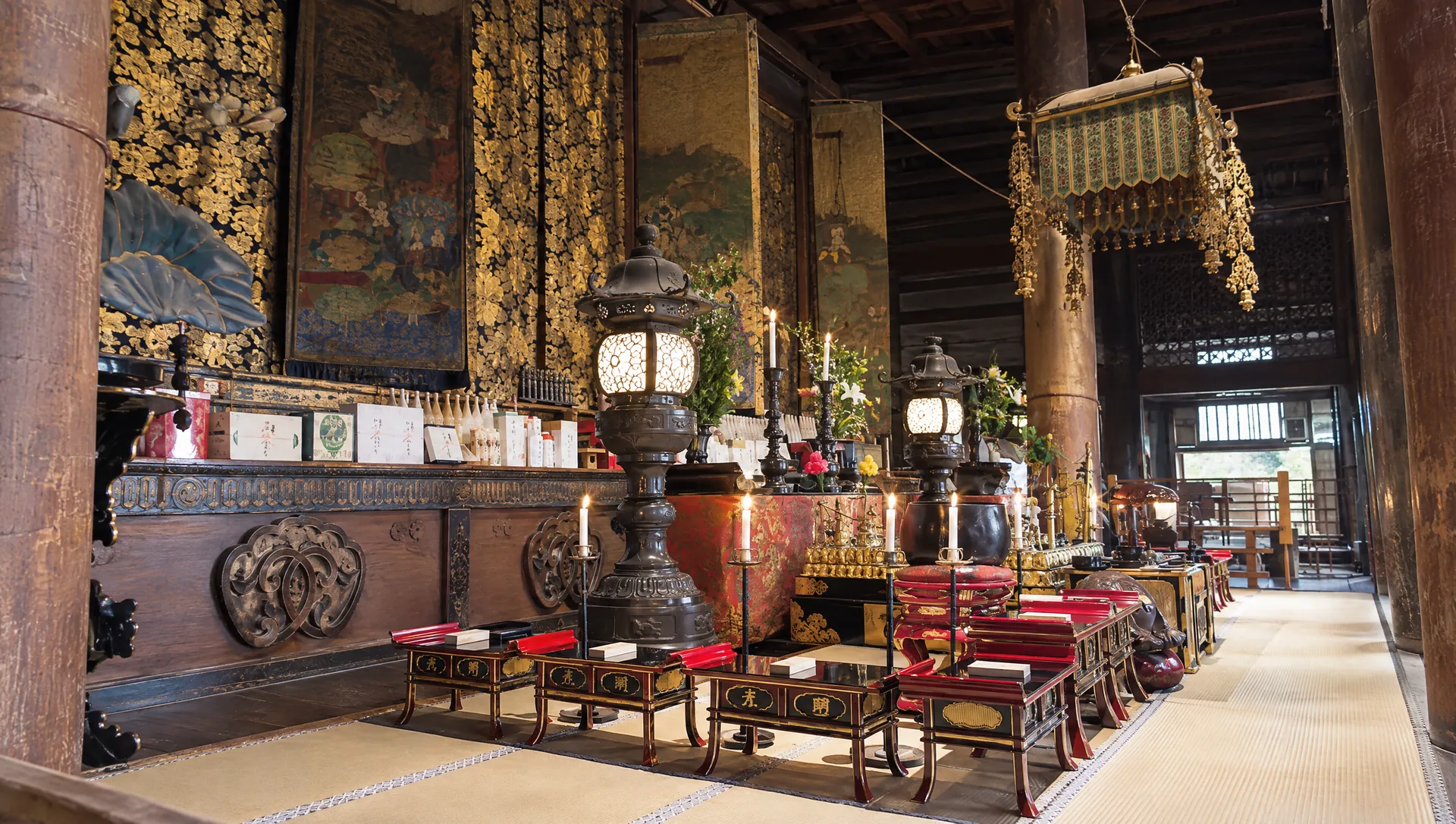
Sources & editorial status
Original MyNara draft based on the linked sources. Sources reviewed 19 October 2026. Opening arrangements, prices and offers may change; use the operator's current information before travelling.
- Sakuramotobō operator — current practice menu, prices and booking conditions
- Sakuramotobō operator — current site, treasure and event links
- Sakuramotobō operator — rail, cable and bus approach options
- Yoshinoyama Tourism Association — temple admission, hours and practitioner lodging
- Visit Nara — conflicting free-admission field and treasure-hall description