
Isonokami Jingu Shrine
Start the Yamanobe-no-Michi walk at a forest shrine of ancient swords and a National Treasure hall.
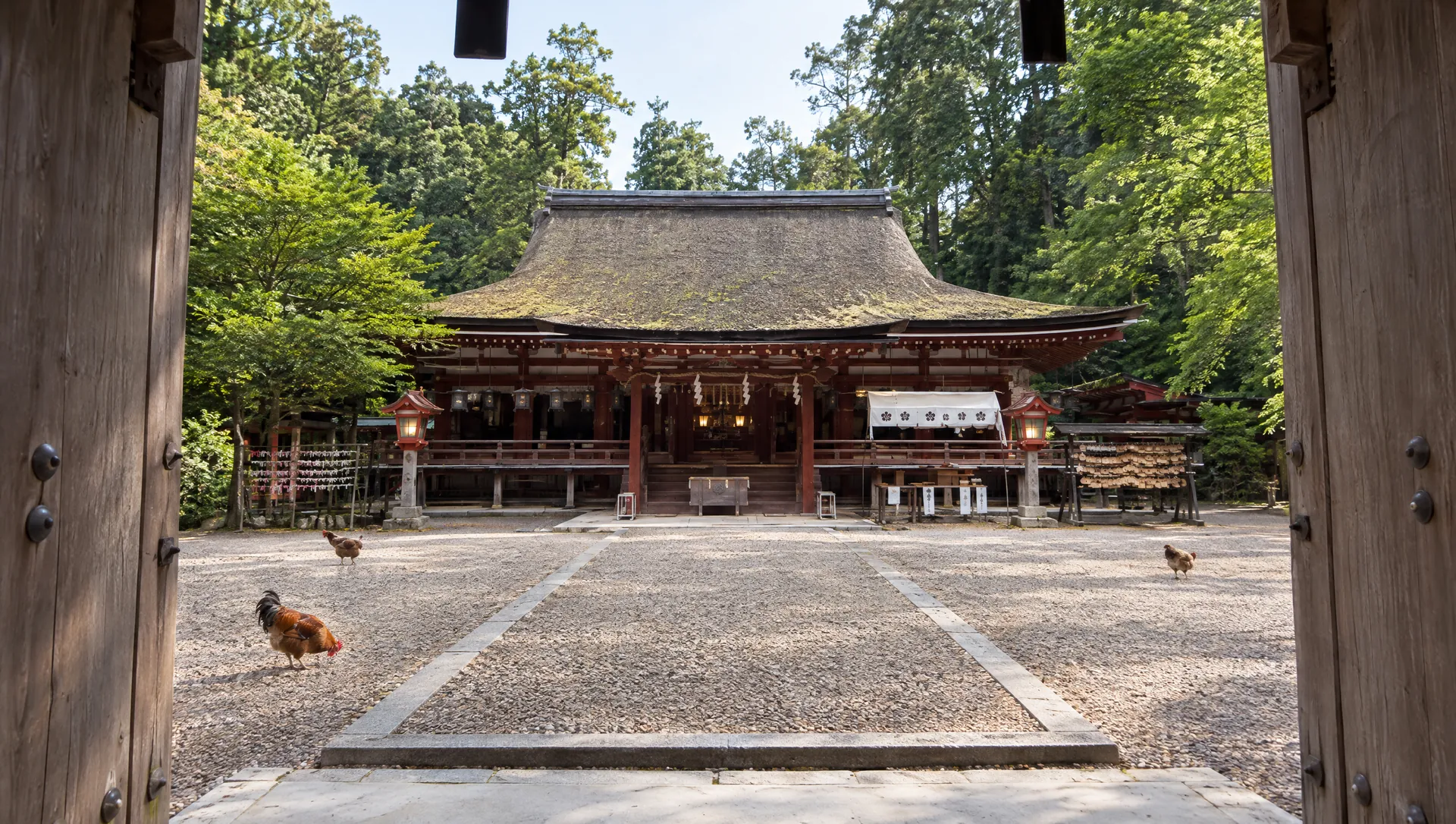 AI-generated visual study · not a documentary photograph
Discover Isonokami Jingu Shrine
Isonokami Jingu sits where Tenri's streets meet the wooded foothills and the old Yamanobe-no-Michi route. The shrine is named in Japan's eighth-century histories and preserves traditions linking sacred swords, the Mononobe clan and the early Yamato court. Its National Treasure worship hall and free-roaming chickens are visible parts of an ordinary visit; its famous Seven-Branched Sword is a treasured object, not something a visitor should expect to see on an open shelf. The site's legendary foundation dates belong to shrine tradition, while the surviving hall has its own later architectural history.
Approach the worship hall as a living sanctuary
Cedar and other evergreen trees frame the ascent to the shrine. The worship hall is a National Treasure, while the shrine's gate and the subsidiary Izumo-Takeo Shrine worship hall are also protected cultural buildings. The prefectural heritage record explains that the shrine historically had no main hall: worship focused on a restricted sacred area behind the hall, where swords, halberds and jewels were excavated in 1874. That sacred zone is not a visitor interior. Look from public worship areas and avoid treating the buildings as an open historic house.
Understand the sword without promising a display
The shrine is associated with sacred weapon traditions, especially the Seven-Branched Sword linked to the Korean peninsula. The blade and its inscription have a major place in the study of early regional contact, but routine public access to the original is not stated on the sources reviewed here. Do not visit expecting to see the National Treasure itself unless a separately announced exhibition confirms it.
Meet the birds without feeding or chasing
Chickens move around the precinct and are a memorable part of the shrine's present life. They are living animals in a worship space, not a staged attraction. Give them room, keep food to yourself and leave worshippers and shrine staff a clear route.
Use the shrine as a trail decision point
The signed Yamanobe-no-Michi continues south through fields, small shrines and burial mounds toward Miwa and Sakurai. A Nara Prefecture guide presents a broad Tenri-to-Sakurai walk, but its times depend on the distance and stops chosen. Decide on a turnaround or onward station before setting out; a brief shrine visit is different from the long walking itinerary.
Allow a realistic approach from Tenri
The shrine is at 384 Furu-cho. Visit Nara estimates thirty minutes on foot from Tenri Station, while Tenri's tourism association gives forty minutes and describes the climb after crossing the Furu River. Allow the longer margin if you are unfamiliar with the route. Bus service to Isonokami Jingu-mae must be checked for the date; the shrine's English site offers interpreter assistance through staff for several languages during stated daytime hours.
What to look for
National Treasure worship hall in a cedar precinct
Seven-Branched Sword history, without an assumed display
Yamanobe-no-Michi walking-route connection
Photo notes
The shrine's English guidance welcomes personal photographs and video in authorised areas if worshippers are not disturbed. It asks visitors to avoid prohibited zones and seek help from staff if unsure. No permission to reuse the operator's images or to organise commercial filming for MyNara has been obtained.
Make a day of it
Explore guides close to this map point, then check the actual route before travelling. Distances below are straight lines, not walking distances or travel times; map points may not be entrances.

Sources & editorial status
Original MyNara draft based on the linked sources. Sources reviewed 20 October 2026. Opening arrangements, prices and offers may change; use the operator's current information before travelling.