
Takamatsuzuka Mural Museum
Compare painstaking mural copies and a chamber model beside the painted Takamatsuzuka tomb.
 AI-generated visual study · not a documentary photograph
Discover Takamatsuzuka Mural Museum
The Takamatsuzuka murals transformed an unassuming Asuka mound into a landmark of Japanese archaeology after their discovery in 1972. The museum next door was created so visitors could study painted copies and a reconstruction while the fragile originals were protected. Its different kinds of reproductions show both the paintings as found and an interpretation of their lost colour; knowing which is which makes the visit more useful.
Three ways of seeing the murals
The museum opened in March 1977 because the fragile National Treasure paintings cannot remain on routine public display. The operator describes three interpretations: a detailed copy of the murals' condition at discovery, a partly restored copy that reduces damage and staining, and a reconstructed painted-plaster version. Their production began in 1974 under the supervision of painters Hirayama Ikuo and Moriya Tadashi and took about two years. Compare the versions before deciding what the original chamber might have looked like. None is the original wall painting, and the stone-chamber model is also a reconstruction.
Place the gallery beside an unresolved tomb
The adjacent mound is a two-tier circular tomb built in the late seventh or early eighth century, according to the burial objects and excavation evidence summarized by the Agency for Cultural Affairs and Nara Prefecture. Its chamber contained a richly painted wall program, but the occupant has not been identified. The museum lets you study reproductions of the paintings and a chamber model without entering the protected tomb. Keep those three things distinct: the burial mound outside, the conserved originals, and the museum's interpretations.
Look past the famous women
The west-wall group nicknamed the Asuka Beauties is the best-known image, but the display also interprets groups of men, directional guardian figures, sun and moon, and the ceiling's star pattern. The copies let you read a whole chamber rather than one widely reproduced fragment. Replica burial objects add another part of the burial story.
A conservation story outside
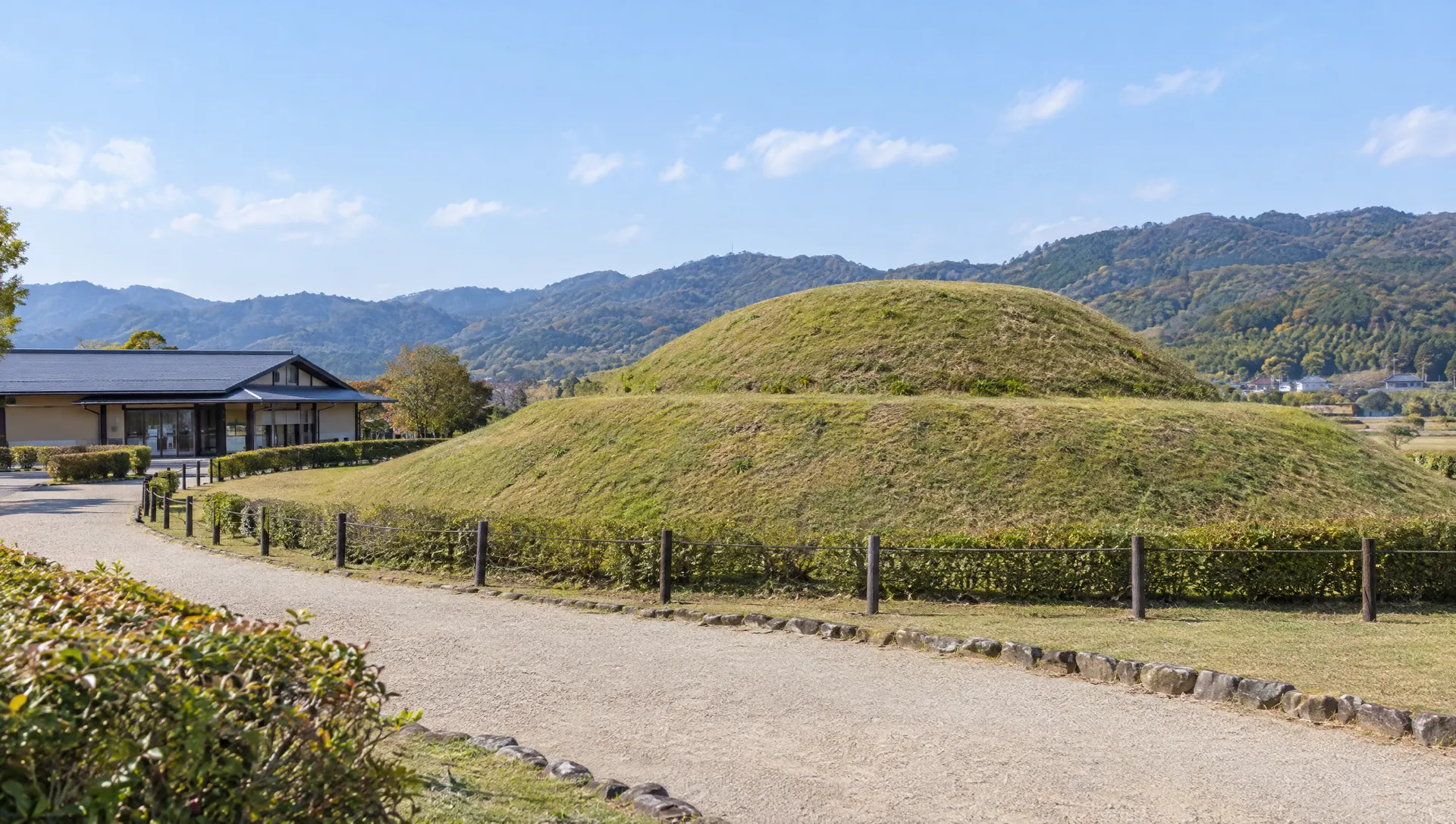
The mound is about a minute's walk from the museum. The operator explains that the original murals were removed for conservation and are not on permanent display here. Seeing the restored mound after the gallery helps separate the place of burial, the conserved originals and the museum's copies.
Plan the short route from Asuka Station
The operator estimates about twenty minutes for an unhurried indoor visit; the mound is about one minute away and Nakaoyama Kofun about ten. The park gives roughly twelve minutes on foot from Kintetsu Asuka Station, with the Takamatsuzuka bus stop as another approach. The adjacent government park hall is closed for renovation, and its car park has been suspended since 1 September 2026. From 30 November 2026, the park says the hall's surrounding area will also close, preventing through-passage; a nearby underpass is expected to remain open until around March 2027. That notice does not say the Mural Museum itself will close, so check the museum's current access and the park's posted detour before travelling.
What to look for
Discovery-state, partly restored and plaster reconstructions
Full burial-chamber model and replica burial objects
Takamatsuzuka mound one minute away
Photo notes
The operator's 16 April 2022 notice permits still photography inside the museum, subject to no flash, tripods, selfie sticks or video, and some areas remain no-photography zones. The notice discourages commercial use. Follow current signs and staff directions; permission to take a personal still does not grant MyNara publication or commercial reuse rights.
Make a day of it
Explore guides close to this map point, then check the actual route before travelling. Distances below are straight lines, not walking distances or travel times; map points may not be entrances.

Sources & editorial status
Original MyNara draft based on the linked sources. Sources reviewed 24 October 2026. Opening arrangements, prices and offers may change; use the operator's current information before travelling.
- Museum operator — exhibit interpretations, opening history, current individual/group fees, disability discount, duration, enquiry phone and group booking (checked 2026-10-24)
- Agency for Cultural Affairs — excavation history, mound form and late-seventh/early-eighth-century dating (checked 2026-10-24)
- Nara Prefecture — Takamatsuzuka Kofun, burial context and special-historic-site status (checked 2026-10-24)
- The Kansai Guide / Kansai Tourism Board — 2026 Kansai Culture Day facility listing, museum free-admission date 13 November (checked 2026-10-24)
- Government park — Takamatsuzuka-area visitor details (checked 2026-10-24)
- Government park — Takamatsuzuka-area car-park suspension from 2026-09-01 (checked 2026-10-24)
- Museum operator — indoor still-photography rules (notice dated 2022-04-16; checked 2026-10-24)
- Government park — park hall surroundings close from 2026-11-30; through-passage stops and underpass expected to remain open until around 2027-03 (notice dated 2026-10-18; checked 2026-10-24)
- OpenStreetMap museum node for approximate map pin