
Soni Highland
Walk a managed pampas-grass landscape, then plan food and a hot spring around the last bus.
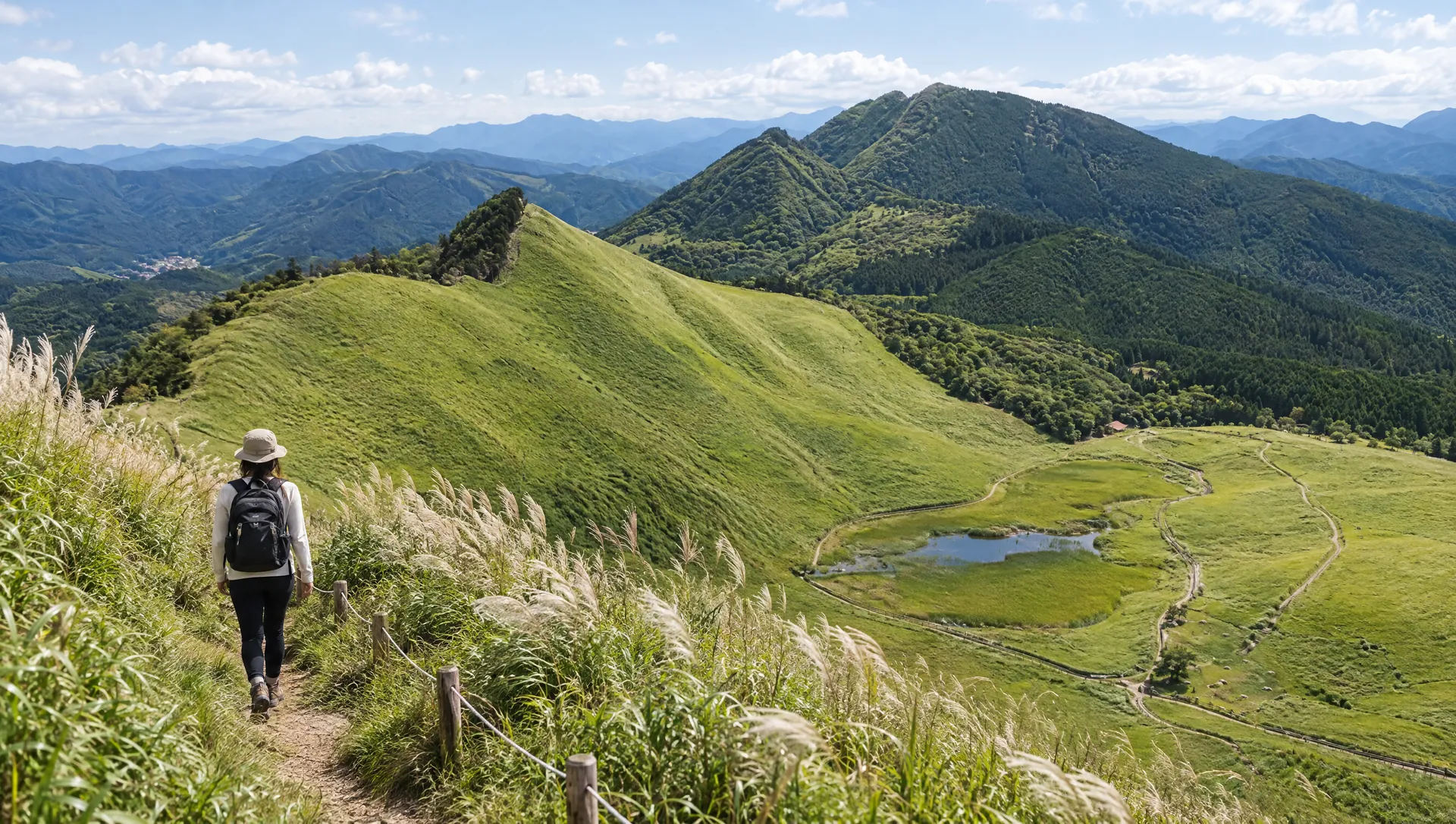 AI-generated visual study · not a documentary photograph
Discover Soni Highland
Soni Highland is an open grassland on the western side of Mt. Kuroso and Mt. Kame, with Okame Pond below the rising paths. Its familiar autumn colour is not simply untouched wilderness: villagers once used the grass for thatched roofs, and the landscape has been maintained through grassland protection and controlled burning. Come for the view, but leave time to understand the pond, the ridge, the village's stewardship and the practical journey back.
Why the grassland looks this way
The local operator explains that susuki once supplied roofing material. When demand declined, the grassland needed active protection; the area is now managed with annual burning, normally in March. The first green growth and the silver-to-gold heads of autumn are two stages of that same cycle, not separate attractions.
Choose a walk that fits your transport
For a shorter visit, start near the highland parking area, follow the signed path around Okame Pond and climb only as far as conditions and time allow toward Kameyama Pass. The local tourism corporation also publishes an approximately 2-hour-35-minute beginner route from Kazura bus stop through the highland, pass, pond, Farm Garden and Taroji stop. That is a full walking route, not a 2-hour visit including transport, lunch or bath time; check its map and current path notices before using it.
A pond, a ridge and changing light
Okame Pond sits below the slope, so the path toward the pass reveals its shape against the grassland. On a clear day the low-angle light gives the susuki a different appearance from the green summer plateau. The ridge is exposed to weather; keep to marked paths and do not enter the wetland for a photograph.
The return bus is the real deadline
For the published 2026 autumn season, the direct bus from Nabari Station reaches Soni Highland at 10:22 on weekdays, with an additional 11:22 arrival on weekends and holidays. The highland return leaves at 15:27 on weekdays and at 14:27 or 15:27 on weekends and holidays. These are seasonal schedules, not a promise of year-round service. The Farm Garden and Taroji stops have different timetables and require about 30 minutes and an hour of walking respectively from the highland, according to the bus operator. Verify the service for your exact date before setting out.
Food and a bath need their own time
Soni Kogen Farm Garden is a separate stop with a vegetable-focused restaurant, produce shop and brewery; Okame-no-yu bathhouse stands beside it. The rice-bread hall also advertises a pre-booked group baking experience, but excludes the autumn September–November period. These facilities are near the route rather than at the plateau itself, so do not count on a meal or bath without checking opening and the return connection.
Autumn access and group buses
The prefectural visitor guide lists paid parking near the highland. Soni Village reports that autumn weekends and holidays have produced waits of three hours or more for parking and asks visitors to consider weekdays. The village also says large and medium buses must reserve parking at least two weeks ahead; on October and November weekends and holidays, bus parking is unavailable because of congestion. Microbuses must use designated private lots and cannot reserve. Check with the village or its named tourism operator before arranging group transport; a navigation app alone cannot tell you how long the car parking queue will be.
What to look for
Okame Pond beneath the rising grassland
Kameyama Pass and the wider ridge
Green spring–summer growth and autumn susuki
Farm Garden and Okame-no-yu below the plateau
Photo notes
The pond-and-ridge view changes strongly with the light. Use signed paths and keep out of the wetland and managed grass. This page does not establish permission for drones or commercial photography; seek the managing body's current rules before either.
Make a day of it
Explore guides close to this map point, then check the actual route before travelling. Distances below are straight lines, not walking distances or travel times; map points may not be entrances.


Sources & editorial status
Original MyNara draft based on the linked sources. Sources reviewed 19 October 2026. Opening arrangements, prices and offers may change; use the operator's current information before travelling.