Araike Garden: A Pondside Pause in Nara Park
Walk the edge of a Meiji-era pond, sit beside its lawn and willows, and look across the water toward Nara’s temple-and-hill landscape.
 Verified site photographs are being prepared.
Discover Araike Garden: A Pondside Pause in Nara Park
Araike is one of Nara Park’s quieter water landscapes, just south of the better-known central temple route. Nara Prefecture’s park-history record dates the pond to 1888, when three nearby towns built it for irrigation. Nara City added a central embankment in 1907, dividing the water into upper and lower ponds; the prefectural timeline dates the present Araike Garden’s park development to 1967. The lawn and paths visitors encounter therefore belong to a later public-park setting than the pond itself. The water edge, benches, grass and willows make the place useful as a pause between Naramachi, the park and the Takabatake side of town. It is an open landscape rather than a staffed attraction: there is no single ticket or indoor exhibit, and a short stop is more rewarding when you notice how water, temple roofs and the surrounding wooded slopes sit together.
Read a practical water landscape
Nara Prefecture describes Araike as a pond built during the Meiji period in a park where water was scarce. The prefectural park-history material records a central embankment built in 1907 that divided the pond. The water is therefore part of modern park infrastructure as well as scenery; it should not be mistaken for an ancient temple pond simply because old religious precincts surround it.
Separate the pond’s history from the garden
The prefectural chronology gives a more precise sequence: nearby towns built Araike in 1888 as an irrigation pond, Nara City built the dividing embankment in 1907, and Araike Garden was developed as a park in 1967. This distinction helps read the place accurately: the water feature predates the lawn-and-path garden visitors use today, and the nearby historic temples do not make the pond itself an ancient temple feature.
Pause on the lawn and follow the east-side stream
The official park guide highlights the green lawn, benches along the pond edge and willows. It also points out a small stream on the garden’s eastern side. These features make a simple rest stop or picnic break, but they are not a managed picnic reservation or a guarantee of empty benches. Keep food and rubbish secure around wild deer, do not feed them human food, and leave planted areas and water edges undisturbed.
Use the view to connect neighbouring Nara
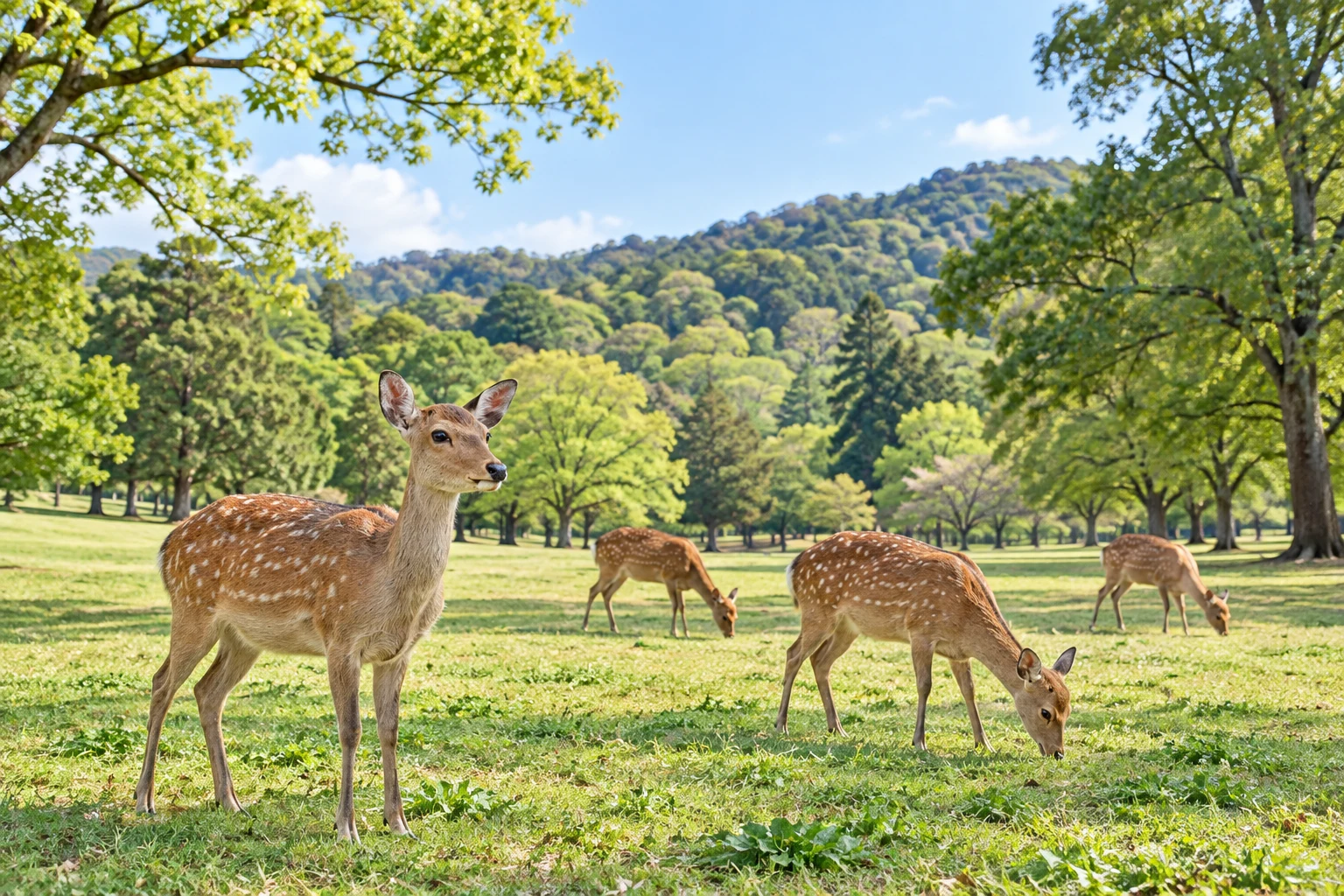
The pond sits within the broad Nara Park setting, with temple roofs and wooded slopes appearing across the water in some directions. The official park guide describes the pond, its lawn, benches, willows and adjoining stream as part of this landscape. Check the current state of nearby attractions and access separately, since conservation work can change views and visitor routes.
Plan the approach as a walk, not a station-side stop
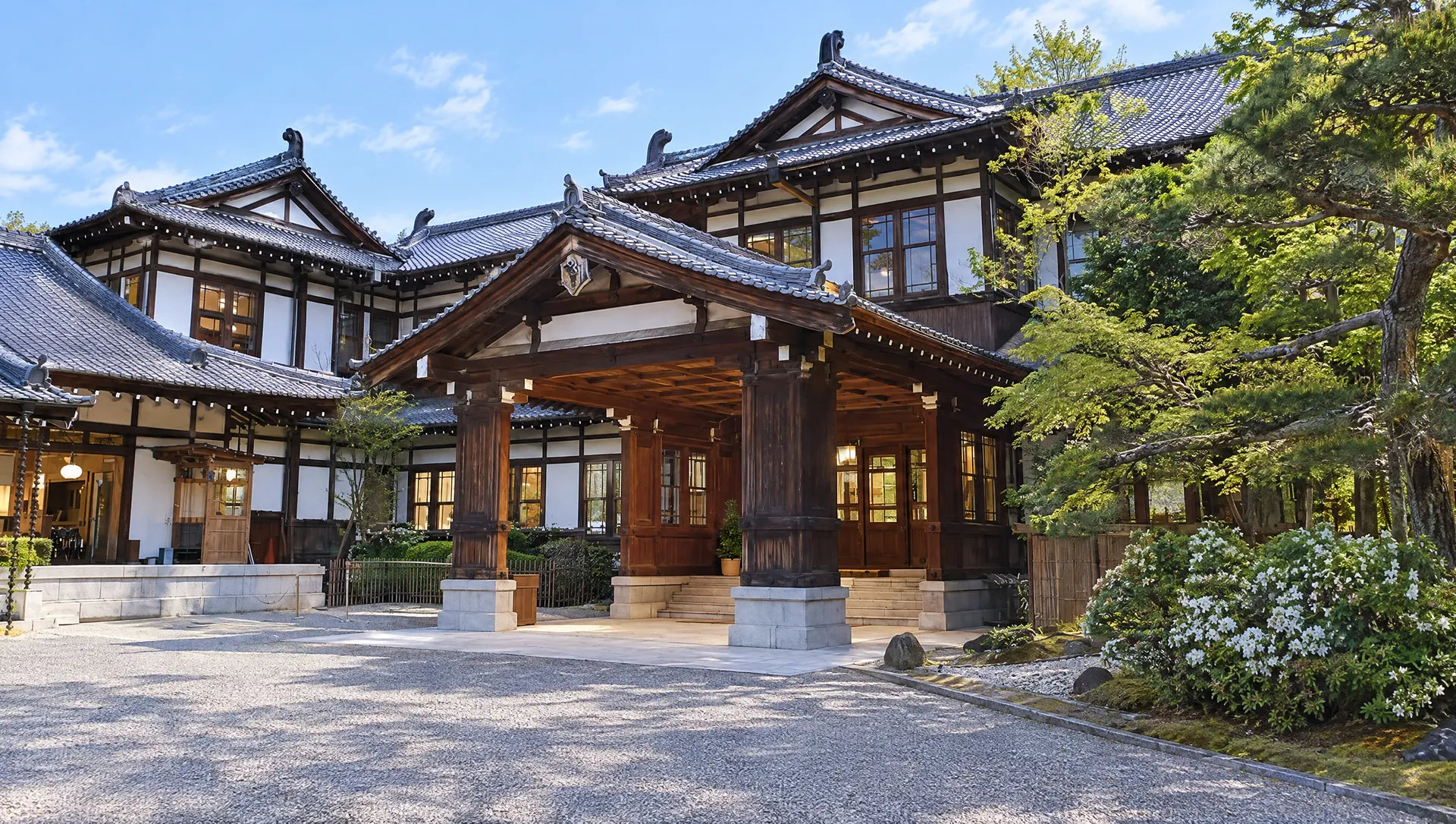
Nara Prefecture estimates about fifteen minutes on foot from Kintetsu Nara Station. From JR Nara Station, take the Nara Kotsu outer-loop bus to Kencho-mae and continue on foot for about ten minutes. These are guide estimates rather than live travel times; consult current bus information, weather and the path you intend to use. The garden lies south of the central park route and can be combined with Nara Hotel, Sarusawa Pond or the Takabatake neighbourhood, but check distances and slopes before promising an easy connection.
Check facilities and access needs
The prefecture lists free admission and an Araike Garden toilet. Its facility record, updated 27 February 2026, describes the toilet as accessible and lists separate multipurpose toilets and parent-and-child toilets; the park-wide rest-area guide also lists Western-style seats, a child chair and a diaper-changing table. The sources do not publish toilet opening hours or confirm that every path to the building is step-free. Check the location on the prefectural park map, and contact Nara Park Office at 0742-22-0375 if these facilities are essential to your visit.
What to look for
Meiji-era pond built to address water scarcity in Nara Park
Open lawn, pondside benches, willows and an eastern stream
A calmer pause south of Nara’s busiest temple-and-deer route
Photo notes
No third-party image is licensed for this guide. The prefecture's park photography guidance should be checked before organised or commercial filming. Avoid blocking the public path, disturbing deer or entering planted areas.
Make a day of it
Explore guides close to this map point, then check the actual route before travelling. Distances below are straight lines, not walking distances or travel times; map points may not be entrances.
Sources & editorial status
Original MyNara draft based on the linked sources. Sources reviewed 24 October 2026. Opening arrangements, prices and offers may change; use the operator's current information before travelling.
- Nara Prefecture Park Quick Guide — pond history, lawn, benches, stream, access, free entry and toilet listing
- Nara Prefecture — Nara Park history and planning records; 1907 central embankment
- Nara Prefecture Library and Information Center — historical overview of Nara Park; 1888 irrigation pond context
- Nara Prefecture — Nara Park area and facilities
- Nara Prefecture — Nara Park rest areas and toilets; western-style seats, child chair and diaper-changing table (updated 27 February 2026)
- Nara Prefecture — Araike Garden toilet equipment and accessibility (updated 27 February 2026)