
Inabuchi Terraced Rice Fields: A Working Landscape
Walk the public lanes of Oku-Asuka to see rice terraces, irrigation and village life that remain in use.
 AI-generated visual study · not a documentary photograph
Discover Inabuchi Terraced Rice Fields: A Working Landscape
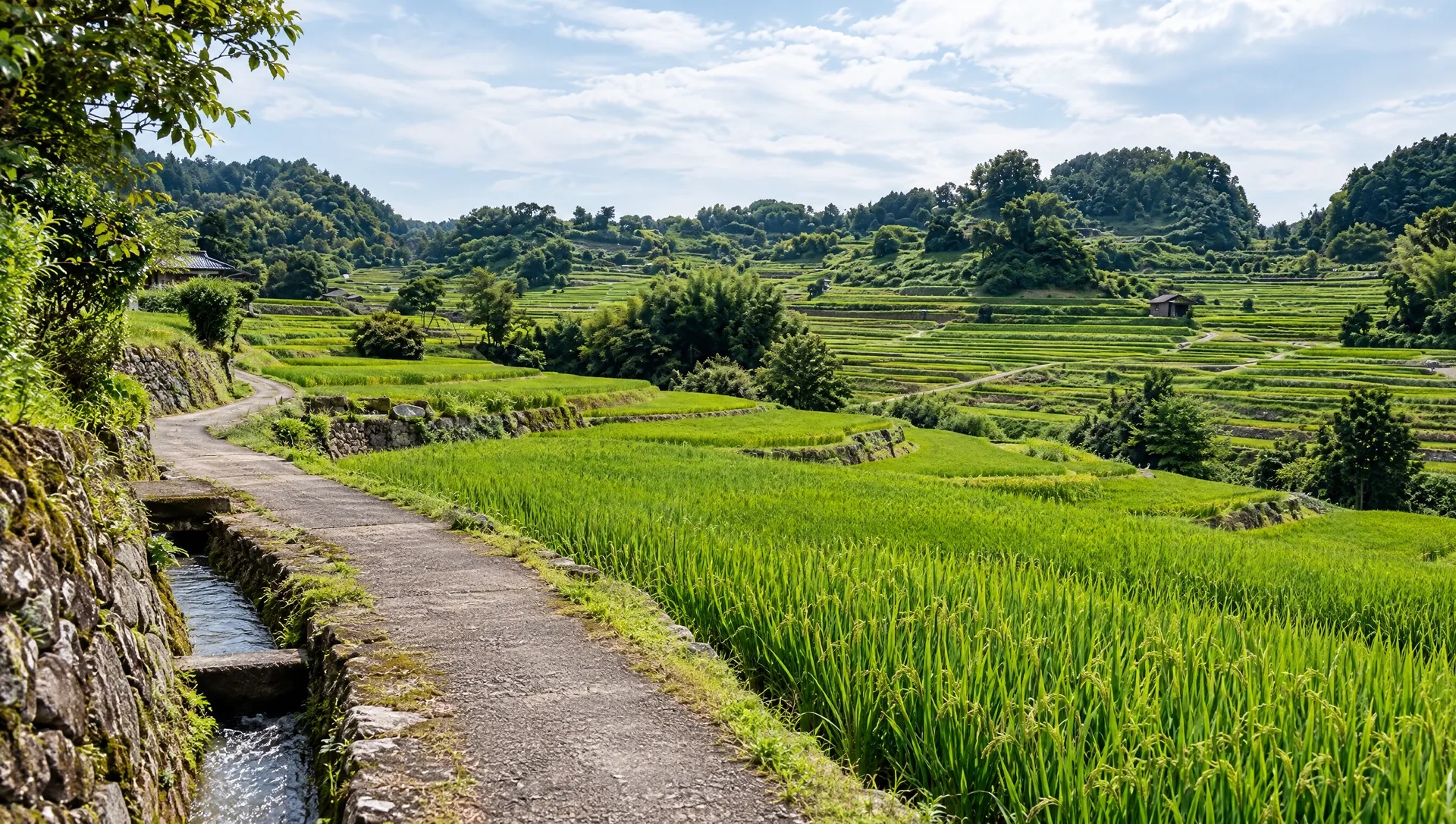
Inabuchi's terraces are cultivated fields in a village, not an admission-based attraction. The slopes, stone walls and irrigation channels belong to the wider Oku-Asuka cultural landscape selected by the national cultural agency. Their value lies in continuing work as much as in a seasonal photograph: farmers and residents maintain a landscape shaped by centuries of water management. Visitors can appreciate it from lawful public paths, but must not enter paddies or turn narrow lanes into an improvised car park.
Look at the structure of a living landscape
The Agency for Cultural Affairs describes stone retaining walls, small settlements and cultivated slopes along the upper Asuka River. The designation record describes the main Oi-de irrigation channel as about 3.8 km long and notes dozens of channels maintained by cultivators; it says parts of the system are believed to date from the fifteenth century. Notice how the fields occupy small level plots cut into steep ground; the channels and walls are working infrastructure, not abandoned archaeological scenery. The national designation covers a wider Oku-Asuka area, so one photo point does not represent its full extent.
Choose the season without promising a fixed scene
The prefectural guide describes water-filled paddies reflecting light in late spring and red spider lilies around late September. Planting, harvest, flower timing and weather vary by year. The village describes distinct changes across all seasons, but a visitor should not expect a guaranteed bloom, a flooded field or a specific sunset view. The strongest experience may be understanding the layers of farm work rather than chasing one image.
Reach the fields on foot or by bicycle
Visit Nara estimates about twenty minutes on foot from Ishibutai Kofun to the Inabuchi area and suggests a bicycle or taxi from Kintetsu Asuka Station. That is a general-area estimate, not a promise for a particular viewpoint or a return journey. Paths climb and may be narrow; check the route, weather and last bus before leaving central Asuka. The map marker represents a broad landscape area rather than a gate.
Respect the farmers who keep it visible
The village tourism office states there is no parking near the terraces and asks visitors not to park on the road. Stay on public paths, leave farm entrances and equipment clear, and do not walk onto bunds or into planted plots for a photograph. The fields are free to view from public space; a guided visit or farm experience is a separate arrangement and should not be assumed available here.
What to look for
Working terraces and stone-wall pattern
Oku-Asuka's nationally recognised cultural landscape
Seasonal scenery with clear farm-access etiquette
Photo notes
No field image is licensed for MyNara. Shoot from public paths without stepping into planted land or photographing residents' homes and work at close range without consent. Drone/commercial filming requires the relevant landowner and local permissions.
SEASONAL CALENDAR
Events connected with Inabuchi Terraced Rice Fields: A Working Landscape
These records are shared with MyNara’s event calendar, so dates and notices have one source. Recurring patterns are not confirmed dated editions; check the organizer’s latest guidance.
Asuka Half Marathon 2027
The organizer confirms a 21.0975 km half marathon from 09:00 to 12:30 on March 14, 2027, with a first-come capacity of 3,000 runners. The general entry filled on October 9, 2026, well before its original December deadline; the organizer's notice thanks applicants but does not publish the final number of accepted runners. The course starts and finishes at Kitora Tumulus Shijin-no-Yakata and passes the Tenmu and Jitō tombs, Kawaradera, Tachibanadera, Ishibutai, the Inabuchi terraces and Takamatsuzuka-area roads. This is useful to spectators and anyone planning to visit these sites that day, not an invitation to enter. The start/finish is a 20-minute walk from Kintetsu Asuka Station; there is no participant parking, road restrictions begin near the venue at 08:00, and station-area congestion is expected. A free general-visitor shuttle runs from the venue back to Asuka Station from 10:00 to 14:00, but not before the race. Check the organizer's latest access and course notices before travelling.
- Time
- Race: 09:00–12:30; roads near the main venue restricted from 08:00
- Admission
- Runner entry was ¥6,000; the general entry reached its 3,000-person cap and closed October 9, 2026. No spectator admission fee is stated.
- Booking
- General runner entry is closed after reaching capacity. The organizer does not publish a spectator registration process; follow its visitor-access guidance and do not enter the course.
Make a day of it
Explore guides close to this map point, then check the actual route before travelling. Distances below are straight lines, not walking distances or travel times; map points may not be entrances.
Sources & editorial status
Original MyNara draft based on the linked sources. Sources reviewed 20 October 2026. Opening arrangements, prices and offers may change; use the operator's current information before travelling.