Daian-ji: Sculptures from Nara's Lost Great Temple
Look beyond the surviving precinct to nine Nara-period Buddhist sculptures, and check the dates for two rarely shown Kannon images.
 Verified site photographs are being prepared.
Discover Daian-ji: Sculptures from Nara's Lost Great Temple
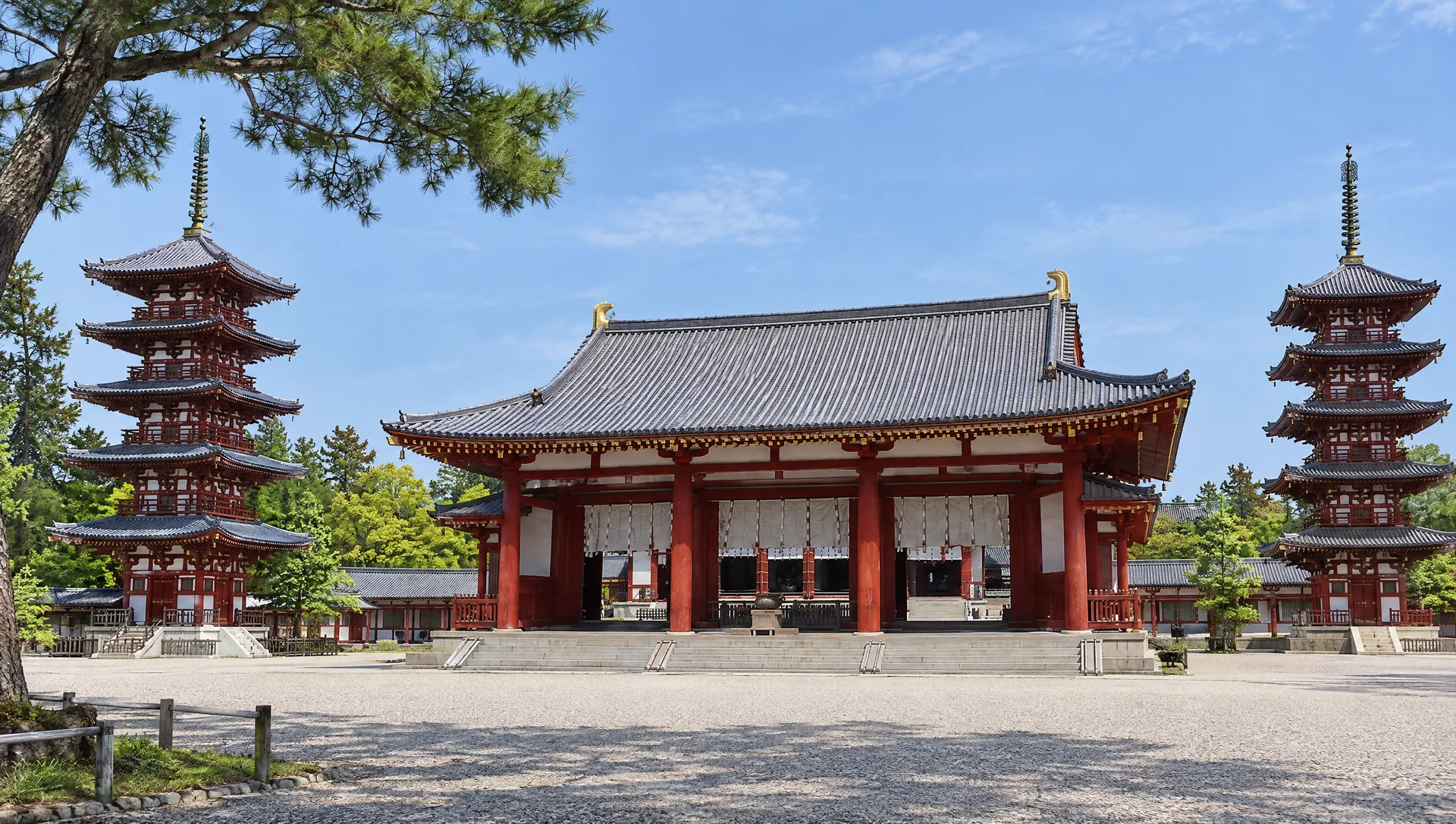
Daian-ji rewards a visitor who wants to understand what was lost as well as what survives. In the Nara period it was a vast state temple; today's quieter precinct is only a small part of that footprint. The treasure hall preserves sculptures from the ancient community, while the temple's reconstruction display helps make sense of buildings that can no longer be walked through. Its lineage is traditionally traced to Prince Shōtoku's Kumagori Shōja, but that founding account should be read as temple tradition rather than a surviving seventh-century building at the present address.
Read a chain of temple sites, not a single original building
The temple traces a route through Kumagori Shōja, Kudara Ōdera, Takaichi Ōdera and Daikan Daiji before the institution was established at Heijō-kyō as Daian-ji. Its own history identifies the excavated Kibiike site in Sakurai as a strong candidate for Kudara Ōdera. That is a story of institutional succession and archaeological interpretation, not proof that the buildings on today's Daianji street have stood continuously since Prince Shōtoku. The ancient precinct once covered far more ground and the original halls and towers have disappeared. Start with that distinction, then the modest present scale becomes part of the story rather than a disappointment.
Begin with the sculptures you can ordinarily see
The prefectural visitor bureau counts nine surviving Nara-period Buddhist images associated with the temple and says seven can ordinarily be seen in the treasure hall. These are the tangible counterweight to the absent architecture. The Eleven-Faced Kannon in the main hall is usually concealed and has a special opening from October through November; Batō Kannon is associated with a March opening. A visit on an ordinary date is still worthwhile for the treasure hall, but do not promise that either hidden image will be visible without checking the temple's dated notice.
Reconstruct the absent precinct without mistaking a model for ruins
The temple says its treasure hall has a supervised digital reconstruction of the ancient complex, with controller-operated exploration and a VR component introduced in March 2026. It describes twin seven-storey pagodas and many halls in the former grounds; these are reconstructed interpretations informed by excavation, not standing monuments on the current path. Ask the reception desk whether the equipment is operating and how to use it before planning the visit around it. The digital display is part of Daian-ji, not a second attraction or a separate bookable experience.
Notice present-day worship on its own terms
Daian-ji remains an active place of Buddhist worship. The temple describes prayers for recovery from illness and holds the January Sasazake and June bamboo observances; these are religious practices, not medical treatment or a promise of health outcomes. The prefectural bureau also lists second-Sunday sutra copying and related practice, with its own timing and offering. Ask the temple about the next session, participation language, capacity and any additional fee rather than assuming that a normal admission ticket reserves a place.
Plan the paid rooms and the bus approach
The temple posts visiting from 09:00 to 17:00, with reception ending at 16:00, and generally closes only on 31 December. Its ordinary main-hall-and-treasure-hall ticket is ¥600 for adults and university students, ¥300 for high-school students and younger. March, October and November special openings add ¥200; the dated 2026 autumn notice states ¥800 and includes the treasure hall. Buses toward Daianji, Sharp-mae or Shiratsuchō leave both JR and Kintetsu Nara stations; alight at Daianji and allow the temple's estimated ten-minute walk. Confirm the current service and any ceremony-related viewing interruption before you travel.
What to look for
Seven Nara-period images ordinarily shown in the treasure hall
Special opening of the Eleven-Faced Kannon in October–November and Batō Kannon in March
Digital reconstruction of the much larger vanished temple precinct
Photo notes
No temple sculpture, worship, hall or VR image is licensed to MyNara. Do not reuse operator or tourism photos, and ask temple staff about photography inside the main and treasure halls. Obtain written permission for commercial-site images.
Make a day of it
Explore guides close to this map point, then check the actual route before travelling. Distances below are straight lines, not walking distances or travel times; map points may not be entrances.
Sources & editorial status
Original MyNara draft based on the linked sources. Sources reviewed 19 October 2026. Opening arrangements, prices and offers may change; use the operator's current information before travelling.
- Daian-ji operator — history and successor sites
- Daian-ji operator — Eleven-Faced Kannon and special opening
- Daian-ji operator — ordinary hours and admission
- Daian-ji operator — bus route and coach approach
- Daian-ji dated notice — 2026 autumn opening and digital reconstruction
- Nara Visitors Bureau — surviving sculptures and accessibility
- Nara Visitors Bureau — second-Sunday sutra copying