Meoto Daikokusha: A Paired-Deity Shrine in Kasuga's Southern Precinct
See Kasuga Taisha's paired-deity shrine, its traditional ladle offerings and the starting and finishing point of the Wakamiya Fifteen Shrine Pilgrimage.
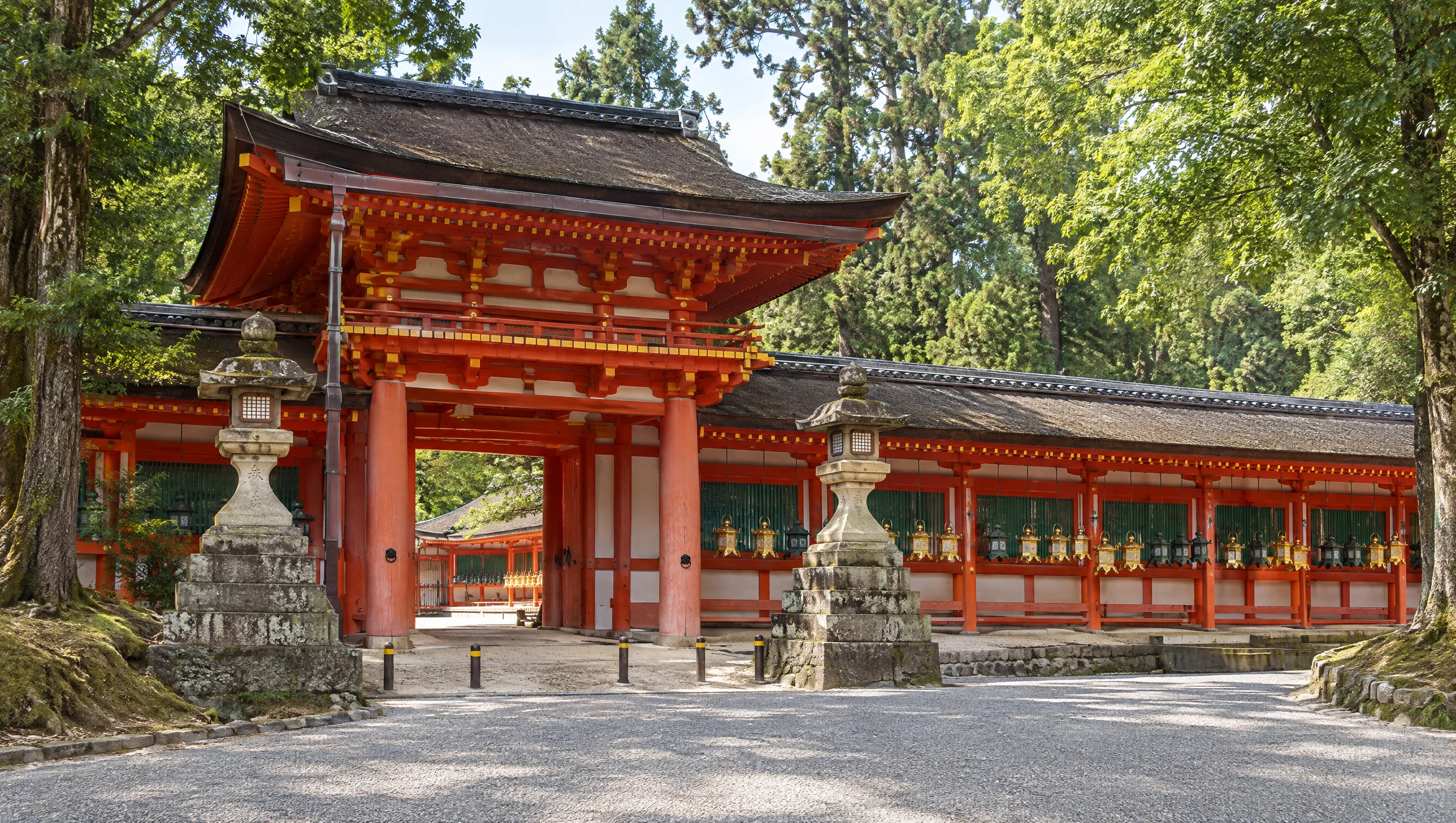
 Verified site photographs are being prepared.
Discover Meoto Daikokusha: A Paired-Deity Shrine in Kasuga's Southern Precinct
Meoto Daikokusha is a small shrine in Kasuga Taisha's southern precinct, dedicated to Ōkuninushi and Suseri-hime as a divine couple. Kasuga Taisha's own history places the shrine's origin in the Heian period, when sacred images associated with Izumo were brought here; treat this as the shrine's transmitted religious account. The operator's visitor page labels the shrine a nationally Important Cultural Property. Today it serves both as a place of worship and as the registration and final offering point for the Wakamiya Fifteen Shrine Pilgrimage, a devotional walk among fifteen shrines and worship points associated with the stages of life. It is a distinct stop within Kasuga's broader sacred precinct, not a separate ticket gate for the main sanctuary.
Look for the shrine's distinctive offerings
The operator says Suseri-hime is represented holding a wooden ladle, which is why worshippers have traditionally dedicated ladles in place of votive plaques. Donated ladles can be seen at the shrine. The operator also notes the more recent popularity of heart-shaped ema and identifies the old Fukuno-tane charm as a good-fortune and prosperity amulet. These are devotional customs and current shrine offerings, not guaranteed souvenirs; ask the staff what is available on the day.
Begin and finish the Wakamiya Fifteen Shrine Pilgrimage
Registration takes place at Meoto Daikokusha, where visitors receive fifteen offering slips. The shrine currently lists reception from 9:00 to 15:00 and an offering of ¥1,500. Follow its numbered map, place a slip at each shrine or worship point, and return here to report completion and receive the mark and token. The fifteen stops include small shrines and remote worship points; this is a devotional route, not a promise that every structure is staffed or open for entry. Check the operator's current map and instructions before setting out.
Try the water-revealed fortune slip if it is offered
A Japan Tourism Agency English-language interpretation describes a paper fortune that reveals its writing when immersed in water near the shrine. This is a visitor activity reported in that 2018 interpretation, while Kasuga Taisha's current main shrine pages do not list its present-day availability or price. Ask at the shrine before counting on it, and follow staff guidance around the water basin. Treat the result as a devotional custom, not a prediction or guarantee.
Plan around the shrine's two published time ranges
Kasuga Taisha's current basic-information page lists Meoto Daikokusha from 9:00 to 16:30, while the individual precinct page shows gate hours of 6:30 to 17:30. The pages do not explain whether these refer to different kinds of access. For a visit that includes the shrine office or the Fifteen Shrine Pilgrimage, plan within the shorter 9:00–16:30 window; ask the shrine directly if you need early or late access. Festival arrangements can also change the schedule.
Read the fifteen stops as a sacred landscape
Kasuga Taisha says the precinct contains 62 subsidiary shrines and that the southern area around Wakamiya was historically visited by worshippers who prayed through the deities over the course of a life. The pilgrimage links these worship points with different concerns such as learning, family, health and livelihood. Some are small outdoor shrines; others are places for worship from a designated point. Follow the numbered map and do not enter a structure or restricted path unless the shrine explicitly permits it.
Keep this stop distinct from Kasuga Taisha's main sanctuary
Meoto Daikokusha sits in the southern precinct, beyond the main sanctuary approach. The broader Kasuga Taisha grounds and the inner-cloister visit have separate hours and access rules. A visit to this shrine does not include entry behind the main sanctuary cloister, the museum, or the botanical garden; each is a separate experience.
What to look for
Paired Ōkuninushi and Suseri-hime worship
Traditional ladle offerings and heart-shaped ema
Registration point for the Wakamiya Fifteen Shrine Pilgrimage
Photo notes
Kasuga Taisha allows personal photography only when it does not interfere with rites or disturb other visitors. Its grounds-wide policy restricts tripods, monopods, selfie sticks, lighting, drones, interviews and commercial filming; obtain the shrine's permission for publication or promotional use. No third-party image is licensed for this guide.
Make a day of it
Explore guides close to this map point, then check the actual route before travelling. Distances below are straight lines, not walking distances or travel times; map points may not be entrances.
Sources & editorial status
Original MyNara draft based on the linked sources. Sources reviewed 24 October 2026. Opening arrangements, prices and offers may change; use the operator's current information before travelling.
- Kasuga Taisha — Meoto Daikokusha, sacred images, ladles and heart ema
- Kasuga Taisha — Wakamiya Fifteen Shrine Pilgrimage route, life-stage context and offering (checked 2026-10-23)
- Kasuga Taisha — basic visitor information: Meoto Daikokusha 9:00–16:30, pilgrimage reception through 15:00, and access (checked 2026-10-24)
- Kasuga Taisha — Meoto Daikokusha's individual precinct page: 6:30–17:30 gate hours and shrine background (checked 2026-10-24; the difference from basic visitor information is unexplained)
- Japan Tourism Agency — multilingual interpretation of Meoto Daikokusha, including water fortune-telling (prepared 2018; current availability and price not confirmed)
- Kasuga Taisha — Meoto Daikokusha returned after repair
- Kasuga Taisha — precinct map
- Kasuga Taisha — current grounds photography rules