
Kinpusen-ji Temple
Enter Yoshino's great Shugendo hall, with a clear distinction between ordinary worship and hidden-image openings.
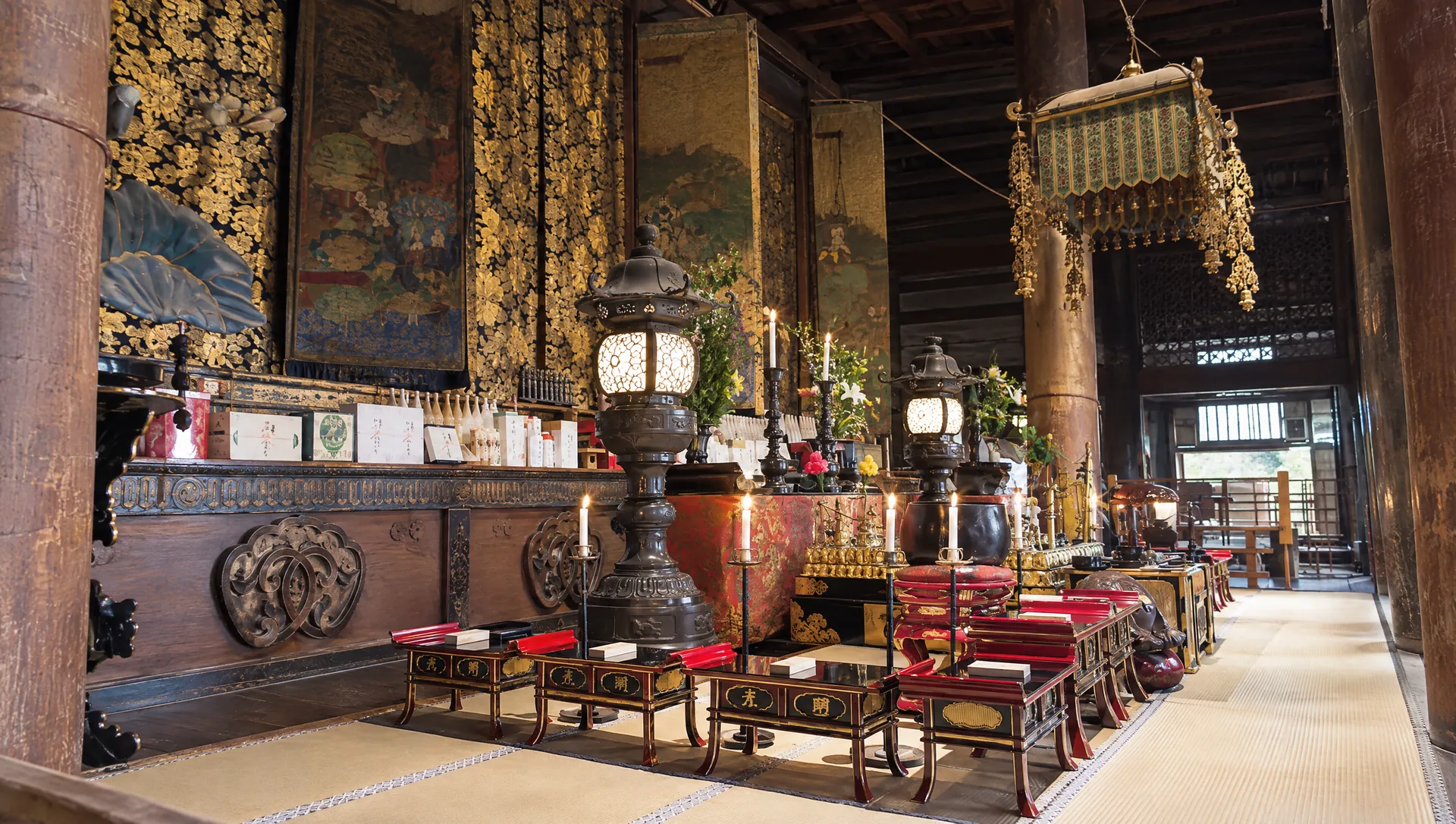 AI-generated visual study · not a documentary photograph
Discover Kinpusen-ji Temple
Kinpusen-ji is the central temple of the Yoshino–Omine Shugendo landscape. Its Zao-do hall, completed around 1592 after repeated losses, remains the visible heart of the mountain town and a working place of worship. The three large Kongo Zao Gongen images are hidden on ordinary days; the temple announces specific special openings. An autumn 2026 opening runs from 24 October to 30 November, with its own price and possible pauses for services. That difference matters more to a traveller than a generic promise to 'see the statues'.
Understand Zao-do as a living hall
The temple describes the present National Treasure hall as about 34 metres high, rebuilt around 1592. It holds several devotional images within a working ritual space; enter with the pace of a worshipper, not only a sightseer. The founder En no Gyoja's vision of Zao Gongen is temple tradition, while the date of the standing building belongs to a much later rebuilding.
The principal images are normally concealed
Three Kongo Zao Gongen figures are kept behind the hall's great shrine doors. The operator says they are not visible during ordinary admission. Its 2026 autumn special opening is 24 October–30 November, 8:30–16:00, with adult admission ¥1,600. Worship services can interrupt entry. On other dates the ordinary hall charge applies and visitors should not expect the hidden images to be revealed.
Notice the gate under conservation
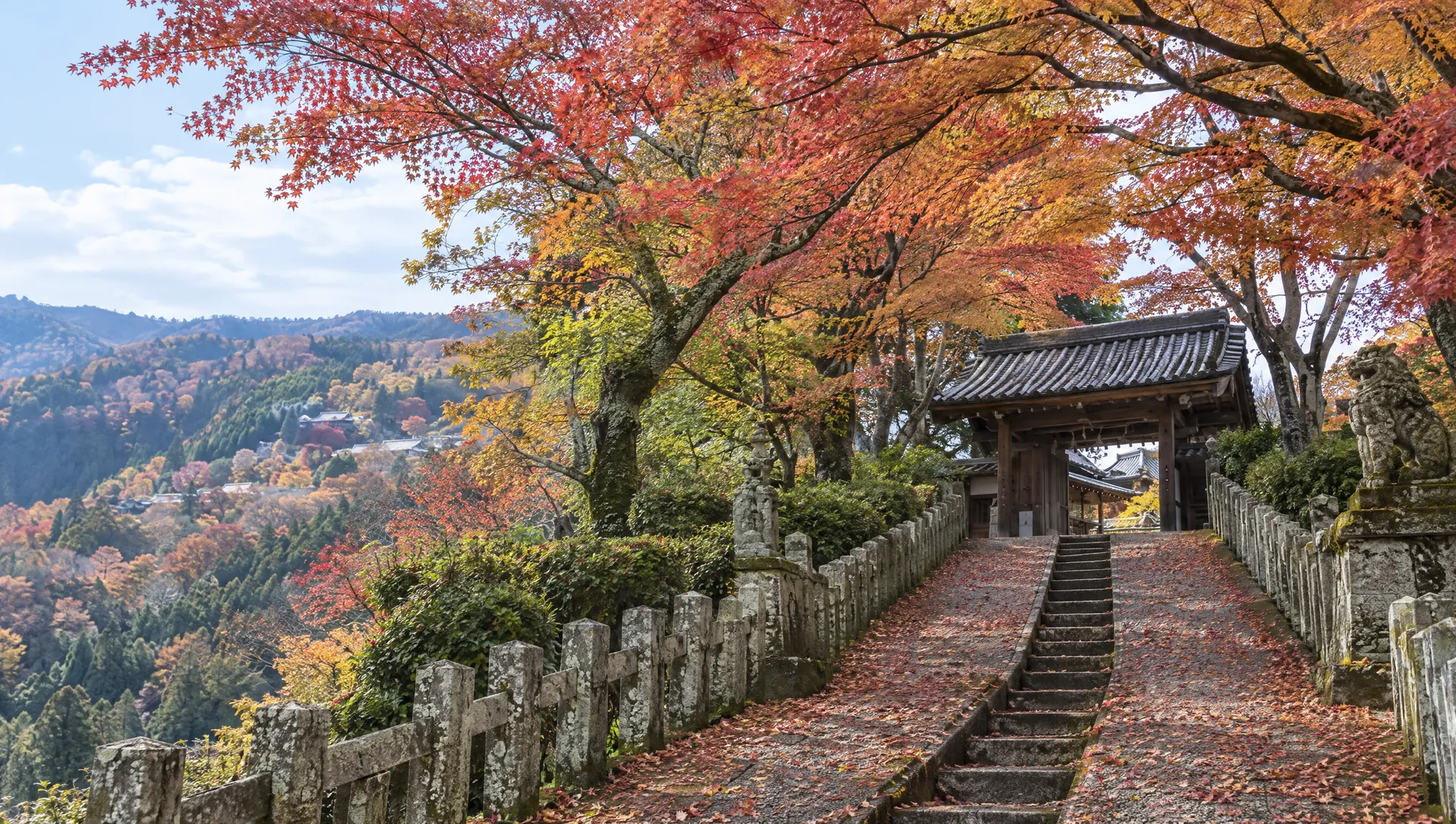
The north-facing Nio Gate is another National Treasure: the temple gives its ridge height as 20.3 metres and explains that it faced pilgrims arriving from the north, while Zao-do faces south. The two guardian statues are about five metres tall; the operator dates them to 1339 and 1340. Major repair work began in 2018. Confirm the current worksite and route before expecting an unobstructed gate view or passage through it.
Read the wider Yoshino mountain
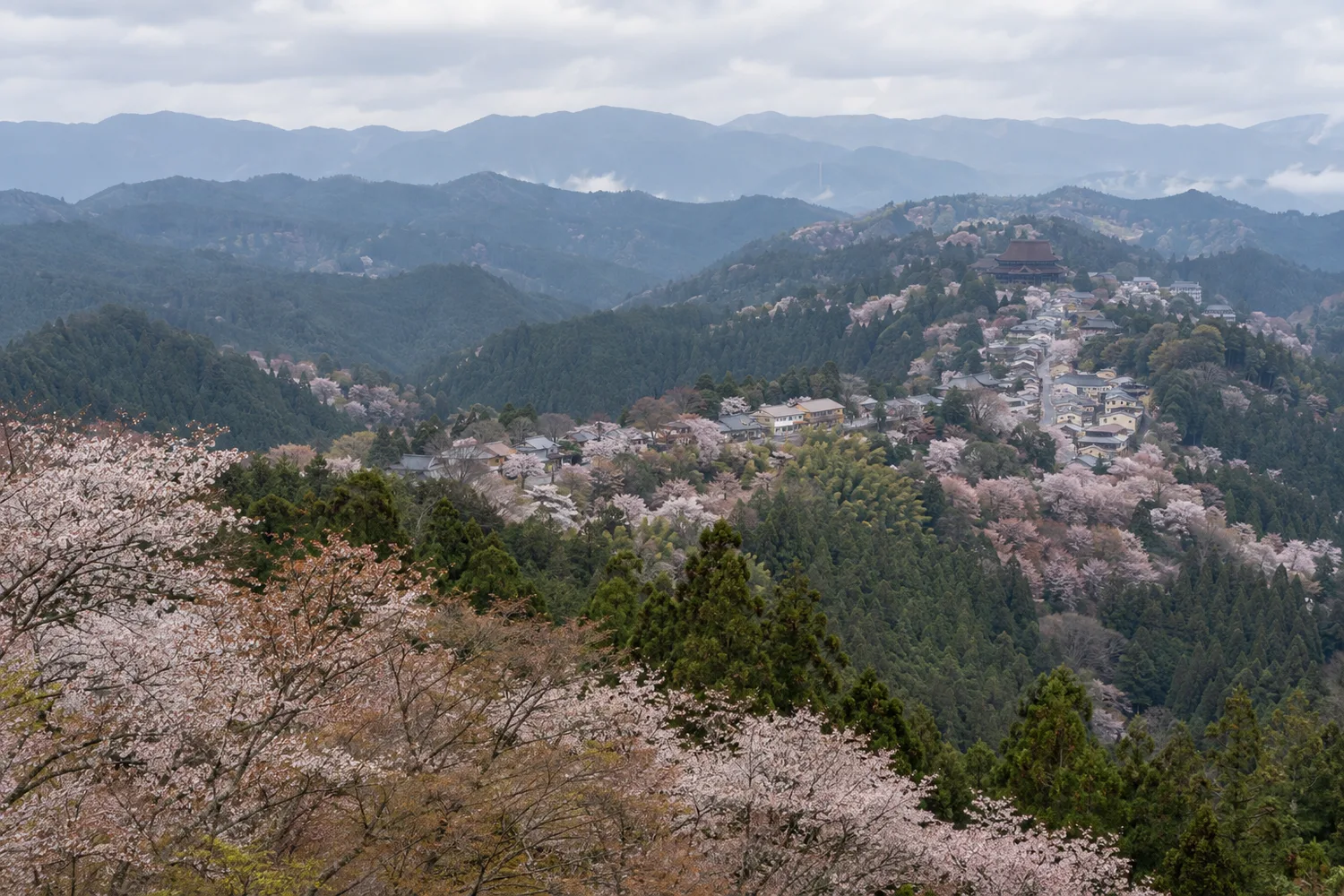
The temple's precinct connects Zao-do to smaller halls and the surrounding pilgrimage town. From here, Yoshimizu Shrine and other Yoshino stops continue along sloping streets. The mountain's sacred identity and seasonal cherry landscape are broader than one courtyard, but the walk is steeper and more crowded than a flat-town map suggests.
Choose transport and time together
The operator gives its address as 2498 Yoshinoyama. Rail takes visitors to Kintetsu Yoshino Station, after which ropeway or seasonal road transport and an uphill walk depend on current service. The prefecture itinerary estimates roughly ten minutes from Yoshinoyama ropeway station to the hall. Check ropeway operation, road controls and the final return connection before committing to a late-afternoon visit.
What to look for
1592 National Treasure Zao-do hall
Three normally concealed Kongo Zao Gongen
Shugendo precinct and Nio Gate conservation
Photo notes
Neither ordinary admission nor the special opening establishes permission to photograph the hidden images or reproduce temple photographs. Observe in-hall notices and worshippers' privacy, and seek explicit permission before any commercial photography or image publication.
SEASONAL CALENDAR
Events connected with Kinpusen-ji Temple
These records are shared with MyNara’s event calendar, so dates and notices have one source. Recurring patterns are not confirmed dated editions; check the organizer’s latest guidance.
Kizō-in Shinpen Daibosatsu Memorial Goma Rite 2026
Kizō-in identifies the Shinpen Daibosatsu Memorial Great Goma as its largest annual observance. Its October 2026 notice invites many worshippers and sets the rite for December 6: reception from 09:00, assembly at Kinpusen-ji's Zaō-dō forecourt at 10:30, procession at 11:00 and goma from 11:30. The notice asks affiliated groups to report attendance by November 27. Kizō-in's 2025 notice explicitly said worship was open to all; the 2026 flyer does not spell out independent visitor positions, the exact goma ground, any fee or transport arrangements. Confirm these details with the temple before a special trip. The Yoshino Mountain Tourism Association lists about 450 yamabushi for this annual observance; that figure describes the ascetic procession, not audience size.
Check organizer informationKinpusen-ji Setsubun-e and Oni Fire Festival
Kinpusen-ji's distinctive Setsubun rite welcomes the demons as well as driving off misfortune, followed by a fire ritual and bean throwing. The temple lists February 3 as the usual date but notes it can vary; check the current schedule, participation rules and crowd guidance.
Check organizer informationKinpusen-ji Hanaku-e (Cherry Blossom Offering Ceremony)
This three-day ceremony reports Yoshino's mountain cherry blossom to the Zaō Gongen. On April 11 and 12, the public procession starts at Chikurin-in at 10:00 and walks to Kinpusen-ji's Zaō-dō; the temple precinct then hosts ritual services and a fire ceremony. Yoshino Town confirms the annual dates and route. Check the current temple notice for viewing access and any changes tied to conditions.
Check organizer informationKinpusen-ji Renge-e and Frog-Hopping Ceremony
A lotus offering rite brings flowers from a pond in Okuda, Yamatotakada, to Zaō Gongen. The Frog-Hopping procession then reaches the temple, where a ritual returns the legendary frog to human form. Kinpusen-ji lists the main service at 16:00; confirm the current procession route and viewing rules.
Check organizer informationMake a day of it
Explore guides close to this map point, then check the actual route before travelling. Distances below are straight lines, not walking distances or travel times; map points may not be entrances.
Sources & editorial status
Original MyNara draft based on the linked sources. Sources reviewed 20 October 2026. Opening arrangements, prices and offers may change; use the operator's current information before travelling.