Akahadayama Motogama: Make Akahada Ware at a Historic Kiln
Try hand-building or decorate a ceramic piece at an Akahada-yaki kiln whose historic display hall and climbing kilns are nationally registered cultural properties.
 Verified site photographs are being prepared.
Discover Akahadayama Motogama: Make Akahada Ware at a Historic Kiln
Akahadayama Motogama is a working kiln in the Gojo-yama hills, where visitors can book a hands-on introduction to Akahada-yaki. The Nara Prefecture guide describes hand-building sessions that take about two hours and painting sessions that take about one hour; the current listed starting prices are ¥4,400 for hand-building, ¥1,430 for a small plate and ¥1,650 for a yunomi tea cup. The kiln's display hall and two climbing kilns are registered tangible cultural properties, so the visit connects making a small object with the industrial history of the craft. This is a reservation-led workshop at a working site, not a walk-in museum or a guaranteed daily demonstration.
Shape clay or add your own design
The prefectural workshop guide lists two kinds of experience: hand-building and painting a pre-made ceramic piece. In the hand-building session, visitors roll clay into a slab and shape its edges into a plate or another simple form; the guide says this takes about two hours and starts at ¥4,400. Painting takes about one hour and starts at ¥1,430 for a small plate or ¥1,650 for a yunomi. Other forms, such as mugs, bowls and flower vessels, may be available at different prices. Ask which blanks are currently offered, how firing is handled, whether shipping is needed and when the finished piece can be collected or delivered.
Learn what makes Akahada-yaki distinctive
Akahada-yaki is a Nara Prefecture-designated traditional craft. The prefecture describes its soft, milky-white glaze and Nara-e imagery as characteristic, while noting that the name's origin has two explanations: the place name and the reddish appearance associated with iron in the clay. The craft has been used for tea utensils, vases and ornaments. A workshop lets visitors handle the material and decorate a piece, but it does not replace a full kiln apprenticeship; ask the potter about the local clay, glaze and firing process as you work.
See the historic kiln buildings as part of a living site
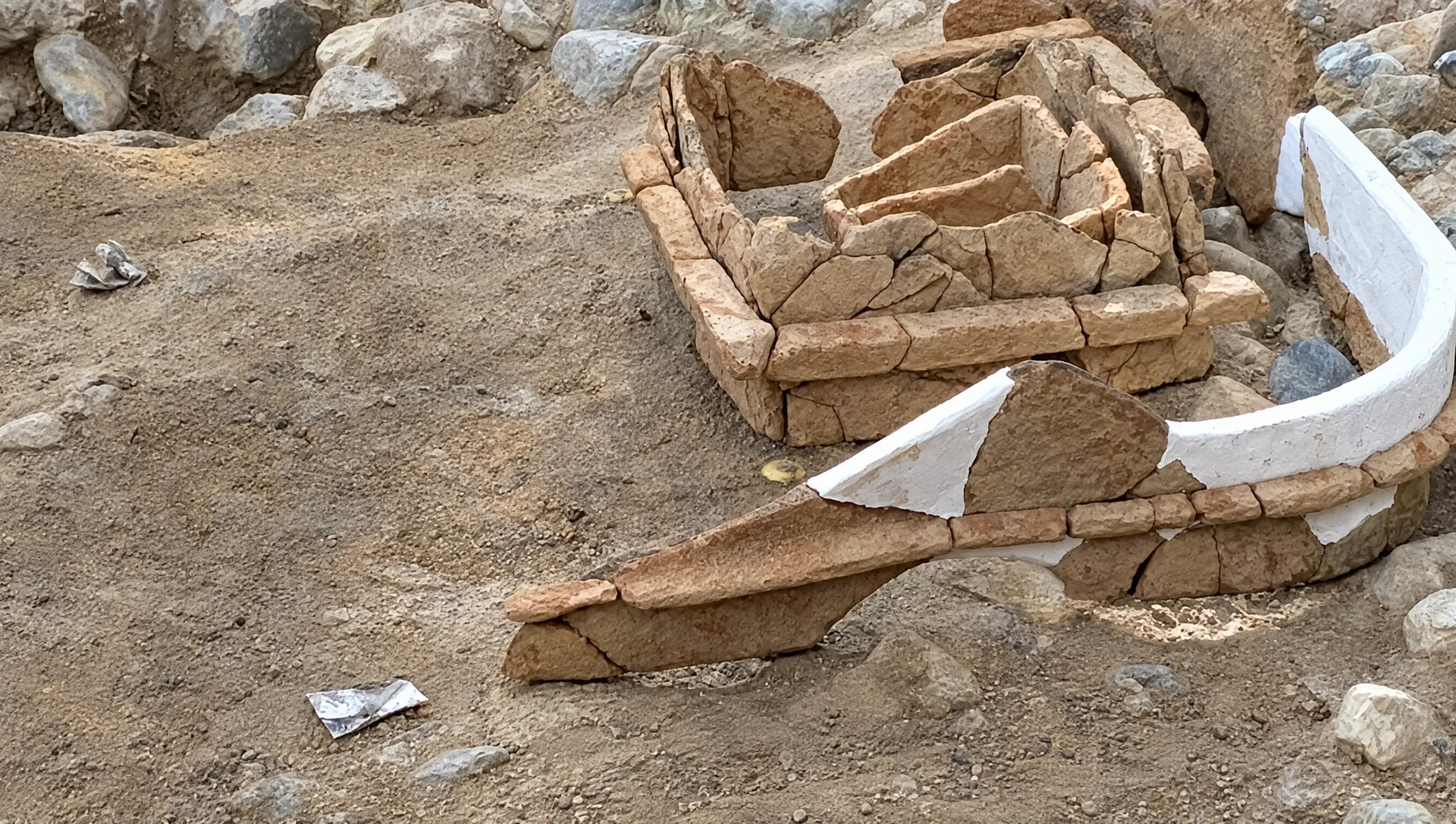
The Agency for Cultural Affairs database records the large climbing kiln as a late-Edo brick structure built along a slope, with two firebox sections and eight firing chambers. A separate medium kiln is also registered. Nara Prefecture says the display hall and former workshop are registered as well. These are heritage structures within an operating pottery property. The sources reviewed do not promise unrestricted public access to every building or a scheduled tour every day, so confirm what can be viewed when booking and follow the host's instructions around kilns and work areas.
Reach the kiln from the west side of Nara
The prefectural access listing gives a bus from the south exit of Kintetsu Gakuenmae Station to Akahadayama, about ten minutes, followed by a short walk; the current Nara City heritage page describes the walk from the terminal as about five minutes. From Kintetsu Saidaiji/Nishinokyo, a taxi is another option. The prefecture lists free on-site parking and a 9:00–17:00 operating window, with closure on Mondays and the fourth Wednesday. Check the bus timetable, exact meeting point, weekly closure and workshop start time with the kiln before setting out.
Book ahead and plan for a handmade item
The prefectural guide says same-day reservations may be possible by telephone, but this depends on the requested activity and remaining capacity. It lists painting for one or more people and hand-building for groups of four or more, with painting accepted until 16:00 and hand-building until 14:30. These are published limits, not a promise of a same-day slot. Call 0742-45-4517 to confirm the date, language support, age suitability, payment method, current price and delivery timeline. The studio is a work environment; ask before taking photographs of workers, tools or other participants.
What to look for
Hand-building and ceramic painting at a Nara craft kiln
Two registered historic climbing kilns and a registered display hall
A hands-on introduction to Akahada-yaki's pale glaze and Nara-e decoration
Photo notes
No general commercial photography permission is published. Ask before photographing artisans, workshop participants, tools, kilns or interior work areas. Do not enter firing areas or heritage structures without an explicit invitation, and do not reuse the kiln's or public agencies' photographs without permission.
Make a day of it
Explore guides close to this map point, then check the actual route before travelling. Distances below are straight lines, not walking distances or travel times; map points may not be entrances.
Sources & editorial status
Original MyNara draft based on the linked sources. Sources reviewed 20 October 2026. Opening arrangements, prices and offers may change; use the operator's current information before travelling.
- Nara Prefecture — current Akahada-yaki workshop prices, durations, booking, hours and access
- Nara Prefecture — Akahada-yaki characteristics and craft designation
- Nara City — kiln visit, heritage context and workshop format
- Agency for Cultural Affairs — registered large climbing kiln record
- Agency for Cultural Affairs — medium climbing kiln record
- Nara Prefecture educational travel guide — workshop identity and group information
- Yahoo! Japan Maps — mapped location for Akahadayama Motogama