Hatsune: Seasonal Yoshino Cooking beneath the Cherry Slopes
A seasonal Japanese restaurant overlooking Yoshino's mountain scenery, with local ingredients, Yoshino kudzu and a menu that changes with the seasons.
 Verified site photographs are being prepared.
Discover Hatsune: Seasonal Yoshino Cooking beneath the Cherry Slopes
Hatsune sits on the steep approach into Shimo-senbon, the lower part of Mount Yoshino's celebrated pilgrimage and cherry-viewing landscape. Its setting is part of the meal: the Yoshino Mountain Tourism Association describes chair-and-table seating in a two-storey dining room, while an older Official Nara Travel Guide entry says visitors remove their shoes and sit low on tatami. Because those published descriptions differ, ask the restaurant which seating is available if it matters to your visit. The association highlights ingredients such as mountain vegetables, sweetfish and wild boar. The menu includes seasonal set meals and Yoshino kudzu dishes; one well-known cold dessert is kuzukiri, translucent kudzu noodles served with a dipping syrup. The restaurant's name comes from the kabuki and bunraku work Yoshitsune Senbon-zakura, specifically the journey scene Hatsune no Tabi in which Shizuka Gozen takes out the Hatsune drum. This is a useful stop between the ropeway and the temples above, but it sits on a pronounced uphill route, so plan the walk and footwear before arriving.
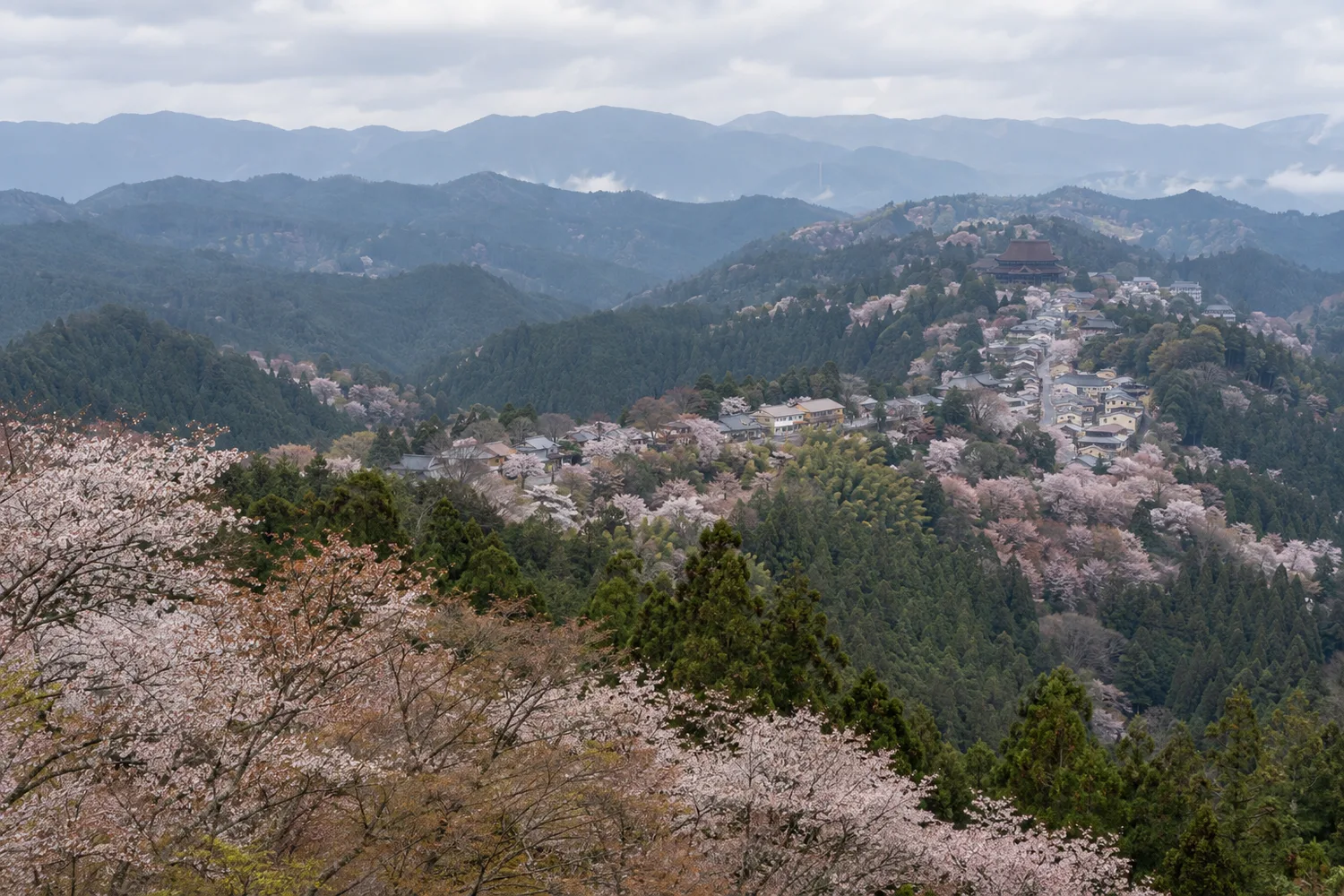
Read Yoshino's landscape from the dining room
The operator places the restaurant in Shimo-senbon, between Kuromon and the copper torii, on the ascent toward the temples. The Yoshino Mountain Tourism Association currently describes chairs and tables on both floors (25 seats downstairs and 20 upstairs); the older Visit Nara entry instead describes shoes-off, low tatami seating. The sources do not reconcile this difference, so contact Hatsune to confirm the current room setup and any step-free needs. Spring blossoms and autumn colour are seasonal scenery, not guaranteed at a particular date. The steep approach makes this a natural rest point while walking uphill.
Taste ingredients associated with the mountain
The official Nara tourism listing names local mountain vegetables, sweetfish and wild boar among the ingredients used in its meals. The restaurant's own site describes its approach as seasonal Yoshino cooking. Its shop-managed listing names Hatsune-zen with seasonal small dishes and Yoshino kudzu, and a winter-season botan-nabe set using local wild boar and house miso broth. The exact menu changes; ask what is being served that day, especially outside the named season.
Try Yoshino kudzu, including kuzukiri
Yoshino is associated with kudzu products, and Hatsune lists kudzu dishes among its local specialties. Visitors can also stop for kuzukiri and tea rather than a full set meal, according to the prefectural travel directory. The operator's current menu page is marked as being prepared, so exact dessert varieties, serving times and prices are not confirmed online. Ask staff about ingredients and cross-contact if you have an allergy or dietary restriction.
Understand why the restaurant is called Hatsune
The operator says it chose the name from Yoshitsune Senbon-zakura, the classic kabuki and bunraku story. In the Hatsune no Tabi scene, Shizuka Gozen and Sato Tadanobu search for Yoshitsune in Yoshino; Shizuka takes out the Hatsune drum given to her by Yoshitsune. This connection gives the restaurant a literary link to Yoshino beyond its mountain views, but it does not mean the restaurant itself is a historic theatre site.
Plan the uphill approach from the ropeway
The address is 2682 Yoshinoyama. Hatsune's own access page places it between Kuromon and the copper torii and says it is about five minutes on foot from Yoshinoyama Station at the ropeway's upper end, or about fifteen minutes from Shimo-senbon tourist parking. The shop-managed listing estimates three minutes from the upper station, while Visit Nara gives one minute; use five minutes as a cautious estimate and allow extra time for the steep slope, crowds and luggage. Check current ropeway operation and road restrictions with the operator or transit provider before travel.
Check seasonal hours, bookings and seating
The operator lists 11:00–15:00 service with a 14:30 last order. Tuesday and Wednesday are usual closing days; April has irregular closures, while November is listed as Wednesday-only closure. The operator says November and April bookings are limited to groups of ten or more, and calls are accepted on operating days from 15:00–17:00. The shop-managed listing separately describes seasonal booking conditions around March 20–April 15 and November 10–30; call before relying on a reservation. Visit Nara says shoes must be removed at the entrance and describes low tatami seating; ask about a table seat or mobility needs in advance. Prices are not available on the operator's current menu page; Tabelog's indicative range is ¥2,000–¥2,999 per person, checked 2026-10-19.
What to look for
A seasonal dining room in Shimo-senbon with mountain views and seating details to confirm
Local ingredients such as mountain vegetables, sweetfish, wild boar and Yoshino kudzu
A literary connection to the kabuki and bunraku classic Yoshitsune Senbon-zakura
Photo notes
No photo-use permission has been secured. Do not reuse the restaurant, prefectural or visitor photos. If producing original imagery, accurately show the actual exterior, view or meal with permission; seasonal blossoms, autumn colour and menu items should not be represented as year-round. Ask before photographing staff, diners or private interior areas. Visitors should avoid blocking the narrow uphill approach.
SEASONAL CALENDAR
Events connected with Hatsune: Seasonal Yoshino Cooking beneath the Cherry Slopes
These records are shared with MyNara’s event calendar, so dates and notices have one source. Recurring patterns are not confirmed dated editions; check the organizer’s latest guidance.
Yoshino Mountain Spring Cherry Blossom Season and Light-Up
Yoshino Mountain Tourism Association describes a spring cherry season across Yoshino Mountain, generally from late March into late April, with blossoms advancing from Shimo-senbon through Oku-senbon. The 2026 light-up itself was held at Nanamagari in Shimo-senbon and Cherry Exhibition Park in Kami-senbon, not at the Hanayagura or Takagi observatories. Those viewpoints are connected as places to understand the wider mountain landscape, not as confirmed light-up venues. Bloom stages, traffic rules and any special access change each year; use the association's dated notice before travelling.
Check organizer informationMake a day of it
Explore guides close to this map point, then check the actual route before travelling. Distances below are straight lines, not walking distances or travel times; map points may not be entrances.
Sources & editorial status
Original MyNara draft based on the linked sources. Sources reviewed 20 October 2026. Opening arrangements, prices and offers may change; use the operator's current information before travelling.
- Hatsune — operator home: current hours, seasonal closures, contact and reservation notes
- Hatsune — operator story: origin of the name from Yoshitsune Senbon-zakura
- Hatsune — operator map and access: location between Kuromon and the copper torii, walking estimates
- Nara Prefecture tourism association — local ingredients, hours, address and closing days
- Official Nara Travel Guide D01477 — seasonal cuisine, vegetarian accommodation, English photo menu and shoes-off note
- Yoshino Visitors Bureau — regional food context and nearby businesses
- Hatsune — shop-managed Tabelog listing: current booking conditions, price range, seating and access