Butsuzuka Kofun: A Tomb Reused for Buddhist Worship
Find a small hillside tomb whose chamber became a medieval Buddhist space, with present-day interior access treated cautiously.
 Verified site photographs are being prepared.
Discover Butsuzuka Kofun: A Tomb Reused for Buddhist Worship
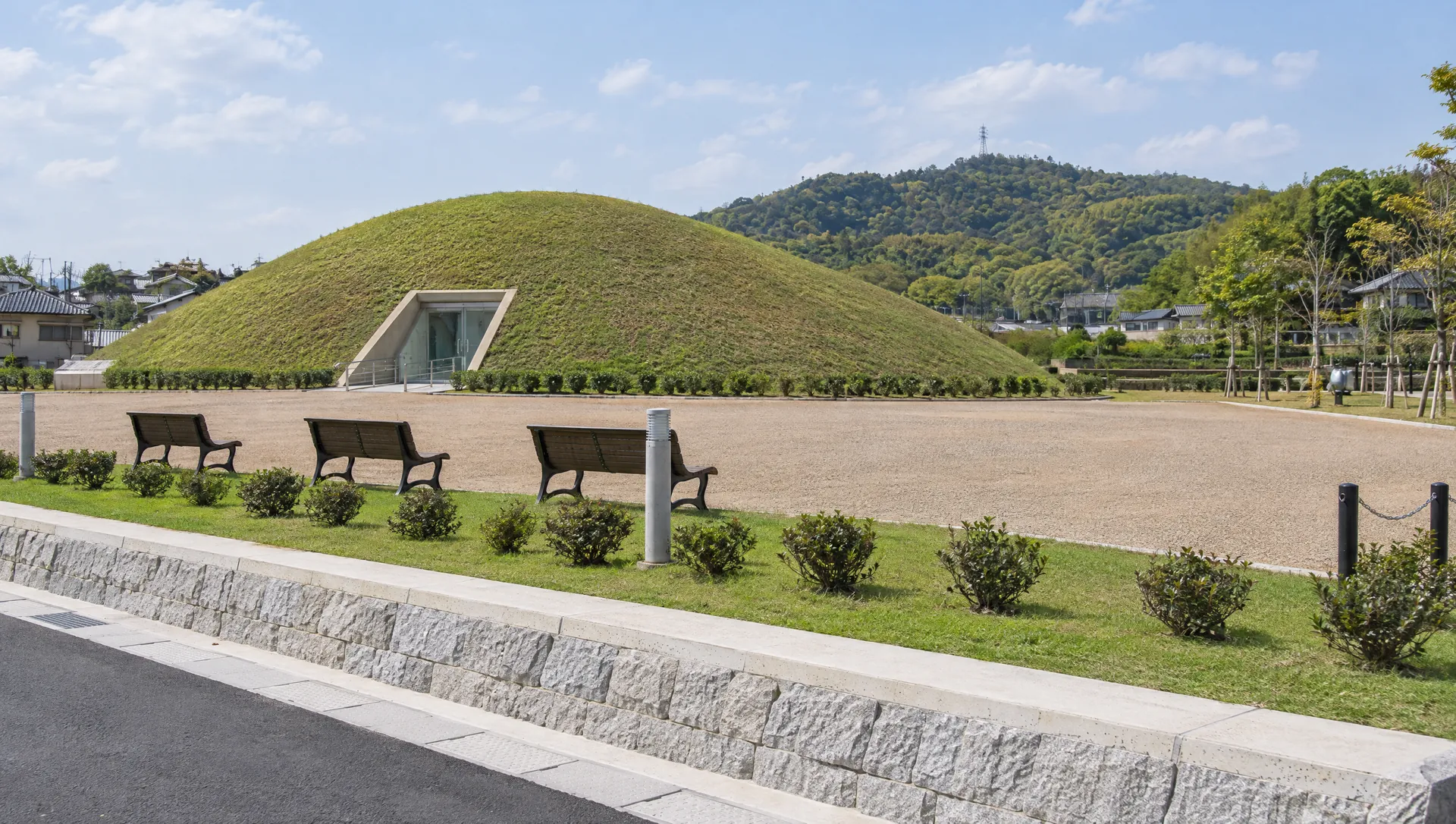
Butsuzuka Kofun is less conspicuous than Fujinoki and lies on a low ridge beyond Hōryū-ji's northern hills. Its archaeology tells two distinct stories. A square mound and side-entry chamber were built around the end of the sixth century; centuries later, people brought Buddhist images and ritual vessels into the chamber and apparently used it as a small devotional space. That later reuse is the reason behind the name Butsuzuka, or Buddha Mound. The site is a worthwhile specialist detour for travellers interested in how older landscapes kept changing, but published guidance conflicts on chamber entry. Plan to see the exterior only unless the responsible office confirms otherwise, and expect a harder-to-find approach than the major Ikaruga temples.
A square mound with a carefully built chamber
Ikaruga Town's excavation account identifies a roughly 23-metre-sided square mound on a ridge extending north from Terayama behind Hōryū-ji. Work in 1976 found a south-opening stone chamber with side passages, measuring 9.36 metres along the excavated portion; part of the passage was left unexcavated. The chamber floor was covered with pebbles and drained through a channel running around it toward the entrance. Pottery of about the late sixth century, fragments of a tortoise-shell-patterned ceramic coffin, horse gear, earrings and small knives belong to the older burial story. The original occupants are not securely named.
Why it became a Buddha mound
Later material changes the interpretation. The town lists small gilded bronze Buddhist images, clay image fragments, vases, ritual vessels and medieval ceramics from the chamber, largely between the late Kamakura and Muromachi periods. Nara Prefecture explains the name as deriving from the stone chamber's reuse as a Buddhist hall. This is a rare case where a tomb's much later religious life is visible in the excavated objects. A nearby medieval Gokuraku-ji has been proposed as a possible connection, but that link is an archaeological suggestion rather than a confirmed ownership or ritual record.
Do not assume the chamber is open
A prefectural heritage description based on a 2017 entry calls this one of Ikaruga's few kofun whose chamber can be viewed. A field survey conducted in February 2021 records the iron gate as locked and says the Ikaruga education board did not allow entry inside. The survey also describes sparse wayfinding and a chamber entrance below adjacent field level. These accounts are not equivalent visitor instructions for 2026. Until the town confirms current arrangements, plan an exterior observation only and never bypass a barrier or enter a field to reach the stones.
Use a deliberate Hōryū-ji walking route
The local Ikaruga tourism guide puts the mound at Hōryūji 3011 and estimates about 16 minutes on foot from Hōryū-ji's South Gate or about 30 minutes from JR Hōryūji Station. Its simple travel time does not describe a signed, paved tourist path. The 2021 survey found the explanatory board away from the mound and little directional signage, so carry the Japanese place name and a current offline map. Roads and paths are narrow around the valley fields. Do not rely on the map pin as a gate, step-free path or parking location; no dedicated car park, accessibility detail or public-toilet information was verified.
Place it within Ikaruga's longer timeline
Fujinoki Kofun nearby offers a late-sixth-century burial with an unlooted coffin and special-only chamber access. Butsuzuka shows a different afterlife: a disturbed burial later transformed into a Buddhist ritual place. Hōryū-ji and the later regional temples are related context, not proof that a known prince or monk was buried here. The prefecture designates Butsuzuka as a prefectural Historic Site, but conservation status is separate from public interior access. The trip makes most sense for a visitor who will read the archaeological evidence and accept that the protected chamber may remain closed.
What to look for
Late-sixth-century square mound and drained stone chamber
Medieval Buddhist objects that explain the site's later name
A quiet northern Ikaruga detour with access limits to verify
Photo notes
No photograph of the mound, chamber or excavated objects is licensed to MyNara. The reviewed official pages do not state a general photography policy. Keep to public paths, avoid private fields and seek town permission for any controlled chamber or commercial shoot; a gallery or survey photograph is not reusable without its own rights clearance.
Make a day of it
Explore guides close to this map point, then check the actual route before travelling. Distances below are straight lines, not walking distances or travel times; map points may not be entrances.
Sources & editorial status
Original MyNara draft based on the linked sources. Sources reviewed 19 October 2026. Opening arrangements, prices and offers may change; use the operator's current information before travelling.
- Ikaruga Town — excavated mound, chamber plan, grave goods and medieval reuse
- Nara Prefecture heritage record — designation and older viewability claim
- 2021 prefectural-designation field survey sheet — locked gate and difficult wayfinding
- Hōryūji i Center — address, walking approach and approximate map marker