Mitsui Tile Kiln: Where Ikaruga Made Temple Roofs
An ancient uphill kiln links the small ridge behind Hōki-ji to the tiles that roofed Ikaruga's early Buddhist temples.
 Verified site photographs are being prepared.
Discover Mitsui Tile Kiln: Where Ikaruga Made Temple Roofs
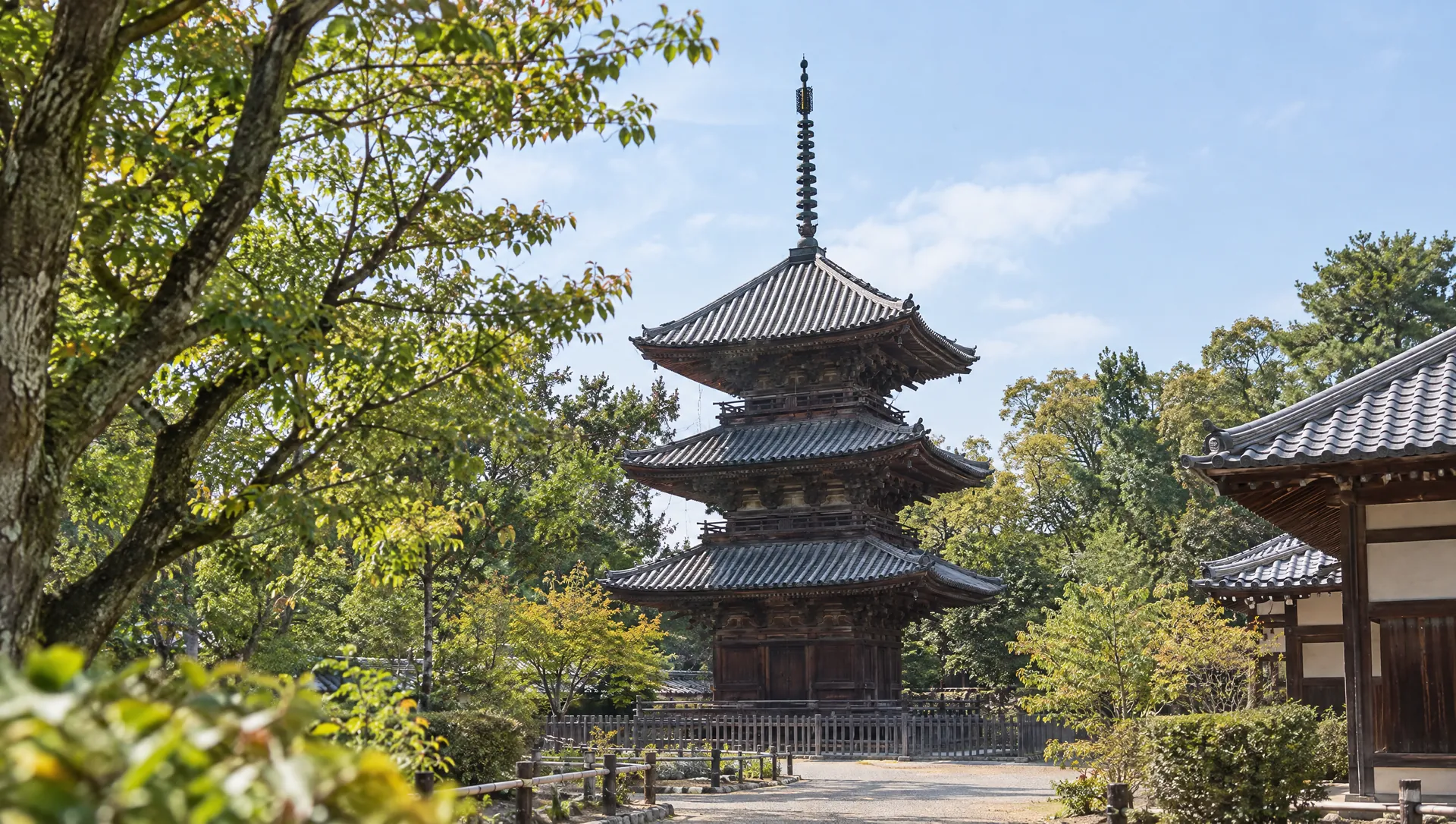
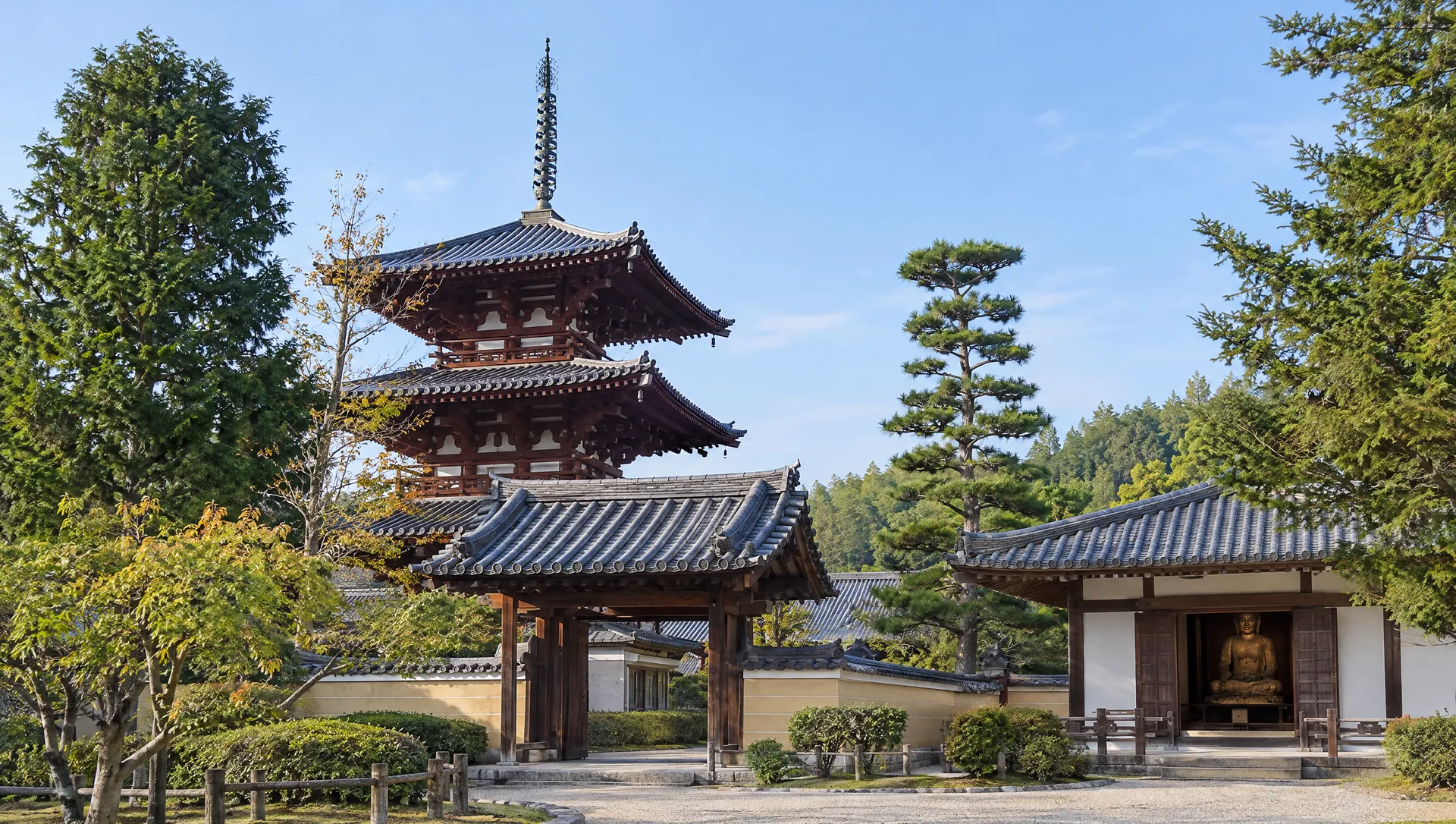
The pagodas at Hōki-ji and Hōrin-ji did not appear without workshops, fuel and skilled makers. On a slope northwest of Hōki-ji, the Mitsui Tile Kiln Site preserves evidence for that less visible part of Ikaruga's Buddhist landscape. An orchard clearance in 1931 exposed a subterranean, stepped climbing kiln; later work found a second, earlier kiln nearby. Tiles made with dies matching temple roof tiles help connect production on this ridge to construction in the valley. This is a protected archaeological site, not a firing demonstration or a pottery class. Go to understand how a temple roof was supplied, and confirm what can be seen at the protective structure before making it the only purpose of a trip.
Read the slope as an industrial choice
The kilns occupy the west side of the rear mound of Kawarazuka No. 2 Kofun, on a ridge northwest of Hōki-ji. Ikaruga Town describes No. 1 as an underground, stepped climbing kiln whose surviving arched ceiling follows a slope of about 40 degrees. Its horizontal surviving length is roughly 4.9 metres, with ten steps recorded in the firing section. The rise let heat move through stacked roof tiles; what matters at the site is the relationship between topography and manufacture rather than a monumental façade.
Two investigations, two kilns
Workers uncovered No. 1 while clearing an orchard in 1931, followed by a prefectural investigation. Roof and flat tiles came from inside. A 1995 repair investigation found an earlier No. 2 kiln with a collapsed upper structure, along with drainage made using round tiles, post holes and ash deposits outside the mouth of No. 1. The main protected site is therefore a small production complex, not a single perfect oven. The visible condition of either kiln today may differ from excavation drawings; interior entry and a clear viewing window are not confirmed by the current town or tourism notices.
Follow the tile pattern to two temples
Roof tiles found near the kiln include lotus-pattern eaves tiles made with the same dies as examples from Hōrin-ji and Hōki-ji. Nara Prefecture dates the kiln's operation broadly to the later seventh and early eighth centuries, when Ikaruga's Buddhist building programme was active. A shared die gives a material link between workshop and roofs; it does not tell us the name of every tile maker or prove that every tile at the temples came from this one hillside. Looking at the two temples after the kiln turns familiar pagoda silhouettes into a story of organised supply and labour.
Why the ridge has two kinds of archaeology
The kiln was built into the slope of Kawarazuka No. 2, itself part of a group of three older burial mounds. Ikaruga Town explains that tiles scattered around a kiln on this hill helped give the kofun group the name Kawarazuka, or 'tile mound'. The tile workshop and the burial mound belong to different functions and centuries; do not treat the kiln as a burial chamber or count a map marker for it as permission to climb the protected mound. The physical reuse of a ridge is the unusual landscape story here.
Plan the visit conservatively
The Hōryūji i Center gives Mii 639 and estimates about 40 minutes on foot from JR Hōryūji Station. Nara Prefecture's walking route places the site roughly 100 metres northwest of Hōki-ji, but that straight geographic relationship is not a signed, accessible route. The Agency for Cultural Affairs records national Historic Site designation from 25 April 1932. Neither the town nor local tourism listing publishes opening hours, a fee, a guaranteed view into the kiln, step-free access or parking for this particular site. Check current notices or ask Ikaruga Cultural Heritage Center before relying on interior or close-up access; stay on lawful paths and do not enter the kiln or orchard land.
What to look for
Stepped kiln following a roughly 40-degree hillside
Matching lotus-pattern tiles tied to Hōki-ji and Hōrin-ji
Earlier second kiln found during 1995 repair work
Photo notes
No kiln, tile or excavation photograph has been licensed to MyNara. Photograph only from an open lawful position without entering a protective enclosure, disturbing the site or stepping onto private land. Ask the cultural heritage manager before commercial filming, drones or close-up equipment use.
Make a day of it
Explore guides close to this map point, then check the actual route before travelling. Distances below are straight lines, not walking distances or travel times; map points may not be entrances.
Sources & editorial status
Original MyNara draft based on the linked sources. Sources reviewed 19 October 2026. Opening arrangements, prices and offers may change; use the operator's current information before travelling.
- Ikaruga Town — two kilns, measurements, tile finds and 1995 investigation
- Nara Prefecture heritage — operation period and connection to two temples
- Hōryūji i Center — address and station walking estimate
- Agency for Cultural Affairs — national Historic Site designation
- Nara Prefecture walking guide — geographic relation to Hōki-ji and kofun