Hokkeji: Empress Komyo's Convent and Seasonal Kannon
Explore an imperial convent through its 1601 hall, historic bathhouse, two gardens and a National Treasure Kannon shown only on announced dates.
 Verified site photographs are being prepared.
Discover Hokkeji: Empress Komyo's Convent and Seasonal Kannon
Hokkeji gives a view of Nara-period Buddhism through an institution founded for women. Empress Komyo turned part of her family residence into a convent that became the leading imperial convent in the national temple system. The temple seen today was rebuilt over centuries: the Main Hall and South Gate are early-seventeenth-century structures, while a historic steam bath recalls the convent's account of care for ordinary people. The National Treasure Eleven-Faced Kannon is normally hidden; its opening, the treasure hall and the gardens follow different calendars. Plan around the actual part you want to see rather than assuming one ticket opens everything every day.
Trace an imperial convent, not an original eighth-century hall
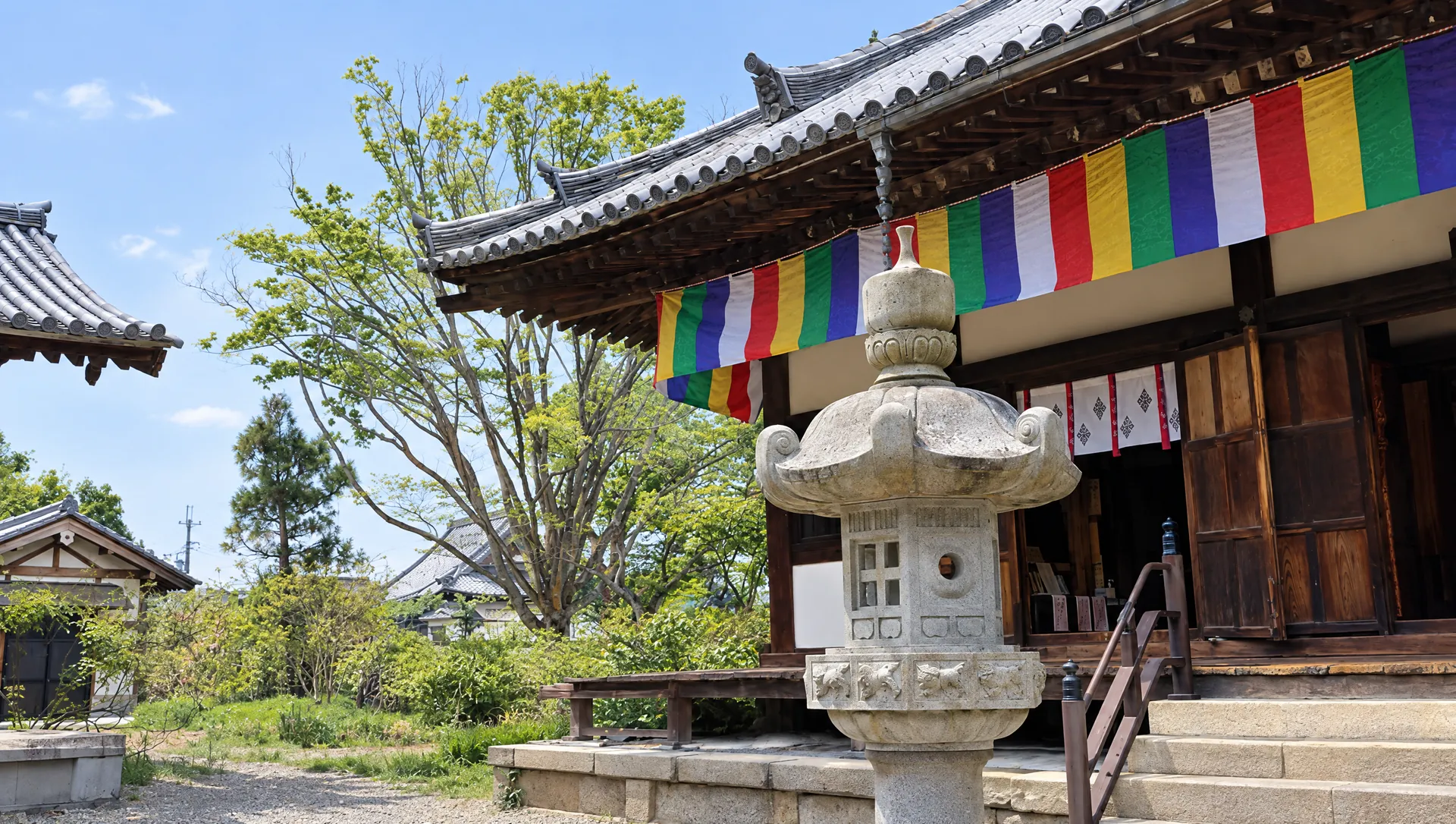
The temple says Empress Komyo established Hokkeji from her former residence on Fujiwara no Fuhito's estate, as the chief convent corresponding to Todai-ji's place in the national temple system. Its ancient compound once held far more buildings than remain now. After decline and successive restorations, Yodo-dono's patronage led to the present Main Hall and South Gate around 1601; the hall reuses some earlier timber but is not itself an untouched Nara-period structure. Read the gate's five-lined wall and the hall together as a story of imperial affiliation and later survival.
Understand what the Kannon viewing ticket can show
Hokkeji's principal Eleven-Faced Kannon, a one-metre National Treasure carved from a single piece of kaya wood, is normally not on view. Temple tradition identifies its form with Empress Komyo crossing a lotus pond; that is a devotional association, not a documented portrait sitting. Outside announced openings, the temple says visitors see a substitute image. For 2026 the operator announces 24 October–10 November for the principal statue in the Main Hall and a National Treasure Amida painting in the Jikoden treasure hall. Its standing visitor guide still says 25 October, while an older city English page gives yet another price schedule, so the dated 2026 temple notice is the proper event reference. Ceremonies can still restrict close access.
Walk between the bathhouse and two different gardens
The surviving Karafuro was rebuilt in 1766. The temple explains that it was a steam bath using medicinal plants and recalls Empress Komyo's vow to care for people with illness; it was not a modern bathing facility for today's tourist. On the west is a designated historic garden with an early-Edo strolling layout and irises around May; on the east, Karakuen has smaller paths and a changing range of flowers. These are different spaces within the same convent, not separate attraction counts. The temple currently says garden-only admission is suspended, so check which gardens are included in the day's temple ticket before setting out.
Use the operator's access and image rules
The Main Hall normally runs 9:00–16:30; the Jikoden closes at 16:00, and the temple can shorten hours for display changes or ceremonies. The operator says wheelchairs can reach the front of the Main Hall with advance contact to open a parking gate, but cannot enter halls or buildings. A 2022 temple notice permits ordinary still photographs on the grounds while prohibiting sales-oriented photography, all video without permission, tripods, monopods and selfie sticks; publication in books or magazines requires prior permission. It does not establish permission for interior or commercial website images. Ask directly before making material for MyNara.
What to look for
Normally concealed National Treasure Eleven-Faced Kannon during announced openings
Main Hall and South Gate rebuilt around 1601 with layers of earlier material
1766 steam bath, historic western garden and eastern Karakuen within one convent
Photo notes
A temple notice allows ordinary still images on the grounds, but forbids sale-oriented shooting, video without permission, tripods, monopods and selfie sticks; printed publication requires prior approval. It does not grant rights to reproduce temple or tourist-association photos or to shoot inside buildings for this website. MyNara has no licensed site image. Obtain written permission for any MyNara feature photography.
Make a day of it
Explore guides close to this map point, then check the actual route before travelling. Distances below are straight lines, not walking distances or travel times; map points may not be entrances.

Sources & editorial status
Original MyNara draft based on the linked sources. Sources reviewed 19 October 2026. Opening arrangements, prices and offers may change; use the operator's current information before travelling.
- Hokkeji operator — current ticket bands, accessibility, route and paid parking
- Hokkeji operator — founding and later rebuilding
- Hokkeji operator — principal Kannon and substitute outside openings
- Hokkeji operator — buildings, steam bath and Jikoden
- Hokkeji operator — two gardens
- Hokkeji operator — 2026 autumn opening dates
- Hokkeji operator — grounds photography restrictions
- Nara City Tourism Association — older English directory to cross-check, not current tariff
- OpenStreetMap-based approximate coordinate display