Saruishi: Four Human-Faced Stones at Kibi-hime's Tomb
See four expressive granite figures beside Emperor Kinmei's mausoleum, while keeping their original purpose and the tomb's attribution open to question.
 Verified site photographs are being prepared.
Discover Saruishi: Four Human-Faced Stones at Kibi-hime's Tomb
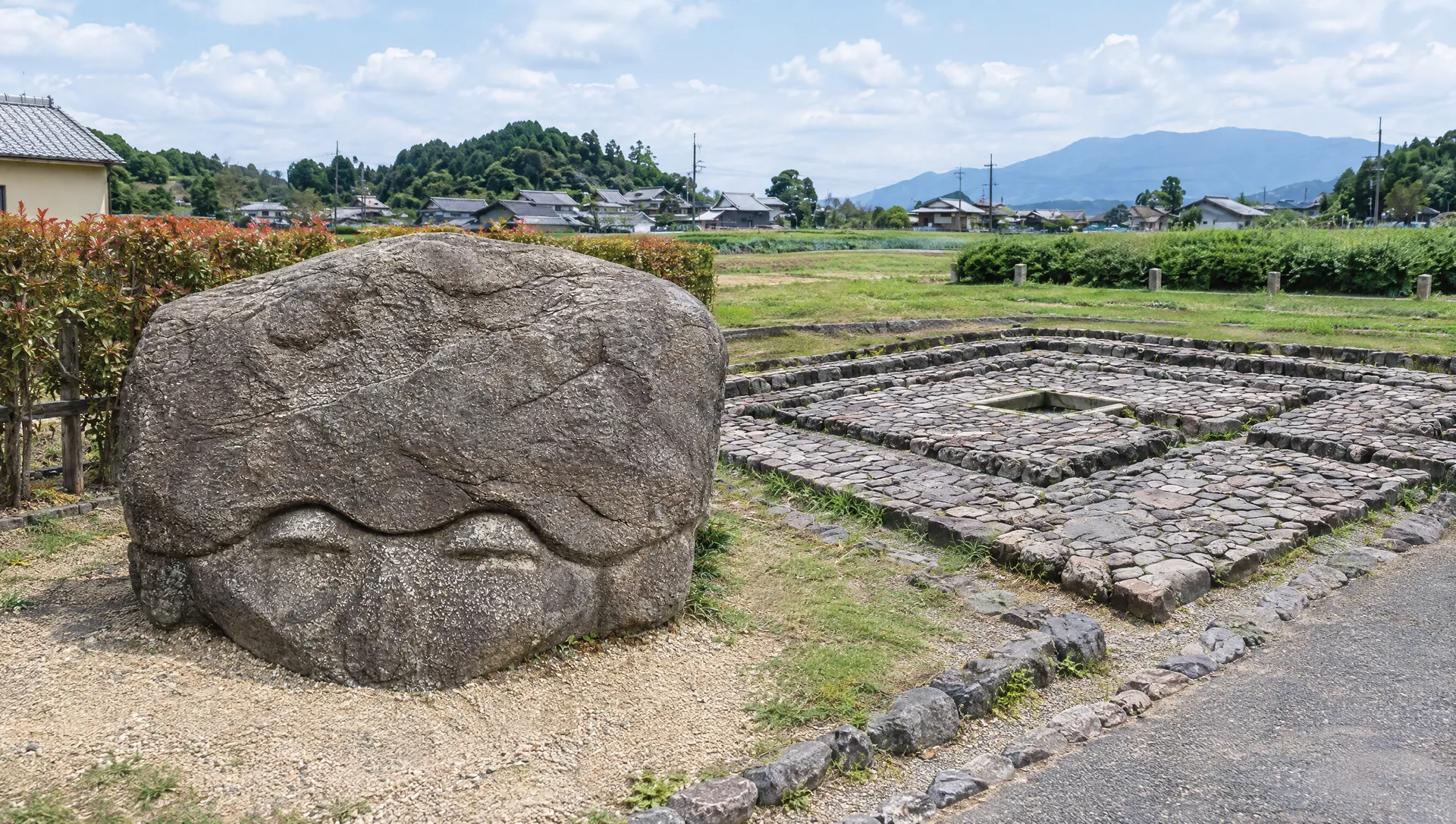
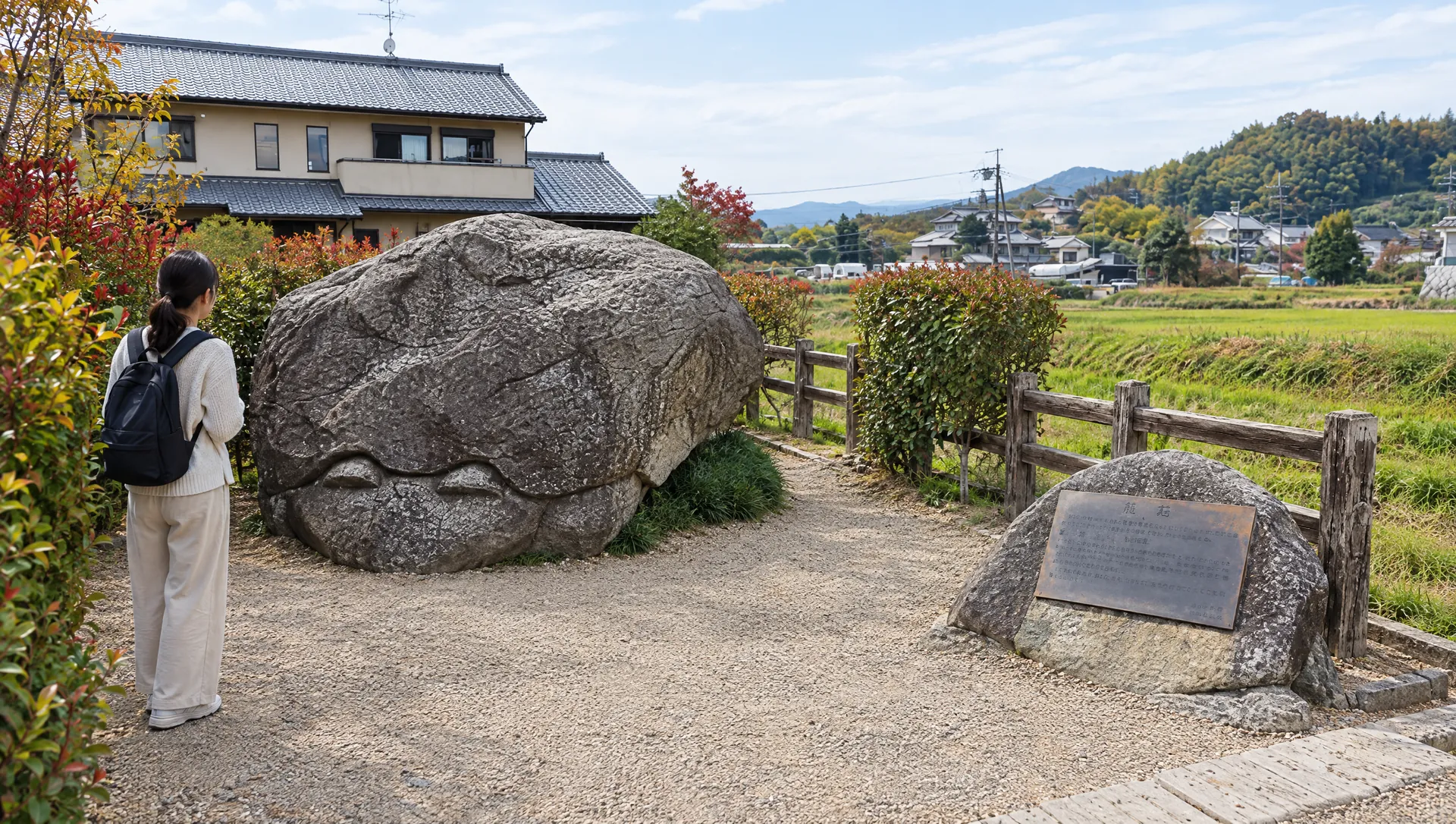
Saruishi, or “Monkey Stones,” are four human-like granite figures placed within the precinct of the tomb traditionally attributed to Kibi-hime-no-miko, beside Emperor Kinmei's mausoleum. The Asuka preservation foundation calls the figures Woman, Sannō Gongen, Priest and Man, reading from left to right. Their names describe how later viewers saw their faces; they do not establish the figures' original identities. The foundation says the tomb is sometimes described as an eight-metre circular mound, but neither its form nor its identification has archaeological confirmation. The stones' original purpose is likewise unsettled: proposals include protective figures, stone haniwa or garden sculpture. Treat the story as an unusually vivid encounter with Asuka's unresolved stonework rather than a solved puzzle.
Four figures, not four separate sites
The four stones sit together inside the same protected plot, so they form one destination rather than four separate stops. The preservation foundation names them, left to right, Woman, Sannō Gongen, Priest and Man. Look for the range of faces and the way the bodies are shaped from single blocks. Several stones are described as having carving on their reverse sides, but visitors must not enter a restricted enclosure to inspect them.
What is known about their past
The foundation reports that the four stones were excavated from a nearby paddy around the beginning of the eighteenth century; the place where they stood before that is unknown. The National Government Asuka Historical Park says they were positioned at Emperor Kinmei's tomb before 1872 and are now at Kibi-hime's tomb. These records describe later movement, not the stones' original seventh-century context. The foundation lists competing explanations, including guardian figures, stone haniwa and garden sculpture associated with the Hirata Kitagawa site. None is established as the answer.
Keep the tomb attribution qualified
Kibi-hime is described in the park and heritage accounts as Emperor Kinmei's granddaughter, mother of Empress Kōgyoku/Saimei and Emperor Kōtoku, and grandmother of Emperors Tenji and Tenmu. The current tomb identification follows historical records, but the preservation foundation explicitly says an approximately eight-metre round mound has no archaeological confirmation and some question whether it is a kofun at all. The nearby Emperor Kinmei mausoleum is a separate monument. Do not merge the two graves or present either attribution as an excavated fact.
View respectfully from the public side
The heritage visitor page describes the four stones as viewable at no charge, while the official park places the site about seven minutes on foot from Kintetsu Asuka Station. The preservation foundation gives about ten minutes. The stones are within a fenced tomb precinct: remain outside any closed boundary, use only the permitted viewing position and follow signs or a caretaker's directions. Do not climb, reach through a fence or enter the mound area. The checked sources do not state a Saruishi-specific drone rule; ask the responsible authorities before planning aerial filming. No staffed daily opening schedule or step-free approach is specified, so confirm current conditions if a date-specific or accessible visit is important.
Check permission before publishing photographs
Asuka Village's cultural-property application list names both Saruishi and Kibi-hime Tomb and directs photography/publication enquiries to the Imperial Household Agency's Unebi Mausoleum District Office (0744-22-3338). The list does not explain how ordinary personal snapshots differ from editorial or commercial use. If you plan to publish images or film commercially, confirm the applicable permission before shooting; do not assume that a public-side viewing also grants publication rights.
What to look for
Four granite figures together at one protected tomb precinct
Competing interpretations kept separate from established evidence
Short walk from Asuka Station; view only from the permitted public side
Photo notes
Stay at the permitted public viewing position; do not enter the fenced area or reach through it. Asuka Village lists the Imperial Household Agency's Unebi Mausoleum District Office (0744-22-3338) for photography/publication applications concerning Saruishi and Kibi-hime Tomb. The scope for ordinary personal snapshots is not stated; confirm rules before publication or commercial filming.
Make a day of it
Explore guides close to this map point, then check the actual route before travelling. Distances below are straight lines, not walking distances or travel times; map points may not be entrances.
Sources & editorial status
Original MyNara draft based on the linked sources. Sources reviewed 24 October 2026. Opening arrangements, prices and offers may change; use the operator's current information before travelling.
- National Government Asuka Historical Park — Kibi-hime tomb, history, access and no parking
- Asuka preservation foundation — four names, uncertain mound and competing stone interpretations
- Asuka Village — photography/publication application contacts for Saruishi and Kibi-hime Tomb
- Asuka heritage visitor page — stones viewable, free admission and station walk
- Asuka Historical Museum digital stone guide — reverse carving and movement history
- Geospatial Information Authority of Japan — approximate location reference, not an entrance survey
- National Government Asuka Historical Park — longer village walking circuits