
Chogaku-ji Temple and the Yamanobe Road
Pause along the Yamanobe-no-Michi for a bell tower gate, Buddhist images, seasonal flowers and an autumn painting display.
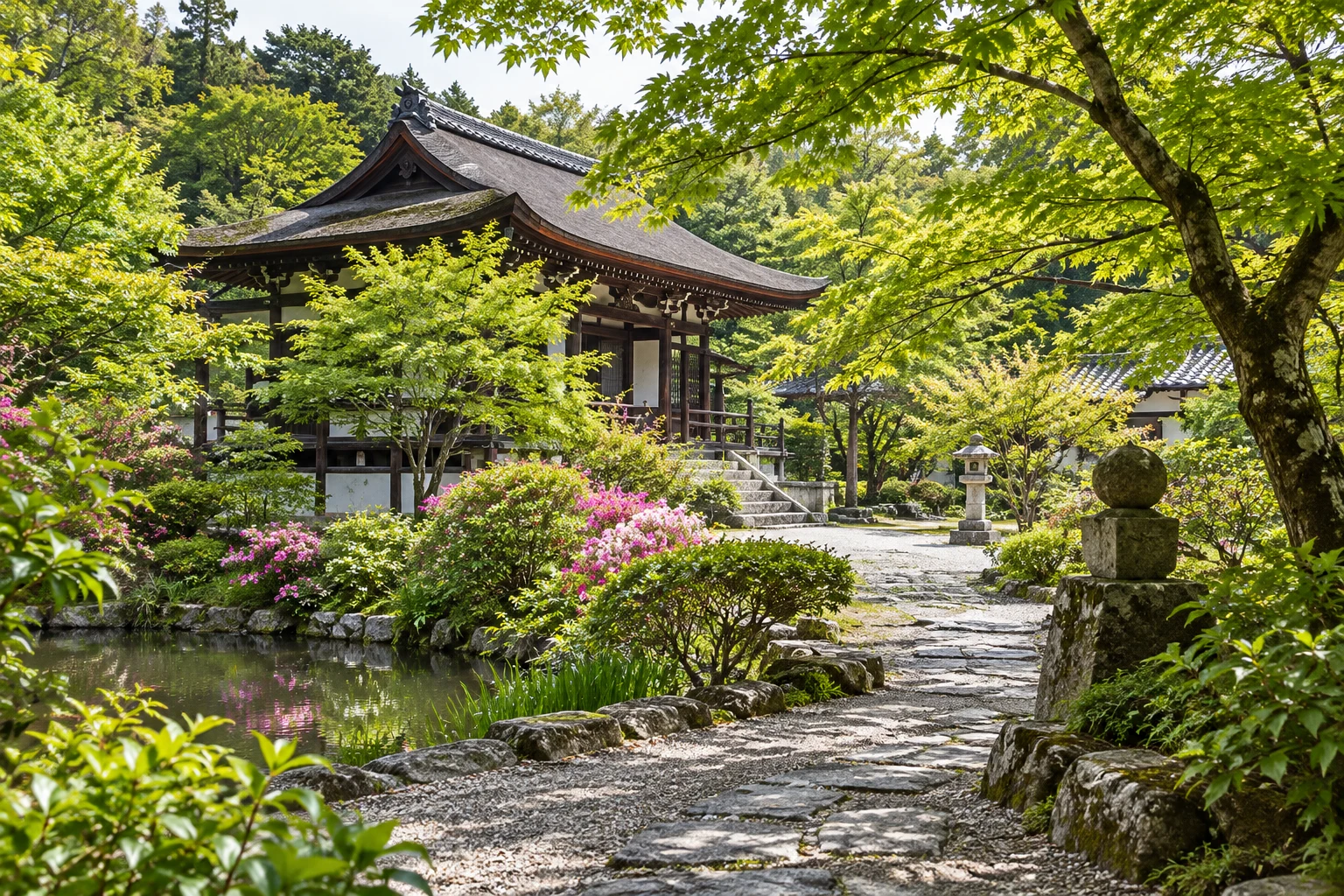 AI-generated visual study · not a documentary photograph
Discover Chogaku-ji Temple and the Yamanobe Road
Chogaku-ji stands by the ancient Yamanobe-no-Michi in Yanagimoto. The temple dates its foundation to 824, when it says Kukai established it as the Buddhist temple associated with Oyamato Shrine under an imperial wish. It recalls a much larger medieval complex, with 48 sub-temples and more than 300 resident clergy at its peak; today the precinct still covers about 12,000 tsubo. Visitors encounter a bell tower gate, the main hall's Amida triad and guardian statues, stone images, a pond and flowers that change by season. In autumn, the temple's Great Hell Painting is displayed in the main hall from October 23 to November 30, with illustrated talks on weekends. The temple's current event-specific guide and Nara Prefecture's 2026 notice agree on the dates; call for any late changes before travelling.
Read the temple's layered origin
The temple's history places its foundation in 824 and connects it to Oyamato Shrine, recalling a time when shrine and Buddhist temple functions were closely linked. It says the temple once had 48 sub-temples and over 300 clergy, a reminder that today's quiet compound was once a major religious centre. The present site preserves part of that long history, but not every building is an original from the foundation period; read the surviving gate, later halls and sculpture as evidence of successive rebuilding and continued worship.
Follow the approach to the bell tower gate
A gravel path lined with Hirado azaleas leads toward the bell tower gate, which the temple describes as its oldest surviving structure and the only building from its founding complex. In the main hall, the temple identifies the Amida Nyorai with Kannon and Seishi attendants as its principal image; it highlights the attendants' half-seated pose and the triad's glass eyes as unusual features. The cultural-property page lists four nationally designated buildings and five important statues. These are the temple's descriptions; check which halls and images are open on the day rather than assuming every interior can be entered.
Choose a season with a reason
The temple gives late April to early May for about 1,000 Hirado azaleas, mid-May for iris reflected in the pond, mid-June to early July for hydrangeas and mid- to late November for autumn colour. These are customary windows, not a bloom forecast. The operator describes the Great Hell Painting as nine scrolls forming one composition of the Ten Kings, underworld scenes and Amida's welcome from the Pure Land. Its current annual calendar and dedicated guide both give October 23–November 30; Nara Prefecture's dated 2026 listing confirms those dates, 9:00–17:00 hours and admission. Talks are listed around 13:00 on weekends and public holidays by the prefectural guide; the temple's own guide specifies Saturdays and Sundays. Phone 0743-66-1051 for late changes, weekday talk arrangements and access questions.
Notice the stone figures along the grounds
The temple's cultural-property guide says many stone Buddhas from the Kamakura through Edo periods remain in its grounds. It singles out a Kamakura-period Miroku image carved from a large stone coffin, likely reusing material from an ancient tomb. Enjoy them as part of the precinct; do not assume every figure has been individually dated or identified.
Use the Yamanobe-no-Michi connection
The temple lies on the southern Yamanobe route. Its own access page gives roughly twenty minutes on foot east from JR Yanagimoto Station or five minutes on foot from the Kaminagaoka Chogakuji bus stop, subject to the current bus timetable. The nearby Tenri Trail Center is a separate rest and information facility; combining the two can create a manageable half-day without implying a continuous step-free route.
Budget time and respect worship
The temple's access page lists 9:00–17:00, open all year, and admission of ¥400 for adults, ¥350 for university/high-school students, ¥300 for junior-high students, ¥250 for elementary pupils and free entry for children under school age. Groups of 30 or more receive ¥50 off each listed ticket. This is an undated operator page, so reconfirm before travel. Allow time for paths within the sizeable precinct, keep voices low near worship, and ask before photographing inside halls, statues or rites.
What to look for
Temple-described bell tower gate from its 824 founding complex
Amida triad, guardian statues, Kamakura–Edo stone figures and seasonal flowers
Great Hell Painting on view October 23–November 30, with seasonal illustrated talks
Photo notes
No temple or tourism-board photograph has been licensed for MyNara. Ask staff before photographing interiors, important statues, rites or paintings; do not reproduce the operator's artwork or visitor photos. Outside, keep tripods off the approach and leave room for worshippers and Yamanobe walkers.
Make a day of it
Explore guides close to this map point, then check the actual route before travelling. Distances below are straight lines, not walking distances or travel times; map points may not be entrances.
Sources & editorial status
Original MyNara draft based on the linked sources. Sources reviewed 26 October 2026. Opening arrangements, prices and offers may change; use the operator's current information before travelling.
- Chogaku-ji — history and heritage setting
- Chogaku-ji — cultural properties and paintings
- Chogaku-ji — current cultural-property list, including stone figures and Miroku stone-coffin Buddha
- Chogaku-ji — Amida triad and principal images
- Chogaku-ji — hell-painting composition and annual display dates
- Chogaku-ji — seasons and annual events
- Chogaku-ji — annual rites and hell-painting dates
- Chogaku-ji — admission and access
- Chogaku-ji — current homepage and 2026 hell-painting notices
- Chogaku-ji — current annual calendar
- Chogaku-ji — Great Hell Painting guide and talk arrangements
- Nara Prefecture — 2026 Great Hell Painting opening details
- Official Nara Travel Guide — Chogakuji Temple
- Nara City tourism guide — independent opening and fee listing