
Horyu-ji Temple
Move through the world's oldest surviving wooden temple buildings, then cross to the Hall of Dreams.
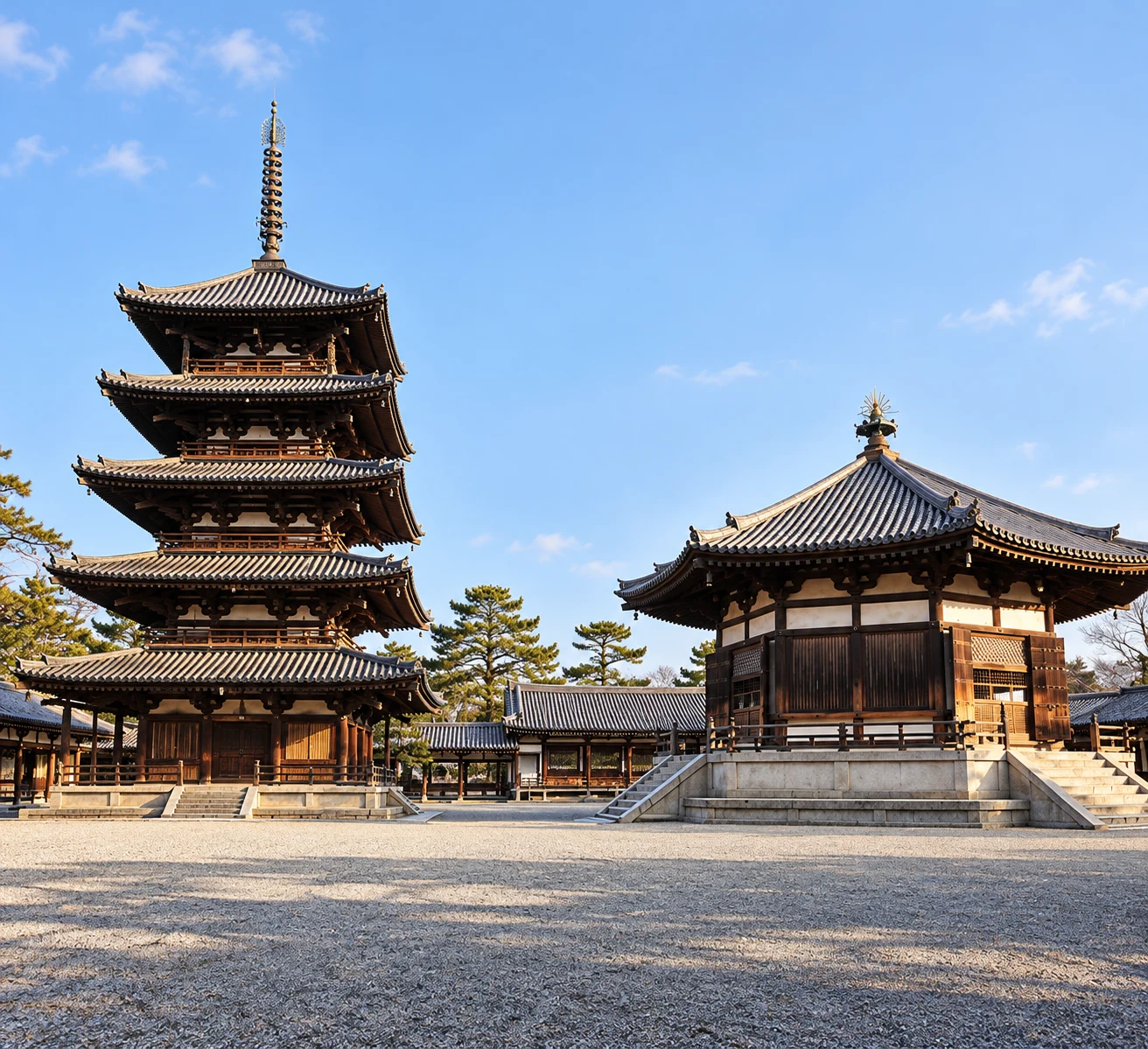 AI-generated visual study · not a documentary photograph
Discover Horyu-ji Temple
Horyu-ji is a large Ikaruga temple, not a single pagoda stop. Its Western Precinct groups the Main Hall and five-storey pagoda; the Eastern Precinct is arranged around the octagonal Hall of Dreams. Between them, the Great Treasure Gallery (Daihōzō-in) brings early Buddhist sculptures and portable shrines into a building completed in 1998. The standard admission covers all three areas. This lets visitors compare surviving wooden architecture with objects preserved from different parts of the temple without mistaking the modern gallery for an ancient hall.
Begin in the Western Precinct
The Main Hall (Kondo) and five-storey pagoda stand together at the heart of the Western Precinct. Inside the Kondo, three canopies mark the Shaka, Yakushi and Amida groups; the temple explains that the wall paintings were damaged in the 1949 fire, removed for conservation and replaced on the walls by reproductions. The first sight of the pagoda is only one part of this carefully connected complex of halls, gates and corridors.
Cross through the East Gate
The East Gate connects the western and eastern sides. The temple's account notes that it was moved from an earlier orientation, so the present route reflects centuries of adaptation rather than a frozen seventh-century plan. Continue to the Eastern Precinct rather than turning back after the pagoda.
Read the Great Treasure Gallery as a gallery
The 1998 Daihōzō-in has a central Kudara Kannon Hall between east and west exhibition rooms. The temple identifies the Tamamushi Shrine, Yumechigai Kannon and Lady Tachibana's miniature Amida shrine among its important works. A million miniature pagodas were commissioned in the eighth century; about 46,000 of the 100,000 assigned to Horyu-ji remain. The objects show different materials and purposes, from beetle-wing decoration on a seventh-century altar to devotional images and printed charms. The separate Daihōzō-den building hosts occasional special exhibitions; its dates and fee are not automatically included in the ordinary gallery route.
Continue to the Hall of Dreams without expecting every image
The Eastern Precinct stands on the site associated with Prince Shōtoku's Ikaruga Palace and centres on the octagonal Hall of Dreams (Yumedono). Its Kuse Kannon is traditionally described by the temple as a life-size image of Shōtoku and is opened only in set spring and autumn periods. The next listed opening is 22 October–22 November 2026; the Upper Mido is separately opened 1–3 November until 16:30. These are dated notices, so confirm them before travelling for a particular image.
Understand the 607 tradition and the 670 fire account
The temple's account of its founding follows records that place a temple and Buddha image here in 607, under Empress Suiko and Prince Shōtoku, after Emperor Yōmei's vow. The Nihon Shoki records a fire in 670, but Horyu-ji notes that historians have questioned the account since the nineteenth century and that the debate remains unresolved. The UNESCO World Heritage property also includes Hokiji, so Horyu-ji is one part of a wider Ikaruga heritage landscape.
Plan the journey, ticket and mobility
The temple estimates around twenty minutes on foot from JR Hōryūji Station or lists buses to Hōryūji Sandō and Hōryūji-mae. One cash-only ticket covers the Western Precinct, Great Treasure Gallery and Eastern Precinct; reception ends at least thirty minutes before closing, while individual buildings can stop entry sooner. Nara's tourism association lists seven loan wheelchairs and ramps around the precinct, but the Main Hall and pagoda have steps at their entrances. A nearby private car park lists ¥500 per car, ¥100 per motorcycle and ¥2,800 per bus, 8:30–18:00, cash only and no reservations; event closures can occur. Check transport, access and parking notices for your date.
What to look for
Western Precinct Main Hall and pagoda
East Gate and Hall of Dreams
Great Treasure Gallery and early Buddhist art
Photo notes
The temple's current Japanese visitor page lists sketching and photography/video among prohibited actions in the precinct. Do not assume images, halls or grounds are free for photography; follow on-site staff and signs. Publication or reuse of Hōryūji photographs or footage needs the temple's application and permission.
SEASONAL CALENDAR
Events connected with Horyu-ji Temple
These records are shared with MyNara’s event calendar, so dates and notices have one source. Recurring patterns are not confirmed dated editions; check the organizer’s latest guidance.
Special Hōryū-ji West En-dō and Fujinoki Kofun Tour (2026)
Ikaruga Town lists this two-date programme as one of the main projects in its new cultural-property initiative. On November 22 and 28, a cultural-property specialist guides visitors through Ikaruga Cultural Heritage Center and Fujinoki Kofun's normally closed stone chamber, followed by a monk-led visit to Hōryū-ji's West En-dō. This rare access is by a booked tour only; the tomb chamber and hall do not thereby become generally open to visitors.
- Time
- Meet at Hōryū-ji i Center at 13:30; planned finish around 15:10. Times may change.
- Admission
- ¥8,800 per person (adults and children). Includes guide and receiver, Ikaruga Cultural Heritage Center admission, tomb cooperation fee, Hōryū-ji admission, and a limited goshuin; travel to the meeting point is extra.
- Booking
- Advance booking through tabiwa is required, and a WESTER account is needed. Applications close 10 days before departure. Minimum departure is 12 participants; Japan Travel may cancel around 20 days beforehand if the minimum is not met. Current seat availability is not stated on the information page. A temple service may also cancel special access after departure confirmation.
Make a day of it
Explore guides close to this map point, then check the actual route before travelling. Distances below are straight lines, not walking distances or travel times; map points may not be entrances.
Sources & editorial status
Original MyNara draft based on the linked sources. Sources reviewed 20 October 2026. Opening arrangements, prices and offers may change; use the operator's current information before travelling.
- Horyu-ji official site
- Horyu-ji Western and Eastern Precinct introduction
- Horyu-ji Hall of Dreams
- Horyu-ji admission and access
- Horyu-ji current Japanese admission, access and photography rules
- Horyu-ji Great Treasure Gallery and objects
- Horyu-ji photo/film use application
- Horyu-ji Main Hall sculpture and mural history
- UNESCO World Heritage Centre — Buddhist Monuments in the Horyu-ji Area
- Nara Prefecture Tourism Association — wheelchair lending and barrier-free information
- Horyu-ji Tourist Car Park — current rates and event closures
- Nara Prefecture listing
- Official Nara Travel Guide — Great Treasure Gallery identity A01556