Nukata no Ōkimi’s Miwayama Poem Stele
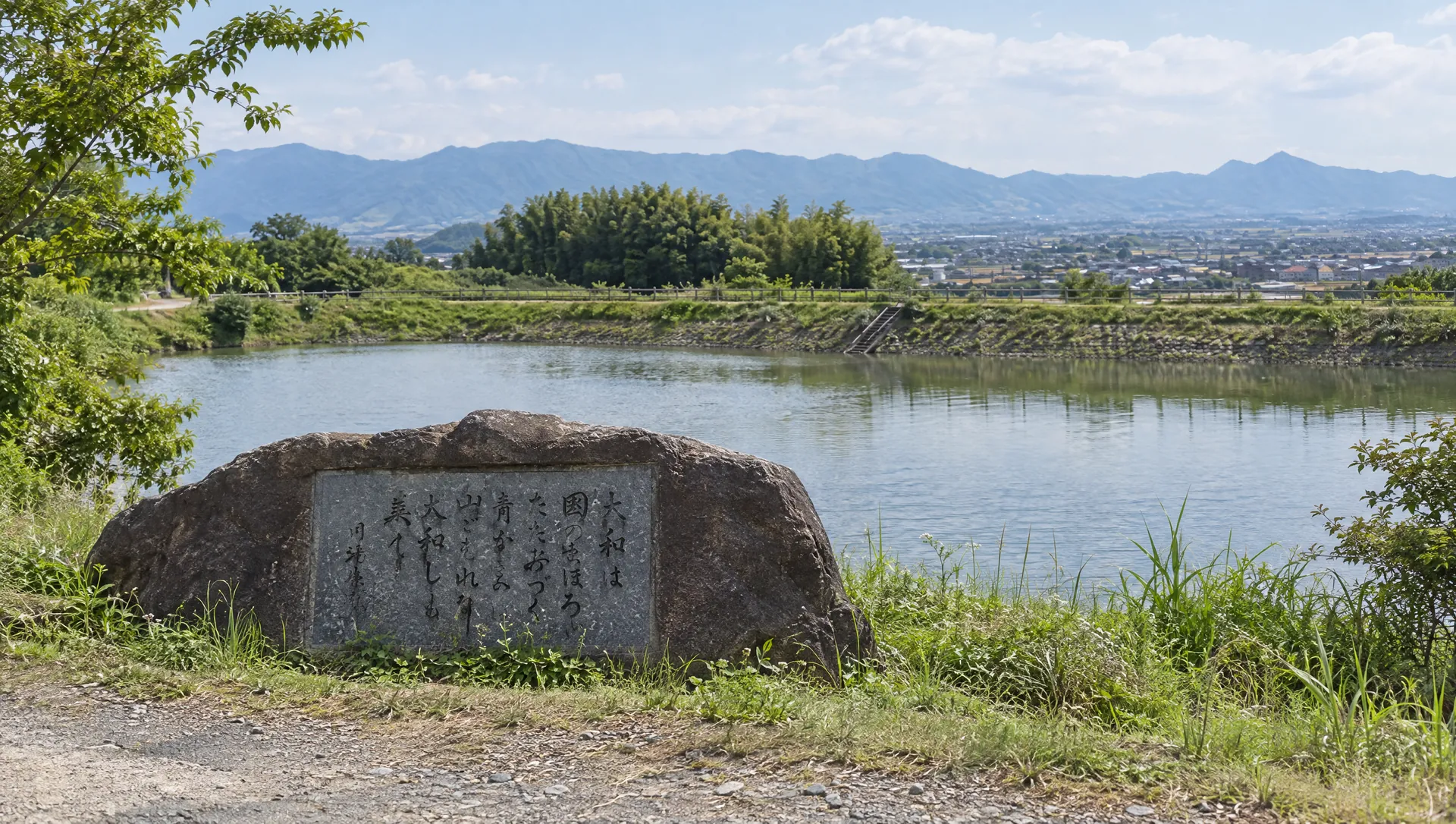
Pause beside a Manyōshū poem stele where Mount Miwa remains in view across the Yamato plain.
 Verified site photographs are being prepared.
Discover Nukata no Ōkimi’s Miwayama Poem Stele
This outdoor monument marks one of the best-known poems associated with the Yamanobe-no-Michi. The long poem in Manyōshū 1:17 is attributed to Nukata no Ōkimi. Sakurai City’s Japanese introductory text calls the following poem (1:18) Ido Ōkimi’s response, although the same page labels its individual entry Nukata no Ōkimi; this guide therefore leaves the response verse’s authorship open. In the long poem, the speaker looks back toward Mount Miwa as the road carries her away: even the clouds, she pleads, should have enough feeling not to hide the mountain. The work is traditionally linked to a journey from Asuka toward Ōmi after the court moved to Ōtsu. That literary setting gives the view its force, but the stele is a later memorial, not evidence that this exact roadside was the poem’s original composition point.
Look from the poem back to Miwayama
The stele stands on a walking route where the sacred, wooded form of Mount Miwa can be seen across the basin. The poem turns an ordinary act—glancing back while walking—into a farewell. Read the view first, then the verse: distance, bends in the road and passing clouds become part of the subject rather than background decoration. The mountain is a living sacred landscape; remain on the public route and do not enter fields or approach restricted areas.
Hear the long poem and its short reply together
The Sakurai City Tourism Association presents the long poem and its compact response verse together. The long poem (Manyōshū 1:17) is attributed to Nukata no Ōkimi. Sakurai City’s Japanese introductory heading describes poem 1:18 as Ido Ōkimi’s reply, but the page’s individual entry labels that same verse Nukata no Ōkimi; because the source is internally inconsistent, this guide calls it the paired response verse without assigning its authorship. The inscription also preserves an older reading of one phrase that Sakurai City’s literary commentary says differs from the reading supported by the original text. This is a useful reminder that a roadside monument is a later interpretation of an anthology, not a substitute for its textual history. The association identifies the calligrapher as novelist Yoichi Nakagawa, known for the 1930 novel “The Twilight of Heaven” (A no Yūgao). The inscription joins an eighth-century anthology, a later literary memorial and a present-day landscape in one stop.
Separate nearby monuments with similar authorship
This is the roadside stele beside the Keikō Mausoleum area, not the separate Nukata-attributed poem monument at Idera Pond. Sakurai City’s monument inventory lists many works and later calligraphers around the Yamanobe trail, so an author’s name alone is not enough to identify a stone. Use the location and wording of the poem to distinguish them. The imperial mausoleum itself is not a visitor interior: keep outside its boundary and follow the signs for the public walking route.
Read it as a later memorial in a living landscape
Sakurai City's tourism association identifies the calligrapher as Yoichi Nakagawa, a Shōwa-period novelist, and places the marker at the three-way junction southwest of Emperor Keikō's mausoleum. The city inventory separately lists this stone under the Yamanobe–Miwa area. The inscription connects a modern roadside memorial to an eighth-century anthology and a landscape that remains culturally significant; it does not establish that the poem was composed at this exact junction. The association's record does not give an installation date, so none is inferred here.
Plan a quiet outdoor stop, not a staffed attraction
The marker is on the rural Yamanobe route, at a junction near the mausoleum. The sources reviewed do not list a ticket counter, staffed hours, toilets or dedicated parking for this stele. Treat the pin as an approximate point, not an entrance or car-parking instruction. Expect an uneven rural walk, weather exposure and limited services; check current route signs and your return transport before setting out. Do not assume that every roadside or field track is public.
Choose a manageable section of the Yamanobe trail
Nara Prefecture describes the full Tenri-to-Sakurai Yamanobe-no-Michi as about 16 kilometres, with gentle ups and downs and many unpaved sections; it recommends comfortable walking shoes. The prefectural route guide notes that walkers can split the journey near JR Yanagimoto Station and use buses on National Route 169 to leave or rejoin the route. Those details describe the long-distance trail, not a measured walk from this stele or a promise of current bus service. Check the route map, weather and date-specific transport before choosing this roadside stop.
What to look for
A landscape held in a poem
See Mount Miwa across the Yamato plain from the route associated with Nukata no Ōkimi’s farewell verses.
Long poem and reply verse
The two Manyōshū poems turn a passing cloud into a tender appeal not to hide the mountain.
A small stop on a much older walk
The stele sits on the rural Yamanobe-no-Michi near Emperor Keikō’s mausoleum; it is an outdoor memorial, not a staffed museum.
Photo notes
The sources reviewed do not state a site-specific photography policy, and no third-party image is licensed for this guide. Stay on the public path, avoid photographing worshippers or private property, and follow posted instructions.
Make a day of it
Explore guides close to this map point, then check the actual route before travelling. Distances below are straight lines, not walking distances or travel times; map points may not be entrances.
Sources & editorial status
Original MyNara draft based on the linked sources. Sources reviewed 24 October 2026. Opening arrangements, prices and offers may change; use the operator's current information before travelling.
- Sakurai City Tourism Association — poem text, author, calligrapher and monument location
- Sakurai City Tourism Association — Yamanobe-no-Michi route and linked places
- Sakurai City — monument inventory identifying the stele southwest of Emperor Keikō’s mausoleum
- Sakurai City — Manyōshū text and commentary; poem 1:18 has conflicting author labels on the page
- Nara Prefecture — Yamanobe-no-Michi (Tenri–Sakurai): full-route distance, trail surface and route-splitting guidance
- JR Central — Yamanobe-no-Michi, Nukata poem stele and Mount Miwa view
- Google Maps — approximate map point for 額田王万葉歌碑