
Yakushi-ji Temple
A Nishinokyo temple where architecture, Buddhist art and sutra tracing meet.
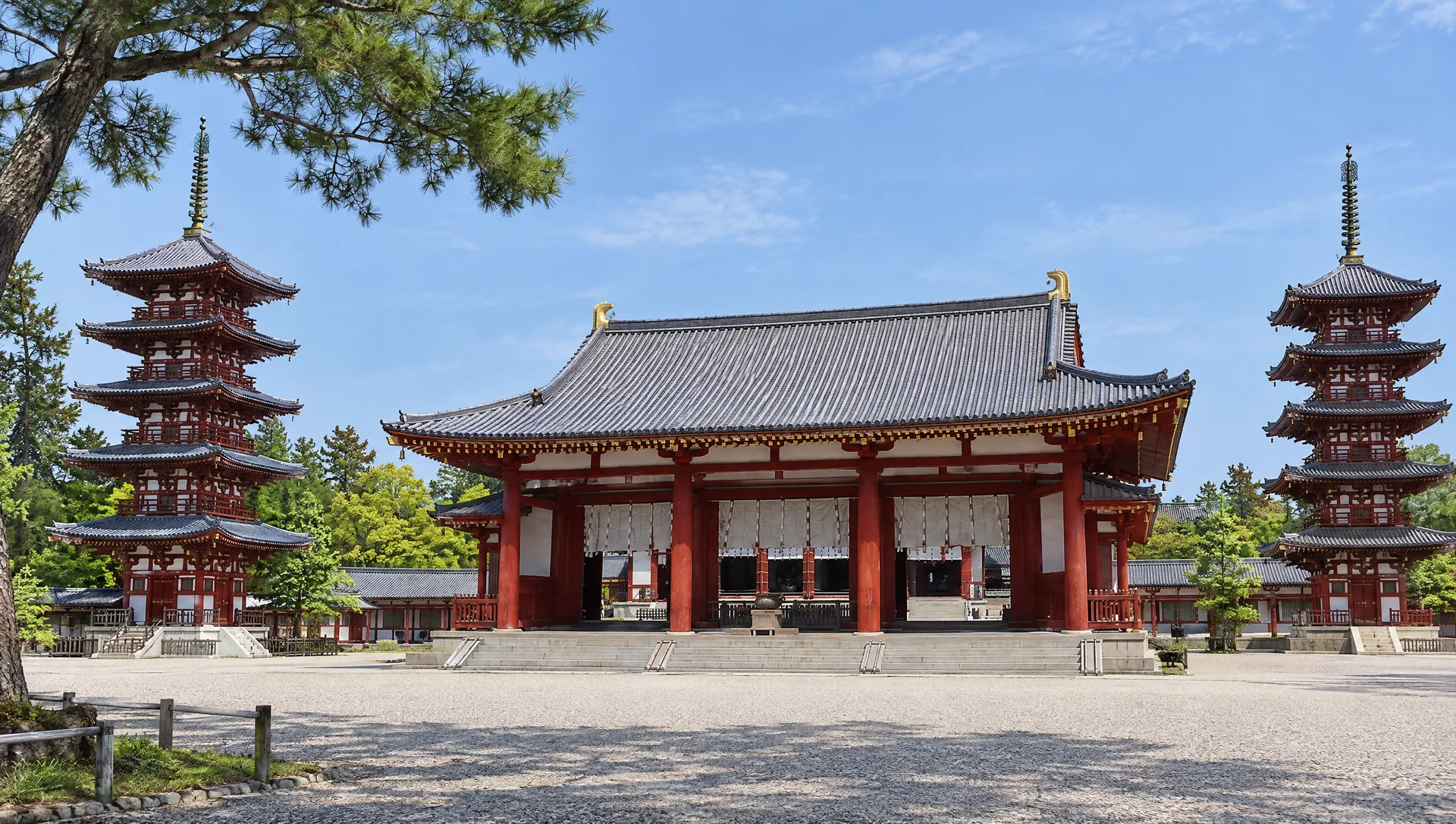 AI-generated visual study · not a documentary photograph
Discover Yakushi-ji Temple
Emperor Tenmu began Yakushi-ji in 680 after praying for the recovery of his consort, who later became Empress Jito. The first temple stood at Fujiwara-kyo; after the capital moved in 710, Yakushi-ji was relocated to Heijo-kyo, present-day Nara. The East Pagoda is the sole surviving building from the early precinct, while fires and later rebuilding shaped much of what visitors see today. Its Main Hall reunites the temple’s origin story with the Yakushi Triad, and the precinct still supports a living practice of sutra tracing.
Look closely at the two pagodas
The East Pagoda is the temple's surviving Nara-period tower, dated by Yakushi-ji to 730. Its paired eaves can make it look like a six-storey tower at first sight, although it has three storeys. Compare it with the West Pagoda, rebuilt in 1981, and read the precinct as a conversation between preservation and restoration rather than assuming both are original.
The healing Buddha at the centre
The Main Hall houses the National Treasure Yakushi Triad: Yakushi Nyorai, the Medicine Buddha, with Nikko and Gakko Bodhisattvas. The temple says the images were enshrined from its founding and that the opening ceremony is recorded for 697. The central figure stands about 2.55 metres high. Its bronze surface, once gilded, is now mostly dark; look also at the unusually detailed pedestal, whose motifs include the four directional creatures. The hall itself was rebuilt in 1976 through a temple-wide sutra-copying campaign.
Try sutra tracing in the temple’s own practice hall
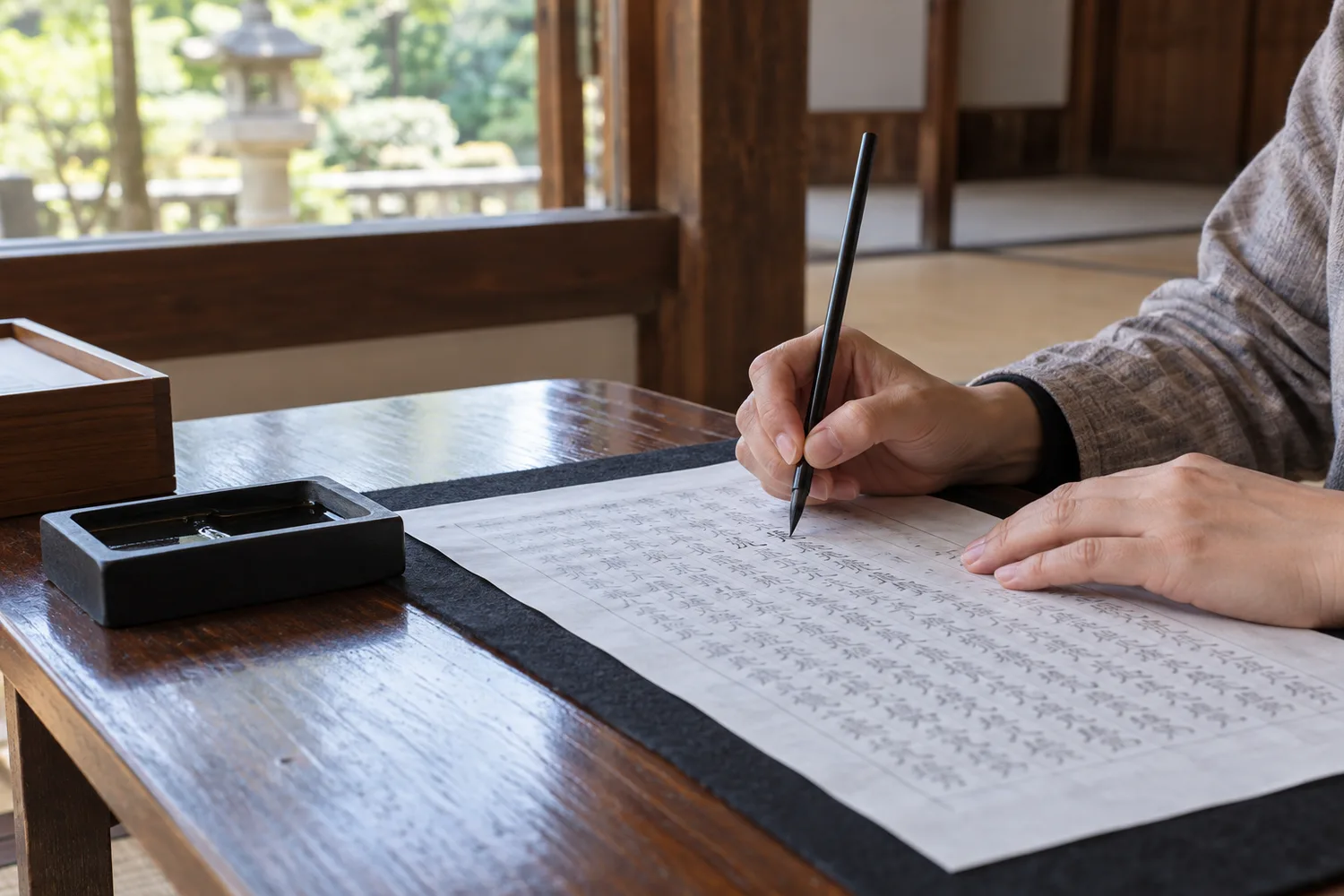
Yakushi-ji’s sutra hall is open daily from 09:00 to 17:00, with last reception at 16:00; individual visitors do not need to reserve and writing tools are provided. A Heart Sutra takes about 1–1.5 hours and costs ¥2,000; longer texts cost more. The temple welcomes visitors regardless of religious affiliation and provides chair seating. This is a devotional practice: follow staff guidance and allow enough quiet time. Groups of seven or more should contact the temple in advance to avoid waiting. Sutra tracing is paid separately from regular precinct admission.
Make a Nishinokyo circuit
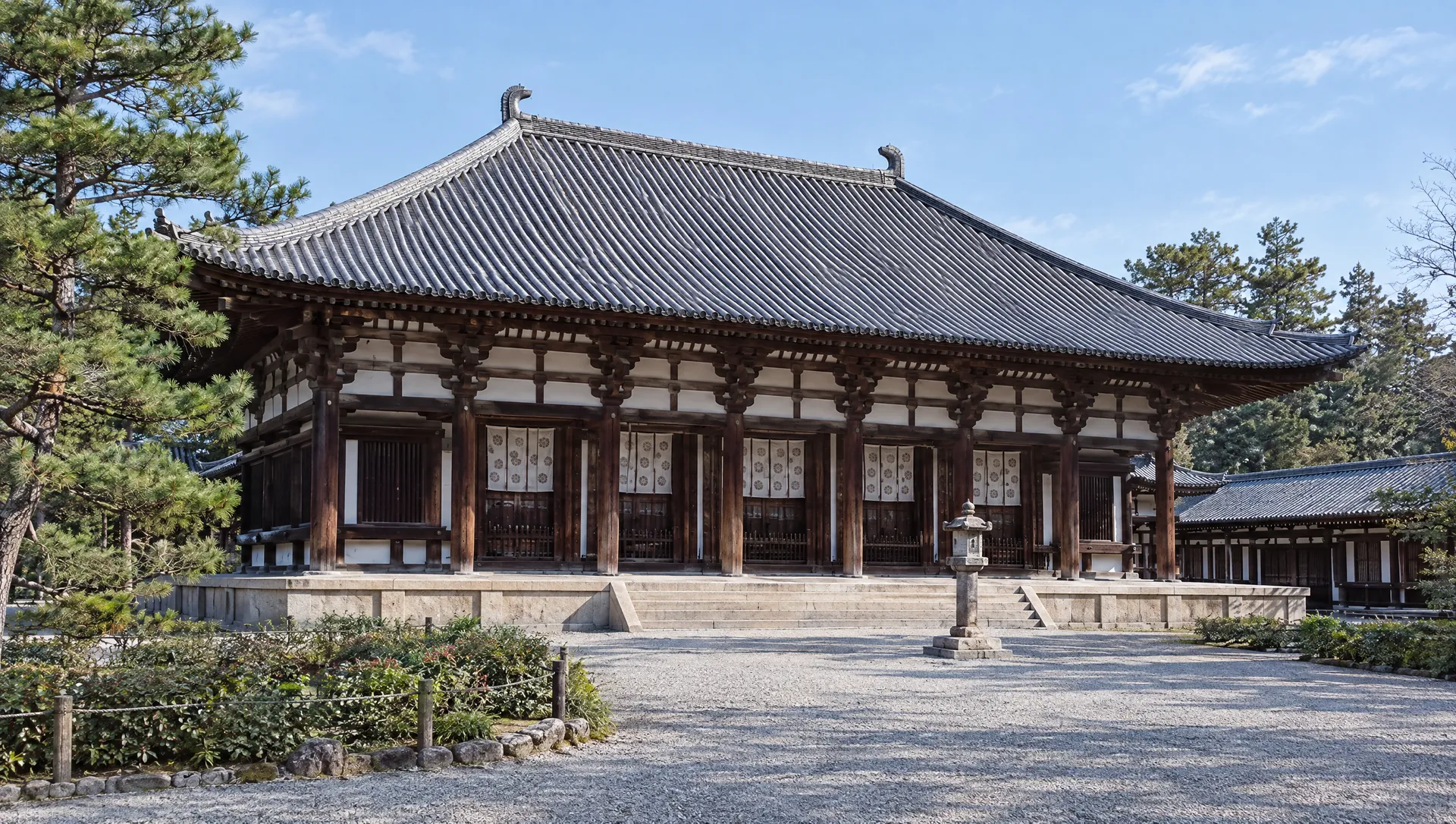
Kintetsu Nishinokyo Station is about a one-minute walk from the temple. Toshodai-ji is around ten to fifteen minutes on foot from Yakushi-ji’s north reception. Walking between them gives a contrast between Yakushi-ji’s visible restorations and Toshodai-ji’s surviving Nara-period halls; allow for separate entry fees, closing times and a longer visit if you plan to try sutra tracing.
A dated autumn opening in 2026
From 24 October to 8 November 2026, Yakushi-ji plans a special exhibition for the 50th anniversary of the Main Hall’s reconstruction, with displays in the West Monk Quarters and Xuanzang Sanzangin. The exhibition ticket is ¥1,000 for adults, ¥500 for junior/high school students and ¥100 for primary school students, in addition to regular admission. The National Treasure East Pagoda’s water-smoke finial is among the announced exhibits. During the same dates, both pagodas are scheduled to open 09:00–16:30, weather permitting; visitors view the interiors from outside and cannot enter the towers. Check the temple’s notice before travelling.
What to look for
Nara-period East Pagoda and rebuilt West Pagoda
Yakushi Triad and the Main Hall
Daily sutra tracing in the temple practice hall
Photo notes
Yakushi-ji requires advance permission for filming, publication, broadcasting, recording and image reuse connected with the temple, its buildings, grounds or treasures. That media-permission rule does not itself establish a blanket ban on personal snapshots; follow posted on-site camera rules, avoid disturbing worship and obtain written approval before publishing or commercially reusing temple-related images.
SEASONAL CALENDAR
Events connected with Yakushi-ji Temple
These records are shared with MyNara’s event calendar, so dates and notices have one source. Recurring patterns are not confirmed dated editions; check the organizer’s latest guidance.
Shūya no Nara Tabi: World Heritage Night Openings (2026)
Nara City Tourism Association's seventh Shūya no Nara Tabi programme brings limited night visits to five World Heritage temples and a separately bookable Mount Wakakusa night-view bus. It began in 2020 and is promoted as a way to experience Nara's historic sites after dark. Each temple has different operating Saturdays, hours and admission; the official schedule below preserves those differences. Temple visits do not require reservations, but the bus does. At Gangō-ji, photography is allowed outdoors only; indoor photography and tripods, monopods or ladders are prohibited. Check the association's current notice for access and transport changes before travelling.
- Time
- Temple openings: Kōfuku-ji Oct 31 and Nov 7, 14, 21, 28, 17:30–21:00; Kasuga Taisha Nov 7, 14, 21, 28, 17:30–20:00; Gangō-ji on those four November Saturdays, 18:00–20:00; Tōshōdai-ji and Yakushi-ji Nov 7 and 21, 17:30–20:30. Optional night-view bus runs Oct 31 and each November Saturday; depart JR Nara 16:10 or Kintetsu Nara 16:15.
- Admission
- Separate admission at each temple: Kasuga Taisha ¥700; Kōfuku-ji adults ¥500, junior/senior high students ¥300, elementary pupils ¥200 (rear chamber costs the same again); Gangō-ji ¥700; Tōshōdai-ji ¥500; Yakushi-ji ¥1,000. Optional reserved round-trip bus: adults ¥2,000, children ¥1,000.
- Booking
- Advance reservation is not required for the five temple visits. The optional Mount Wakakusa bus requires advance booking through Nara Kotsu; check the official campaign page for the booking link and return arrangements. Each temple's session and ticket are separate.
Nara–Nishinokyo Lotus Road
The Nara City Tourism Association coordinates a seasonal route linking Saidaiji, Kikō-ji, Tōshōdai-ji and Yakushi-ji, where lotus flowers bloom in temple precincts. Some editions offer a shared admission ticket, limited goshuin and related walking programmes; dates, ticket terms and participating activities vary by year. Check the association's current announcement before planning the route.
Check organizer informationLight-up Promenade Nara
Nara Prefecture and the Nara City Tourism Association describe an outdoor illumination route linking Kasuga Taisha's first torii, Tōdai-ji, Nara National Museum, Sarusawa Pond, Ukimidō, Heijō Palace and Yakushi-ji. The prefecture says most sites are lit year-round, while Tōdai-ji is seasonal; its 2026 notice gives a separate July–September window for the Great Buddha Hall and Nandaimon. The Tourism Association currently says Ukimidō's lighting is temporarily suspended for LED conversion, but publishes no start date or expected restart; contact Nara Park Office before planning an evening visit specifically for the illuminated pavilion. The illumination shows exterior buildings and landmarks: it does not grant night entry to temple or museum interiors. Times and individual sites can change, so check the prefectural page before setting out. This annual listing is a pattern, not a promise that every site is lit on every night.
Check organizer informationMake a day of it
Explore guides close to this map point, then check the actual route before travelling. Distances below are straight lines, not walking distances or travel times; map points may not be entrances.
Sources & editorial status
Original MyNara draft based on the linked sources. Sources reviewed 20 October 2026. Opening arrangements, prices and offers may change; use the operator's current information before travelling.
- Yakushi-ji official guide
- Yakushi-ji visitor information
- Yakushi-ji sutra tracing: hours, fees and reservation guidance
- Yakushi-ji 2026 autumn special opening
- Yakushi-ji media and image-use permission
- Yakushi-ji history
- Yakushi-ji Main Hall and Yakushi Triad
- Yakushi-ji East Pagoda
- Yakushi-ji guide to halls and images
- Yakushi-ji access
- Yakushi-ji FAQ
- Nara Prefecture listing