
Yoshino Mikumari Shrine: Water, Children and a Mountain Sanctuary
Walk into an early-seventeenth-century shrine in Upper Senbon, and learn why a water deity became associated with children's protection.
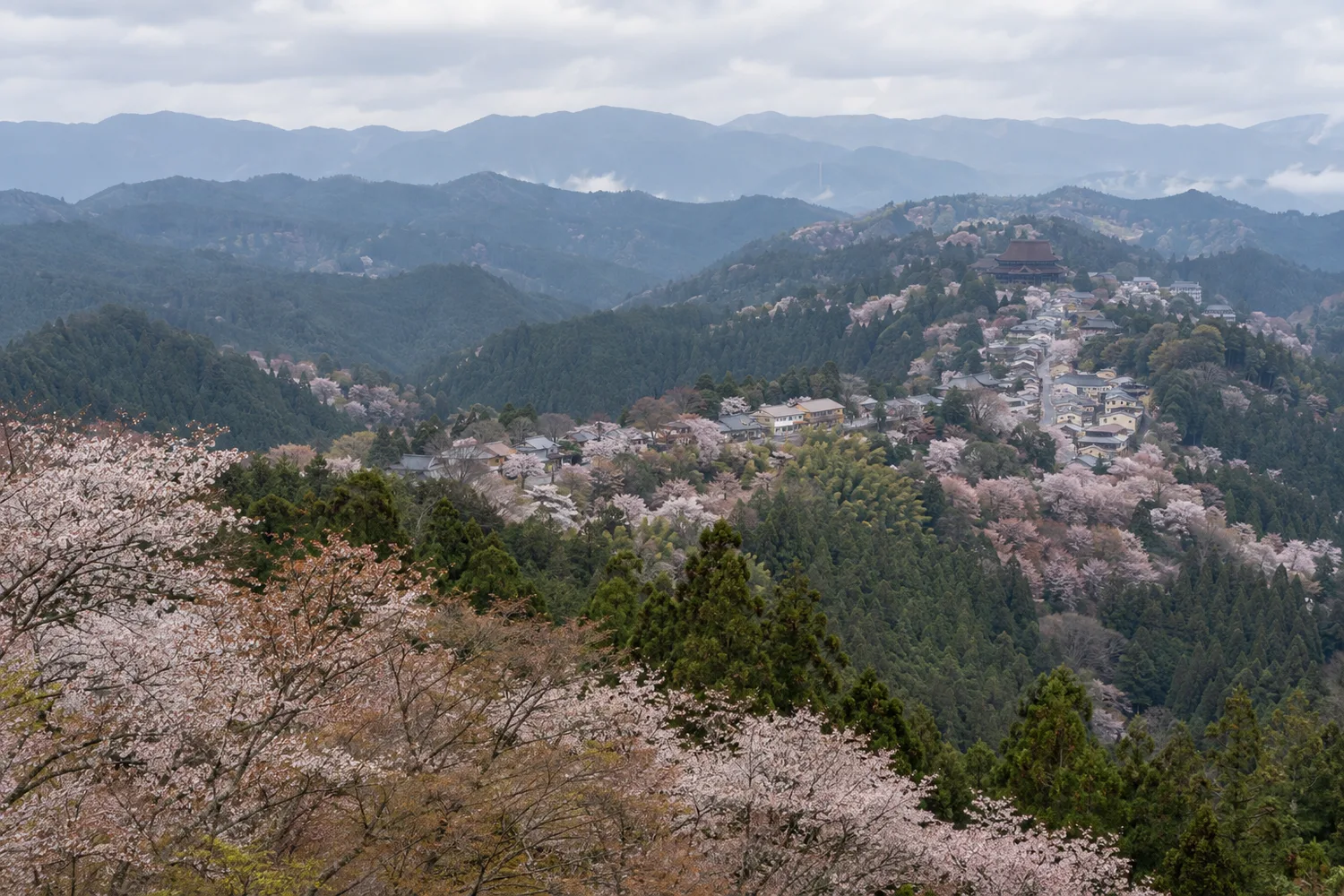
 AI-generated visual study · not a documentary photograph
Discover Yoshino Mikumari Shrine: Water, Children and a Mountain Sanctuary
Yoshino Mikumari Shrine stands above the denser temple-and-shop streets of Yoshino Mountain. Its name points to Ame-no-Mikumari, a deity connected with the distribution of water. Local worship also calls the shrine Komori-no-miya, a guardian associated with childbirth and children. The present buildings belong to an early-seventeenth-century rebuilding associated with Toyotomi Hideyori, while the shrine's place in Yoshino's much longer sacred geography is older. This is a working place of worship and a World Heritage component, rather than a museum whose designated objects are all on show.
Read the shrine through its water and child-protection traditions
The local tourism association identifies Ame-no-Mikumari as the principal deity and Tamayorihime among the other enshrined figures. It explains the Komori name through prayers for a child, safe birth and protection of children. A tradition connects Toyotomi Hideyoshi's prayer here with the birth of Hideyori, who later sponsored the rebuilding. These beliefs and stories are part of the shrine's living history; they should not be presented as proof that a particular prayer will have an outcome.
Look at the buildings, not for the hidden statue
The association lists the main shrine structure, offering hall, worship hall, gate and connecting corridors as Important Cultural Properties. Their grouping gives the precinct a more enclosed, architectural experience than the broad blossom viewpoints below. The wooden seated Tamayorihime image is a National Treasure, but the association explicitly says it is not on public display; another designated wooden image is also not public. Do not plan an ordinary visit around seeing or photographing either sculpture.
Place the rebuilding in the right century
The tourism association dates Hideyori's rebuilding to 1604, whereas an Agency for Cultural Affairs heritage record dates the main building to 1605. An older English directory describes a sixteenth-century rebuilding. The safe visitor-facing conclusion is that the visible historic complex was rebuilt in the early seventeenth century. Exact dating of individual structures requires a component-by-component heritage check; it is not a reason to shift the entire shrine to the sixteenth century.
Make it part of a realistic Upper Senbon walk
The association estimates about ninety minutes on foot from the upper Yoshinoyama ropeway station. That is already beyond the short lower-town temple circuit and still depends on the ropeway actually running. Hanayagura's lookout is close enough to pair with the shrine, while Kimpu Shrine lies farther uphill in Oku Senbon. In spring, blossoms move uphill over time, but a view or peak date cannot be guaranteed. Allow for steep lanes, weather, road controls and the return descent instead of booking the whole mountain into a brief rail stop.
What to look for
Water and child-protection traditions at Komori-no-miya
Early-seventeenth-century Important Cultural Property shrine buildings
Upper Senbon walk close to Hanayagura viewpoint
Photo notes
No building or statue image is licensed to MyNara. The hidden National Treasure cannot be photographed on an ordinary visit. Respect worshippers and posted interior rules; seek shrine permission before photographing interiors or using images commercially.
Make a day of it
Explore guides close to this map point, then check the actual route before travelling. Distances below are straight lines, not walking distances or travel times; map points may not be entrances.
Sources & editorial status
Original MyNara draft based on the linked sources. Sources reviewed 19 October 2026. Opening arrangements, prices and offers may change; use the operator's current information before travelling.