
Jūbei's Cedar
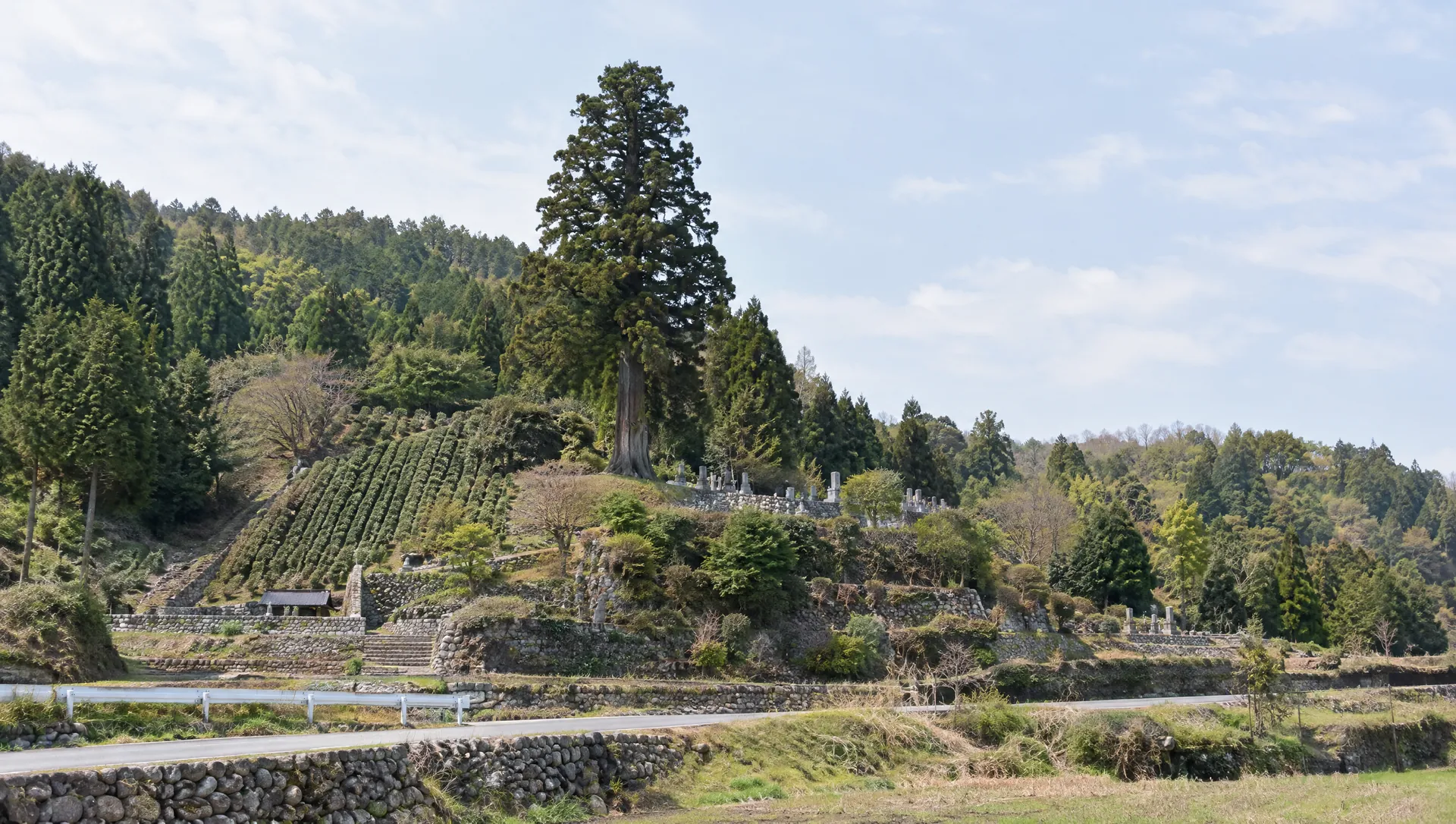
A roadside landmark in Yagyu associated with swordsman Yagyū Jūbei Mitsuyoshi and a cedar planted near the family burial ground.
 AI-generated visual study · not a documentary photograph
Discover Jūbei's Cedar
Jūbei's Cedar is one of the small landmarks that helps make sense of Yagyu as a lived-in mountain village rather than a single castle site. Local accounts say Yagyū Jūbei Mitsuyoshi planted a cedar by his ancestors' graveyard before setting out on travels. Nara Prefectural Library's local-history archive records that the celebrated tree was struck by lightning twice in summer 1973 and gradually declined; its index includes a 1974 photograph. Nara City's walking guide describes the historic tree as dead, while the Yagyu Tourism Association says a second-generation cedar is growing beside it. Visitors should understand this as the old tree's remains and a reported successor, not a living 350-year-old cedar. The planting story is local tradition, not a documented eyewitness account. Nara City also treats the view from the settlement toward the cedar and other heritage as part of Yagyu's historic landscape. The landmark appears along the Yagyu–Kasagi walking network among family memorial sites and everyday village roads.
Separate the historic cedar from its reported successor
The Yagyu Tourism Association says Jūbei planted a cedar at his ancestors' graveyard before leaving on his travels; Nara City's guide also presents the planting as a local story. Neither source establishes an exact planting date. The association estimates that the original tree was about 350 years old, says it was struck by lightning twice in 1973, and reports that a second-generation cedar is growing beside it. Nara City's Yagyu route guide describes the historic tree itself as dead, while the Nara Prefectural Library archive records its decline and catalogs a 1974 photograph. These accounts can be read together as a fallen original and a reported successor; they do not show that the old trunk remains alive or provide a recent arborist assessment of the younger tree.
See the cedar as part of a living village landscape
Jūbei was Yagyū Mitsuyoshi, the eldest son of Yagyū Munenori, whose family became closely associated with the Yagyu Shinkage-ryū sword tradition. Nara City identifies the view from Yagyu settlement toward the former chief-retainer's residence and Jūbei's Cedar as one of the city's important landscape views. The cedar is therefore one stop among the village's historical places, not a monument to martial arts training by itself. The nearby family burial ground and residential setting remain places of respect: view the tree from the signed public way and do not enter graves, yards or private land.
Choose the right Yagyu walking route
The Yagyu Tourism Association's local-history loop starts and ends at Yagyu bus stop, covers about 3.6 km and is estimated at about 45 minutes. Jūbei's Cedar is the first listed stop, followed by Yagyu Shimozuka Kofun, Ataya Jizō and Ken-zuka on Kojoyama. The association also publishes several distinct Kasagi–Yagyu itineraries: its model course is about 5.5 km from JR Kasagi Station to Yagyu bus stop via Kasagidera and Ataya Jizō; its 21 October 2025 walking map labels the Shino-michi course as 6 km; a separate Course 03 on the Yagyu–Kasagi route page is about 11 km from Yagyu bus stop to JR Kasagi Station. These figures describe different mapped courses and directions, not one inconsistent measurement or a site-specific walk time. Follow the map for the route you choose, check current signs and conditions, and treat the stated times as estimates. The map point here is approximate and is not a surveyed entrance or a claim that every adjacent path is public.
Plan for a simple outdoor stop
The reviewed official listings do not publish staffed opening hours, an admission counter, a site-specific photography policy, toilet facilities at the tree, or step-free access details. Do not assume the nearby parking area is a dedicated parking lot for the cedar; consult the current Yagyu visitor map and avoid stopping on narrow roads. Keep noise low, leave offerings and vegetation undisturbed, and ask the local association before commercial filming.
What to look for
Historic tree and reported successor
Nara City describes the historic tree as dead; the local association reports a second-generation cedar beside it.
A story linked to Yagyū Jūbei
Local tradition connects the planting with the swordsman's departure on his travels.
Part of the Yagyu–Kasagi walk
Nara City places the tree along a historic rural route through Yagyu and toward Kasagi.
Photo notes
No third-party photograph is licensed for this guide. The site-specific photography rules are not published in the reviewed visitor sources; respect nearby homes and cultivated land, and ask before commercial photography or filming.
Make a day of it
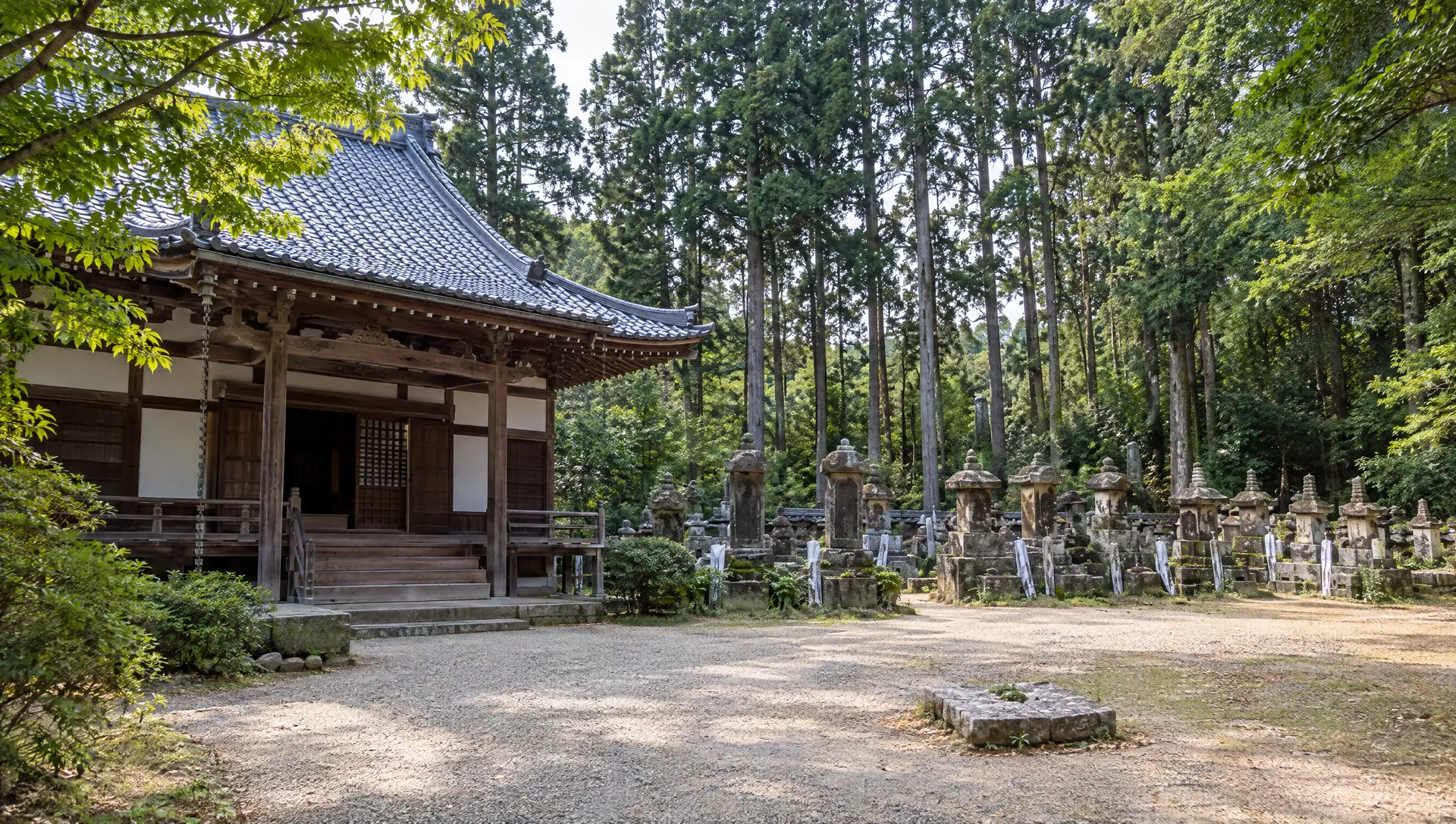
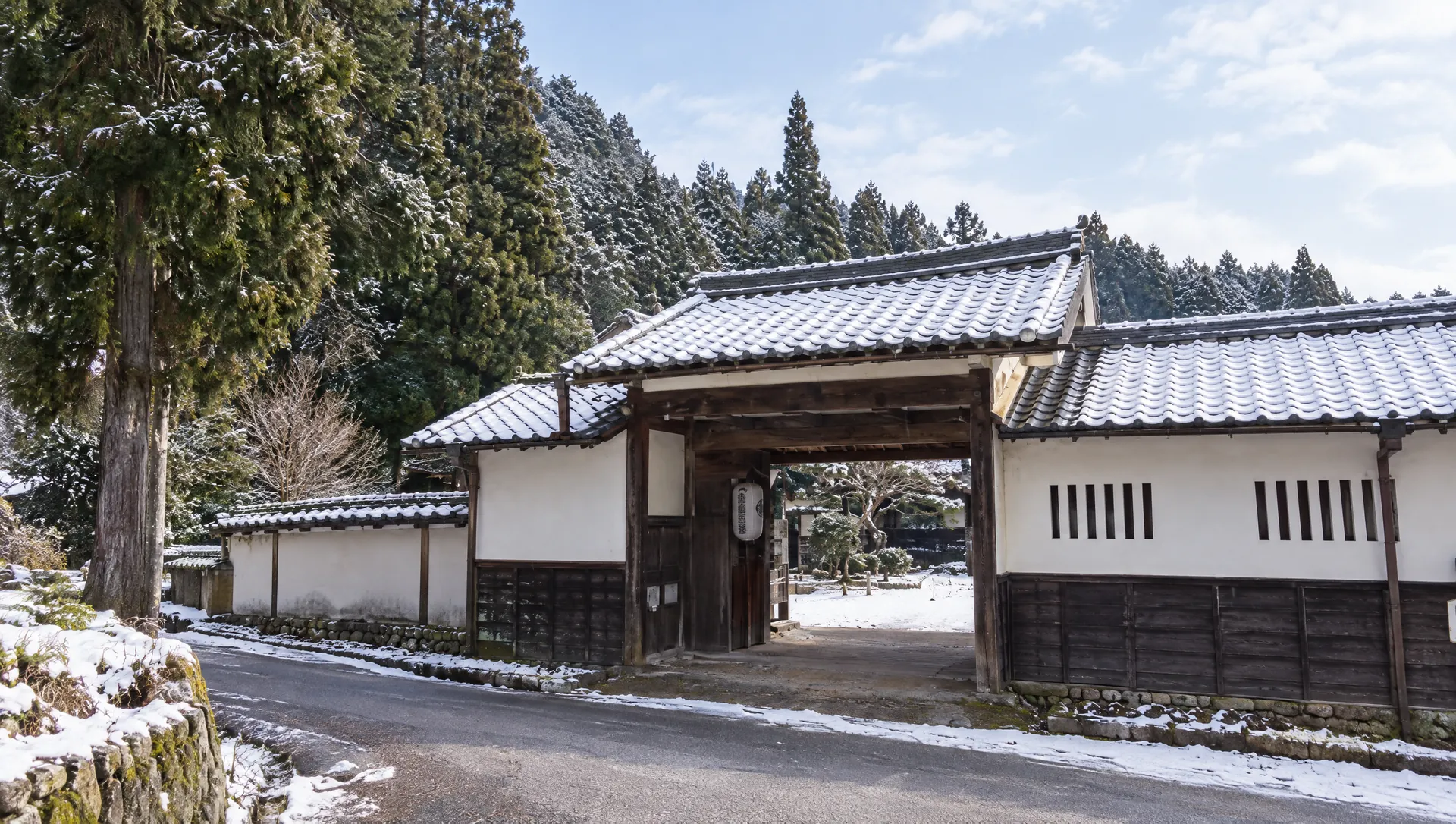
Explore guides close to this map point, then check the actual route before travelling. Distances below are straight lines, not walking distances or travel times; map points may not be entrances.
Sources & editorial status
Original MyNara draft based on the linked sources. Sources reviewed 24 October 2026. Opening arrangements, prices and offers may change; use the operator's current information before travelling.
- Yagyu Tourism Association — Jūbei's Cedar and separate 11 km Course 03 route from Yagyu to JR Kasagi
- Yagyu Tourism Association — local-history loop, route order and estimated distance/time
- Yagyu Tourism Association — 2025-10-21 Kasagi–Yagyu–Minamiyamashiro walking map; Jūbei's Cedar is marked on the map
- Yagyu Tourism Association — access from Nara by bus; check live departures because its PDF timetable is dated 2024
- Nara Kotsu — Bus Navi for date-specific timetables, fares and bus locations; English, Simplified Chinese and Korean interfaces
- Nara City — Yagyu Kaidō route; describes the historic Jūbei cedar as dead and locates it on the Yagyu–Kasagi path
- Nara City — official Yagyu reconstructed historic map
- Nara Prefectural Library — Yagyu photo archive, including the 1974 cedar record and 1973 lightning note; archive listing is not image-reuse permission
- Nara City — important view from Yagyu settlement toward the cedar and other historic assets
- Nara Prefecture tourism — walking the Yagyu historic route
- OpenStreetMap — approximate Jūbei's Cedar map point