
Tōdai-ji Hokke-dō: The Older Hall beyond the Great Buddha
Pay a separate admission to enter Tōdai-ji's oldest surviving hall and see its Nara-period Kannon sculptures; one guardian image is normally concealed.
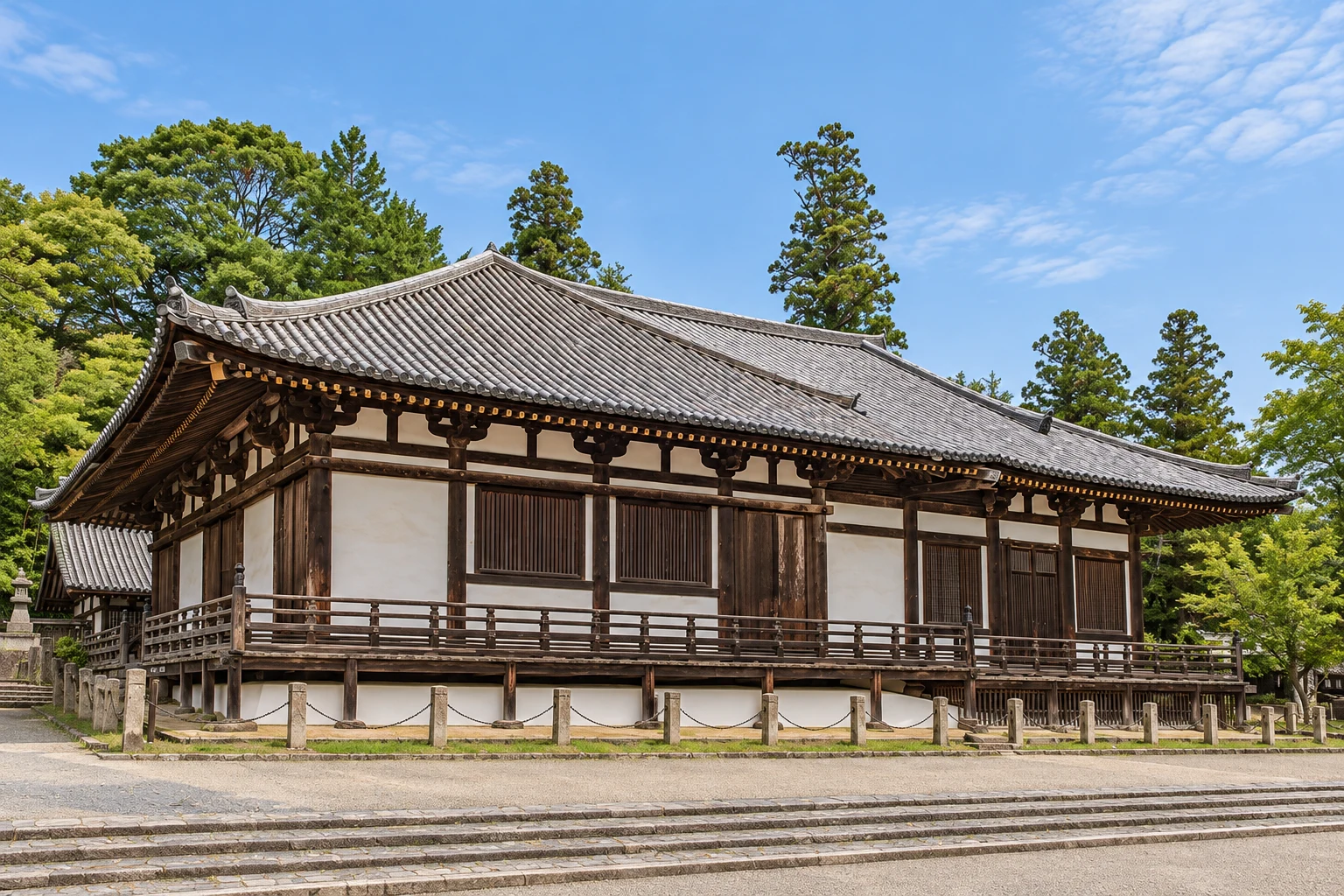 AI-generated visual study · not a documentary photograph
Discover Tōdai-ji Hokke-dō: The Older Hall beyond the Great Buddha
Many visitors finish at the Great Buddha Hall, yet Hokke-dō on the higher eastern precinct tells a different part of Tōdai-ji's story. This hall survived where the Great Buddha Hall was repeatedly lost and rebuilt. Its rear image hall belongs to the Nara period, while the attached worship hall reflects a 1199 rebuilding. Inside, the main Fukūkensaku Kannon stands among a dense group of Nara-period sculptures. The hall's own paid ticket, 16:00 closing time and strict no-photography rule make it an intentional second stop, not a free annex of the Great Buddha Hall.
Look at two periods joined in one building
Tōdai-ji calls Hokke-dō its oldest surviving structure and connects it to Kinshō-ji, the earlier temple on this hillside. Its chronicle supplies 733 as an early reference; the Agency for Cultural Affairs dates the surviving rear image-hall fabric to about 747. These are not a precise single 'built in 733' fact. The forward worship hall was rebuilt by the monk Chōgen in 1199 and connected to the older hall. Look at the roof and massing outside to see the joined Nara and Kamakura-period parts before entering.
Meet Fukūkensaku Kannon, then study the surrounding figures
The main image is Fukūkensaku Kannon, a form of compassion associated with an unfailing lasso that draws people toward liberation. Tōdai-ji lists ten Nara-period National Treasure sculptures in the hall's ensemble, including fierce Kongō Rikishi and protective Four Heavenly Kings. One of those ten, the secret Shukongōjin behind the main image, is ordinarily hidden. Do not promise that all ten can be seen on an ordinary visit, nor count this ensemble as a separate museum.
Know what was moved and what opens only on one day
The temple says sculptures traditionally called Nikkō and Gakkō, along with Kichijōten and Benzaiten, were moved to its museum for earthquake protection. A Hokke-dō ticket does not include that museum. The normally hidden Shukongōjin is announced for 16 December, but an annual opening notice and any restrictions should be checked for the year of travel before promising access. The hall's present sculpture arrangement is therefore a product of conservation as well as its eighth-century origin.
Plan a quiet visit around worship, not a hall photograph
Hokke-dō is an active hall. The temple's Japanese page lists a service on the seventeenth day of each month, roughly 50 minutes from 8:00 in April–October or 8:30 in November–March; listener entry is normally from 8:30 and may be limited by the hall's small capacity. That service timetable and ordinary ticketed opening are different conditions. Inside, photography, sketching and flashlight use are prohibited. Read the temple's explanation outside or after your visit instead of trying to document the sculptures with a phone.
Choose the correct ticket and hillside route
Tōdai-ji currently gives Hokke-dō and Senju-dō a common 8:30–16:00 opening window. Hokke-dō is a separately charged hall at ¥800 for adults and ages thirteen or older, ¥400 for ages six to twelve under the individual schedule. Its ¥1,200 joint ticket pairs the Great Buddha Hall with the museum, not this hall. From the Great Buddha Hall precinct continue toward Nigatsu-dō and locate Hokke-dō on the official map; the route is uphill and uneven. Tōdai-ji describes accessibility of the wider path to Nigatsu-dō but does not establish this hall's step-free interior access, so ask the temple about the exact entrance if needed.
What to look for
Tōdai-ji's oldest surviving hall, with Nara and 1199 architectural fabric
Fukūkensaku Kannon and a protected Nara-period sculptural ensemble
Separate ¥800 admission and a normally hidden image with a date-specific opening
Photo notes
Tōdai-ji explicitly bans interior photography, sketching and flashlight use in Hokke-dō. Its website images cannot be reproduced without permission. Respect worship and signs outdoors; ask the temple before any commercial shoot or drone use, which is prohibited in the wider precinct.
SEASONAL CALENDAR
Events connected with Tōdai-ji Hokke-dō: The Older Hall beyond the Great Buddha
These records are shared with MyNara’s event calendar, so dates and notices have one source. Recurring patterns are not confirmed dated editions; check the organizer’s latest guidance.
Nigatsu-dō Setsubun (2027)
Tōdai-ji's Nigatsu-dō is scheduled to hold its Setsubun rites on February 3, 2027. The temple's annual programme and the Nara City Tourism Association's dated notice list the burning of old talismans around 10:00, bean-throwing after the 14:00 service, and a star-protection rite at 18:00. The public bean distribution is from a temporary stage in the plaza in front of Hokke-dō; crowd limits may apply. The published schedule can change, and no separate event fee or reservation procedure is stated. Check Tōdai-ji's latest notice before travelling.
- Time
- Old-talisman burning around 10:00; bean-throwing after the 14:00 service; star rite at 18:00
- Admission
- No event-specific fee is stated in the checked notices; confirm any separate admission arrangements with Tōdai-ji.
- Booking
- No reservation procedure is stated. The temple warns that crowd capacity can limit access to the bean-throwing area; follow current on-site directions.
Make a day of it
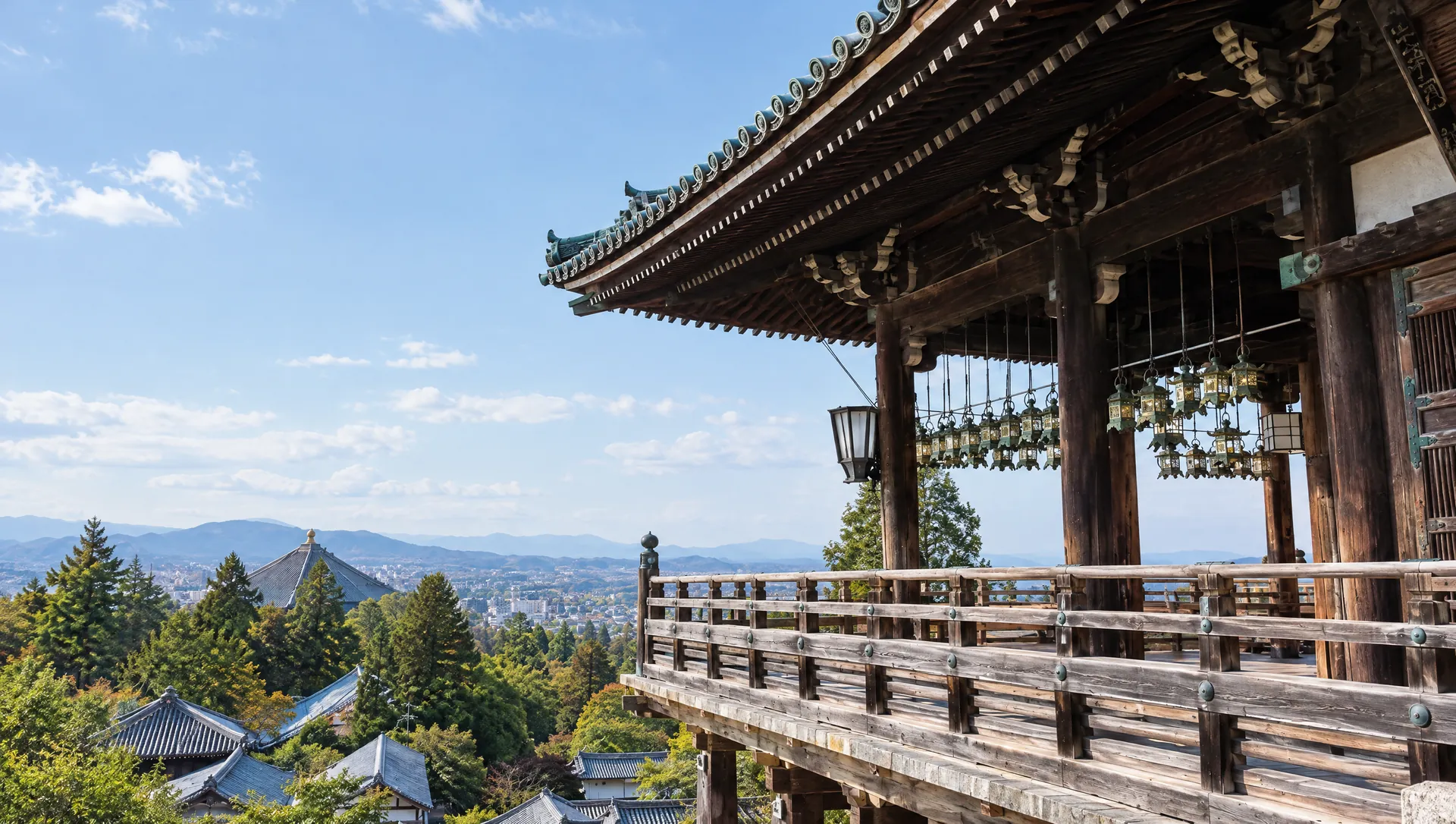
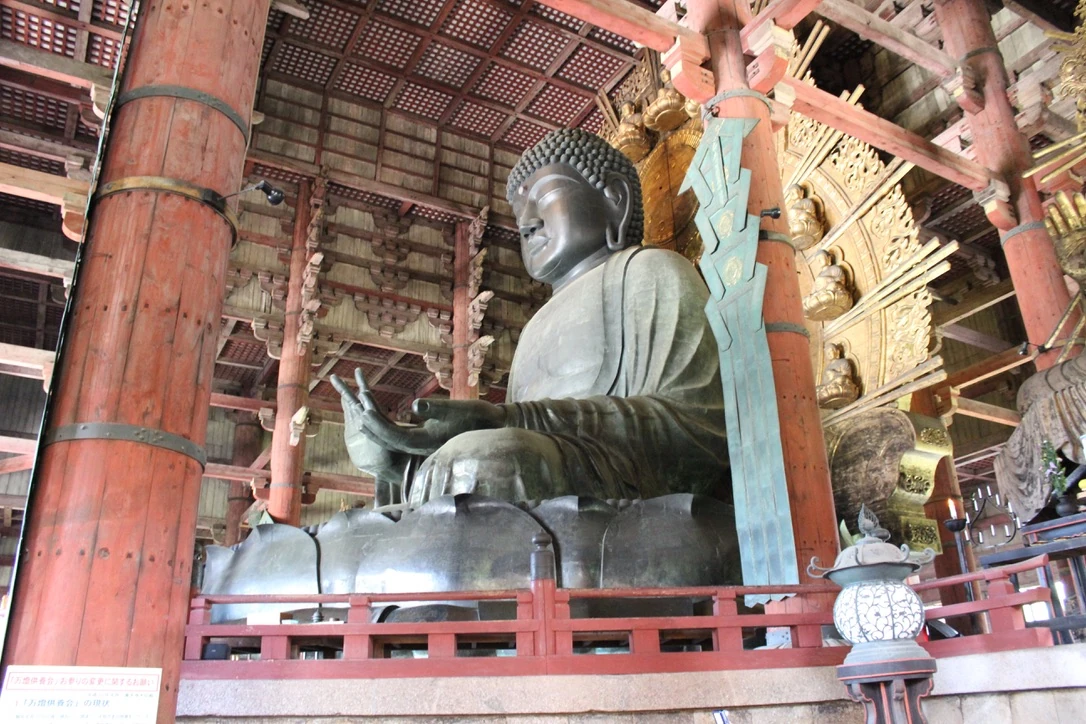
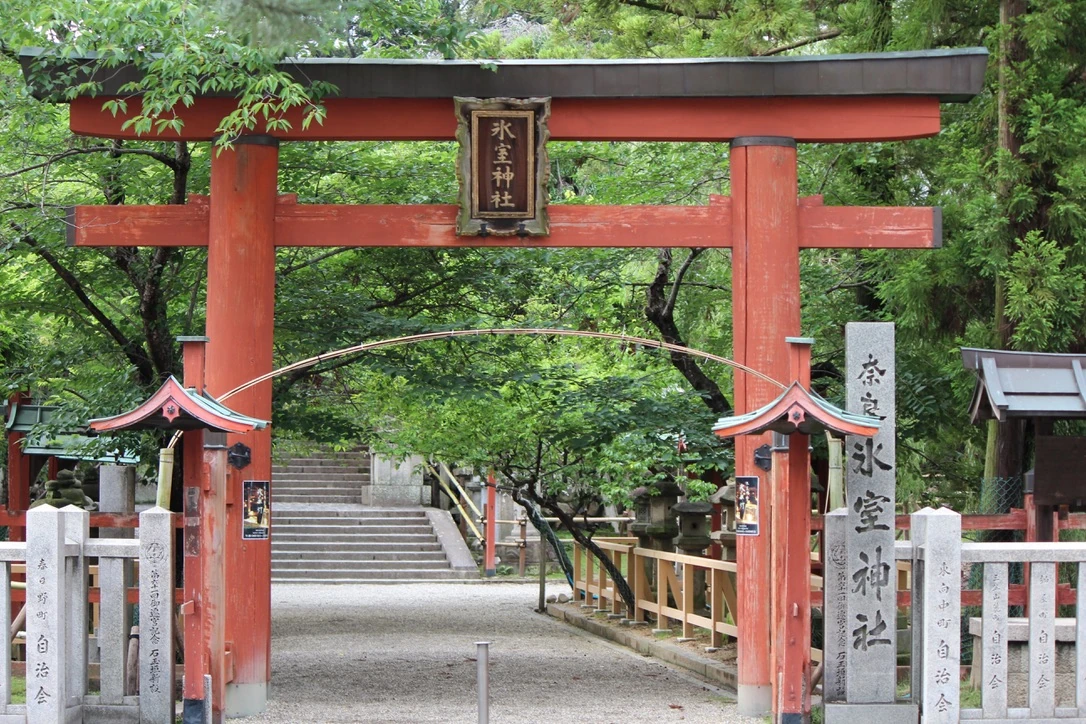
Explore guides close to this map point, then check the actual route before travelling. Distances below are straight lines, not walking distances or travel times; map points may not be entrances.
Sources & editorial status
Original MyNara draft based on the linked sources. Sources reviewed 19 October 2026. Opening arrangements, prices and offers may change; use the operator's current information before travelling.
- Tōdai-ji operator — hall fabric, sculptures, conservation and image restrictions
- Tōdai-ji operator — current hall hours, separate admission and joint ticket scope
- Tōdai-ji Japanese operator page — monthly service and December image
- Tōdai-ji operator — station access and absence of temple parking
- Tōdai-ji operator — precinct route and mobility notes
- Agency for Cultural Affairs — National Treasure fabric dates and joined structure
- Official Nara Travel Guide A01058 — identity and older conflicting visitor terms