Komazuka Kofun: An Older Mound with a Later Horse Legend
View Ikaruga's early keyhole mound from outside its protected area, then separate fourth-century archaeology from the Black Horse story.
 Verified site photographs are being prepared.
Discover Komazuka Kofun: An Older Mound with a Later Horse Legend
The name Komazuka evokes Kurokoma, the legendary black horse of Prince Shōtoku, but the mound beneath that story is older. Ikaruga Town's excavation dates this keyhole-shaped kofun to the latter half of the fourth century, before the prince's lifetime. It is one of the town's earliest known mounds. Centuries of storytelling attached the horse's name to it and paired it with nearby Chōshimaru Kofun, said to memorialise the horse's keeper. An informative visit is a roadside look at a protected landscape, not a climb onto the mound or a tour of an open chamber. The tension between the archaeology and the legend is precisely what makes this quiet stop worth understanding.
Begin with the remaining keyhole shape
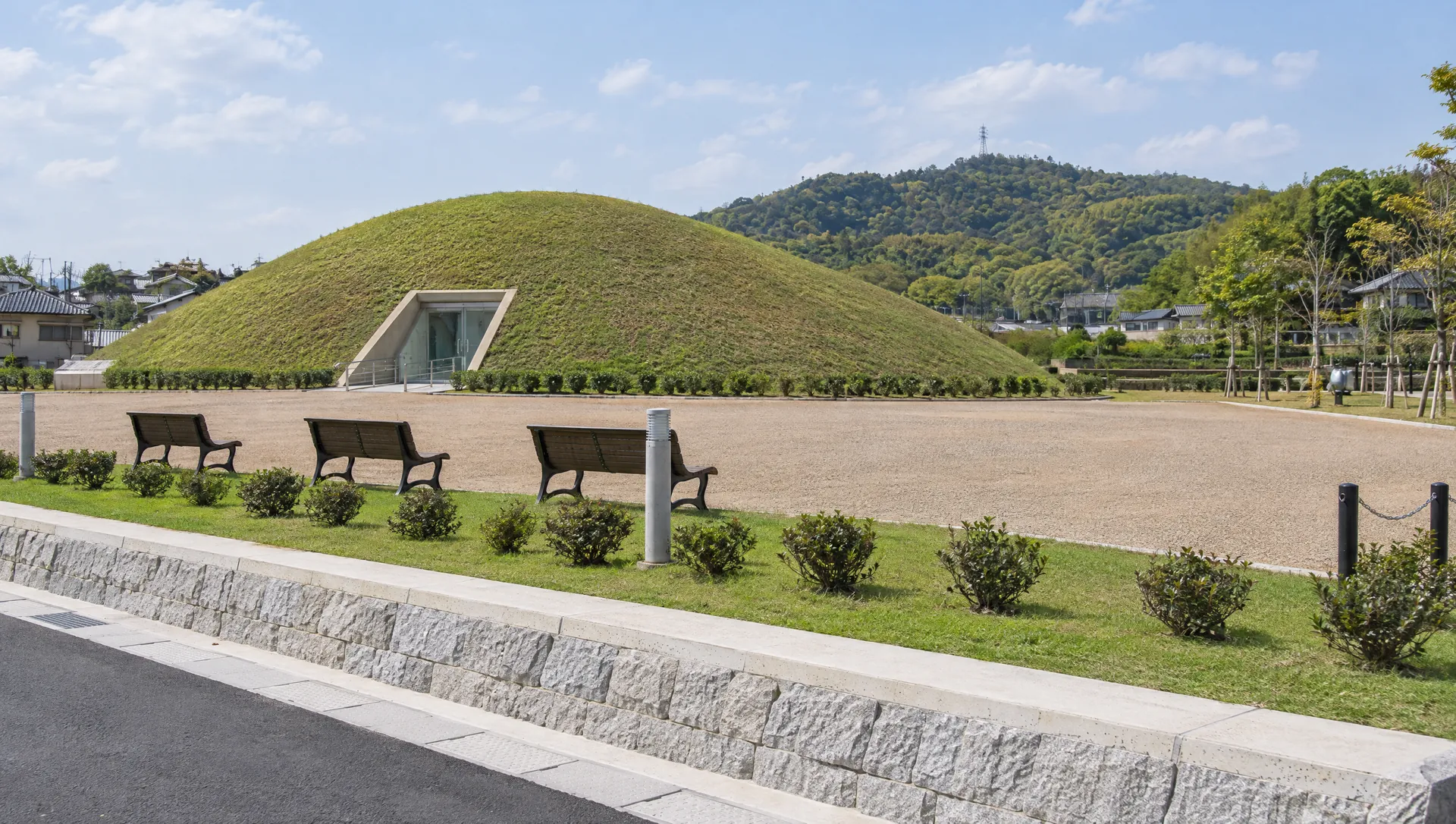
The burial mound faces south and lies south of National Route 25 near the Tōfukuji area. Ikaruga Town describes roughly 49 metres of surviving length, while the local tourism guide estimates that the original design may have been in the 60-metre class because the end of the front section was cut away. Those numbers answer different questions: one is what survives, the other is a reconstruction. Excavations by the town between fiscal 2000 and 2002 found facing stones, haniwa and pottery, supporting a date in the latter fourth century. The burial pit was not dug down, so chamber form and any occupants remain unknown.
Keep the black horse in the realm of tradition
Older Japanese texts and Edo-period illustrated guides place the grave of Prince Shōtoku's horse Kurokoma near Chūgū-ji, and the name Komazuka comes from that tradition. The prefecture records several variants of how the horse died and was buried. They are valuable evidence of how later people remembered the mound, not evidence that a fourth-century tomb actually contained a horse connected with a prince living centuries later. The traveller can hold both stories at once: an early burial landscape and a much younger cultural memory layered over it.
See its pairing with Chōshimaru without merging them
Roughly 100 metres to the south is a separate round mound called Chōshimaru, connected by legend to the prince's horse keeper. Ikaruga Town designated both as town Historic Sites on 8 October 1992, but they are distinct surviving earthworks and deserve separate identities. The local guide says they can be viewed together from the south. The two mounds' forms and research histories differ, and neither proves the legendary burials. Nearby Jōgū archaeological park gives broader context for ancient settlement; it is a separate site rather than part of a kofun ticket.
Plan for an exterior-only stop
The Hōryūji i Center explicitly says visitors cannot enter the mound. It estimates about 22 minutes on foot from JR Hōryūji Station; a bus from JR Ōji or Kintetsu Tsutsui to Hōkiji-guchi stops close by. Check the current Nara Kotsu route and cross roads only at safe points, because this is near Route 25 rather than a staffed attraction. No public entrance hours, fee, dedicated parking, toilet or step-free viewing position was established by the reviewed sources. Use the map marker as a vicinity reference and stay outside fences, farmland and the protected mound.
Know what the excavations have not shown
The tourism listing notes a potentially undisturbed mound because of its surface condition, but the grave pit itself has not been excavated. That is a possibility, not a promise of hidden treasure or an open chamber. Date and form come from the investigated exterior, facing stones and haniwa; a named occupant would require stronger evidence. The official account calls Komazuka one of Ikaruga's earliest monuments, making it a useful counterpoint to the more famous late-sixth-century Fujinoki Kofun west of Hōryū-ji.
What to look for
Surviving early keyhole form south of Route 25
Fourth-century archaeology contrasted with Prince Shōtoku's Kurokoma legend
Paired view with separate Chōshimaru Kofun
Photo notes
No mound, haniwa or heritage-record photograph is licensed to MyNara. A publicly visible exterior does not grant access onto the protected earthwork or private land. Photograph only from a safe lawful position without blocking traffic or residents; check local notices before professional filming.
Make a day of it
Explore guides close to this map point, then check the actual route before travelling. Distances below are straight lines, not walking distances or travel times; map points may not be entrances.
Sources & editorial status
Original MyNara draft based on the linked sources. Sources reviewed 19 October 2026. Opening arrangements, prices and offers may change; use the operator's current information before travelling.