
Mount Yoshino
A layered mountain town of pilgrimage sites, walking routes and cherry-tree slopes.
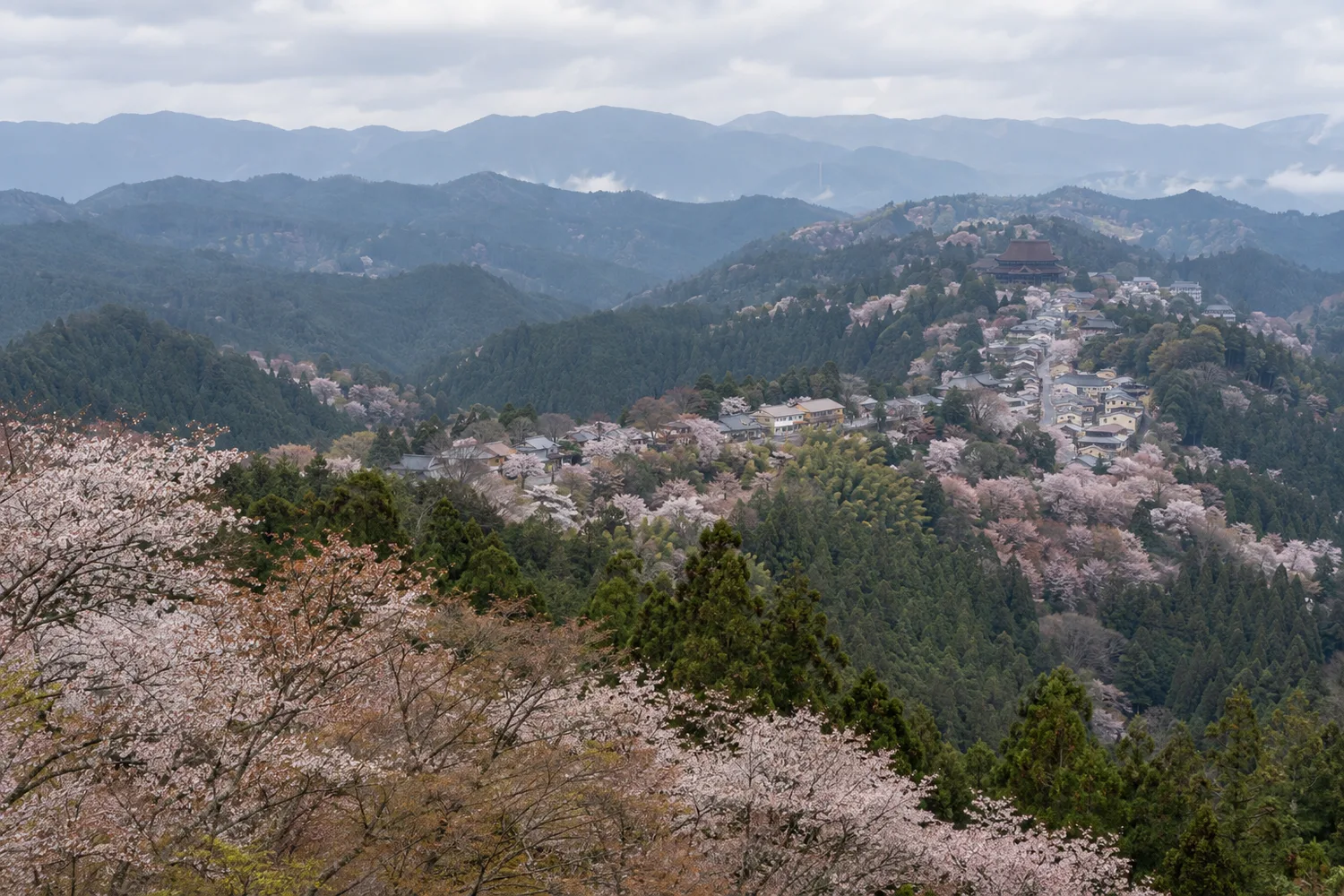 AI-generated representation · not a verified site photograph
Discover Mount Yoshino
Mount Yoshino is a landscape to travel through, not a single summit lookout. The route rises past temple and shrine precincts, old streets and slopes planted with cherry trees. Yoshino and Omine form part of the UNESCO-listed sacred sites and pilgrimage routes of the Kii Mountains, so the mountain's religious history matters as much as its celebrated spring colour.
Read the mountain in four zones
Local guides describe Shimo-senbon, Naka-senbon, Kami-senbon and Oku-senbon from lower to higher slopes. Flowering and weather differ by elevation, so a photograph from one zone cannot tell you what the whole mountain looks like today. The tourism association publishes seasonal updates; consult them close to travel.
Stay for the sacred geography
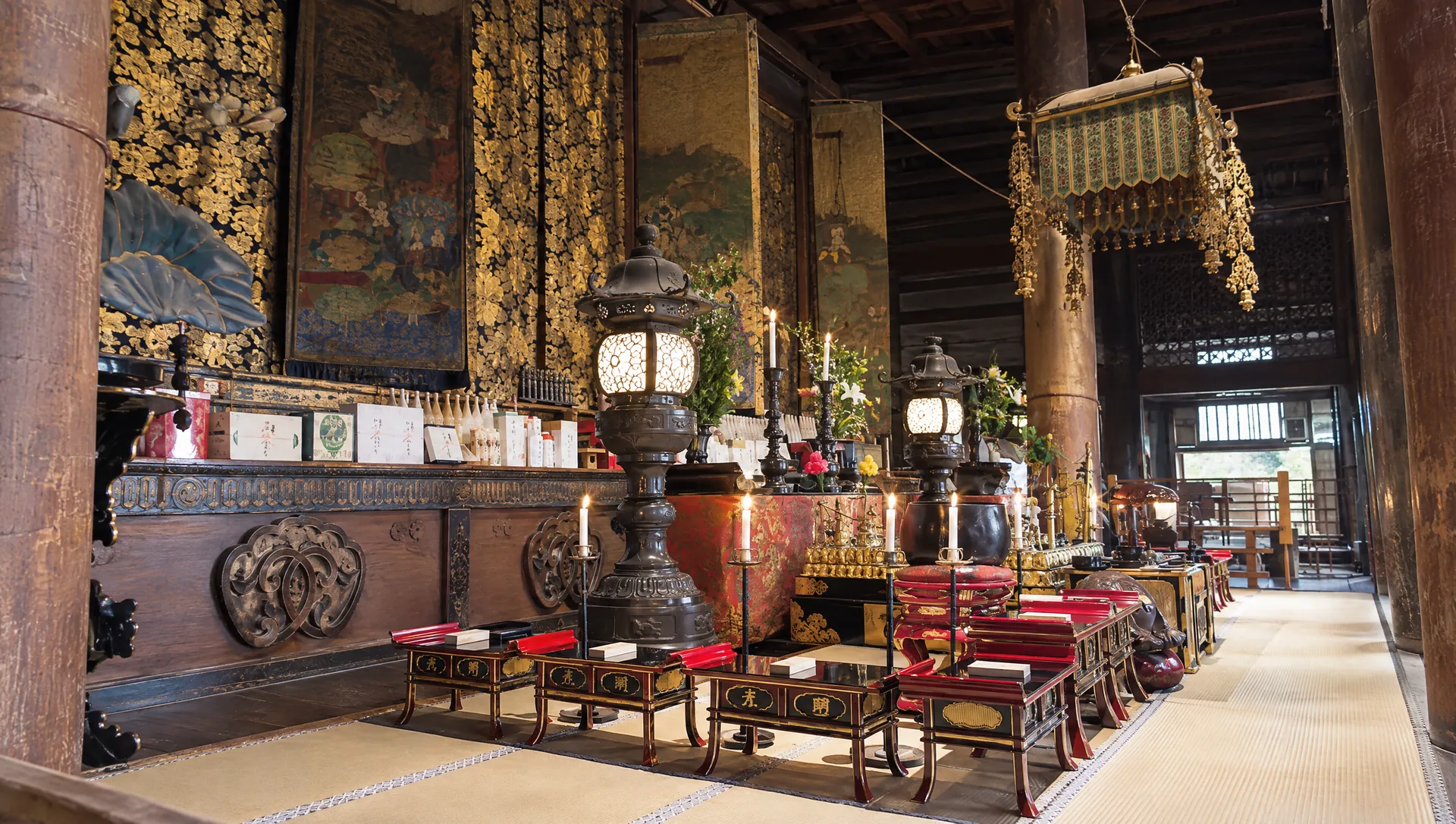
Kinpusen-ji's Zao-do anchors the mountain town, while Yoshimizu Shrine and upper-area sites extend the story of pilgrimage and political refuge. UNESCO identifies Yoshino and Omine as part of a network of sacred sites and routes across the Kii Mountains. Temple halls and shrines have separate visiting conditions.
A useful first walk
Kintetsu Yoshino Station is below the town. The tourism association gives an uphill walk of about 20 minutes via the Nanamagari path to the lower zone; the ropeway is a separate option when it operates. From there, choose a short circuit around the lower and middle town or a much longer hike upward. Its model courses can take about six hours, so do not equate a rail arrival with an instant mountain view.
Seasonal traffic changes the route
During cherry season, roads, parking, buses and the ropeway operate under special plans that can change with bloom and weather. Autumn has its own controls: Yoshino Town lists one-way downhill traffic from Katsute Shrine and no vehicle entry beyond the tourism car park from 24 October to 30 November 2026. The main car park is ¥1,000 for a car, ¥3,000 for a coach and ¥500 for a motorbike from 20 October through 30 November. Recheck the current traffic notice before driving or choosing a return train.
Beyond cherry blossom season
Walking the religious sites, mountain streets and viewpoints does not depend on peak bloom. The same slopes can be hot, wet, icy or crowded at different times; choose shoes and a route for the actual conditions rather than for a spring brochure image.
What to look for
Four elevation zones of cherry-tree slopes
Kinpusen-ji and Yoshimizu Shrine
Pilgrimage landscape of Yoshino and Omine
Photo notes
Views change by zone and season. Use public paths and designated viewpoints; ask before photographing worship, interiors or identifiable people in the town. The tourism association’s photos and map artwork are copyrighted; no image reuse permission has been obtained. Drone and commercial-shoot permissions remain unverified.
SEASONAL CALENDAR
Events connected with Mount Yoshino
These records are shared with MyNara’s event calendar, so dates and notices have one source. Recurring patterns are not confirmed dated editions; check the organizer’s latest guidance.
Yoshino Mountain Autumn Foliage Light-Up 2026
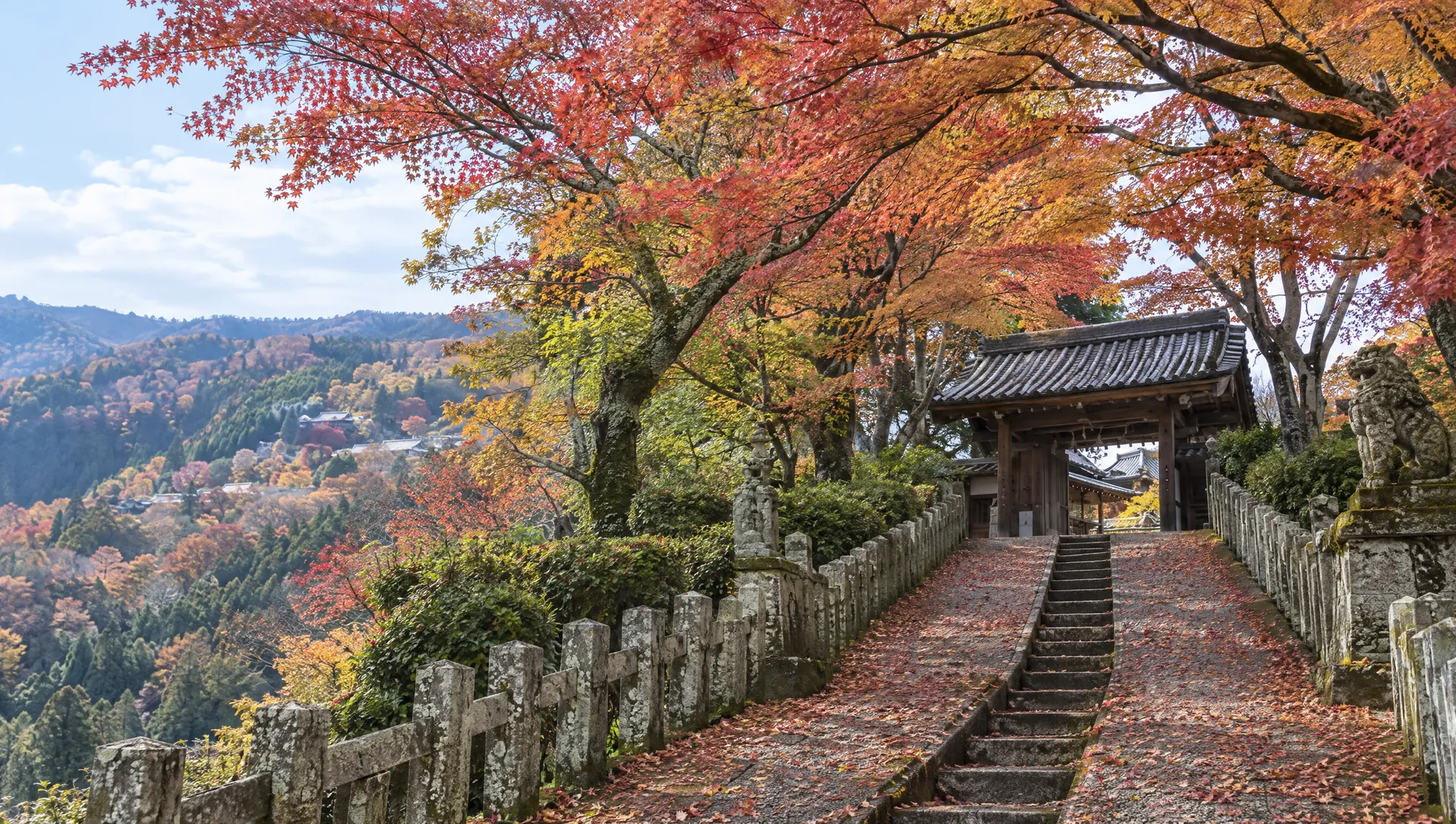
The Yoshino Mountain Tourism Association's current seasonal page and dated October 9 notice both schedule the lights for October 23–November 30, 2026, from 16:30 to 22:00. Nara Prefecture's event listing gives October 24; the checked sources do not explain the one-day difference, so October 23 is retained as the association's announced date and the prefectural listing is flagged for verification. No post-event report was found to confirm opening-night operation. The current-edition location list names Shimo-senbon Park, Kuromon, the copper torii, Kinpusen-ji's headquarters courtyard, Myōhō-den, the former Niten-mon gate, Tōnan-in's pagoda, Yoshimizu Shrine's approach, Katsute Shrine, Kizō-in's gate, Sakuramotobō's Niō-mon, Chikurin-in's gate and Daitō-no-miya. Official area guides place Katsute Shrine in Naka-senbon and Daitō-no-miya in Kami-senbon, so both areas are linked as confirmed 2026 light-up locations. The association's standing seasonal guide separately mentions Naka-senbon Park's Ogi-no-Tani and the lower ropeway's Senbonguchi as usual light-up areas; neither appears in the detailed 2026 location list, so do not assume those sites are lit this year. Confirm the exact sites and traffic controls before travelling.
Check organizer informationSakuramotobō Special Opening of the Tenmu Emperor Image 2026
For this nine-day annual opening, visitors can see the normally hidden image of Emperor Tenmu in the main hall and enter Hōjū-dō, the normally closed treasure hall. The temple's current autumn notice lists 08:30–16:00 viewing, ¥1,000 for adults, ¥800 for junior and senior high school students, and free entry for elementary-school children and younger. Yoshino Mountain Tourism Association also highlights the November opening. Reconfirm hours, fees and any worship-time restrictions before visiting.
Check organizer informationKizō-in Shinpen Daibosatsu Memorial Goma Rite 2026
Kizō-in identifies the Shinpen Daibosatsu Memorial Great Goma as its largest annual observance. Its October 2026 notice invites many worshippers and sets the rite for December 6: reception from 09:00, assembly at Kinpusen-ji's Zaō-dō forecourt at 10:30, procession at 11:00 and goma from 11:30. The notice asks affiliated groups to report attendance by November 27. Kizō-in's 2025 notice explicitly said worship was open to all; the 2026 flyer does not spell out independent visitor positions, the exact goma ground, any fee or transport arrangements. Confirm these details with the temple before a special trip. The Yoshino Mountain Tourism Association lists about 450 yamabushi for this annual observance; that figure describes the ascetic procession, not audience size.
Check organizer informationKinpusen-ji Setsubun-e and Oni Fire Festival
Kinpusen-ji's distinctive Setsubun rite welcomes the demons as well as driving off misfortune, followed by a fire ritual and bean throwing. The temple lists February 3 as the usual date but notes it can vary; check the current schedule, participation rules and crowd guidance.
Check organizer informationYoshino Mountain Spring Cherry Blossom Season and Light-Up
Yoshino Mountain Tourism Association describes a spring cherry season across Yoshino Mountain, generally from late March into late April, with blossoms advancing from Shimo-senbon through Oku-senbon. The 2026 light-up itself was held at Nanamagari in Shimo-senbon and Cherry Exhibition Park in Kami-senbon, not at the Hanayagura or Takagi observatories. Those viewpoints are connected as places to understand the wider mountain landscape, not as confirmed light-up venues. Bloom stages, traffic rules and any special access change each year; use the association's dated notice before travelling.
Check organizer informationKinpusen-ji Hanaku-e (Cherry Blossom Offering Ceremony)
This three-day ceremony reports Yoshino's mountain cherry blossom to the Zaō Gongen. On April 11 and 12, the public procession starts at Chikurin-in at 10:00 and walks to Kinpusen-ji's Zaō-dō; the temple precinct then hosts ritual services and a fire ceremony. Yoshino Town confirms the annual dates and route. Check the current temple notice for viewing access and any changes tied to conditions.
Check organizer informationKinpusen-ji Renge-e and Frog-Hopping Ceremony
A lotus offering rite brings flowers from a pond in Okuda, Yamatotakada, to Zaō Gongen. The Frog-Hopping procession then reaches the temple, where a ritual returns the legendary frog to human form. Kinpusen-ji lists the main service at 16:00; confirm the current procession route and viewing rules.
Check organizer informationYoshino Mountain Autumn Festival
Yoshino Mountain Tourism Association describes this as a festival for all shrines on Yoshino Mountain, with three neighborhood futon-taiko floats processing through the town and a rite at Tenman Shrine. Kimpu Shrine is linked as part of that mountain-wide shrine context, not as a confirmed float stop or a separately documented visitor service; its own rite access and time have not been published. Chikurin-in is linked only as an accommodation guide within the mountain-wide visitor area, not as a procession stop or event venue. Although the association lists the third Sunday of October as the customary date, the 2026 procession was described by the official Nara tourism listing as returning after a seven-year gap. Check each year's programme and route. Yoshino dining guides are separate itinerary stops, not event venues or participants.
Check organizer informationMake a day of it
Explore guides close to this map point, then check the actual route before travelling. Distances below are straight lines, not walking distances or travel times; map points may not be entrances.
Sources & editorial status
Original MyNara draft based on the linked sources. Sources reviewed 20 October 2026. Opening arrangements, prices and offers may change; use the operator's current information before travelling.
- Yoshinoyama Tourism Association
- Yoshinoyama Tourism Association — access and walking
- Yoshinoyama Tourism Association — seasonal blossom and traffic updates
- Yoshino Town — 2026 autumn traffic restrictions and parking rates
- Yoshinoyama Tourism Association — year-round and seasonal parking
- Yoshinoyama Tourism Association — model courses
- UNESCO World Heritage Centre
- Nara Prefecture listing