
Hozan-ji Temple
Climb from the cable car into an active mountain temple beneath a dramatic rock face.
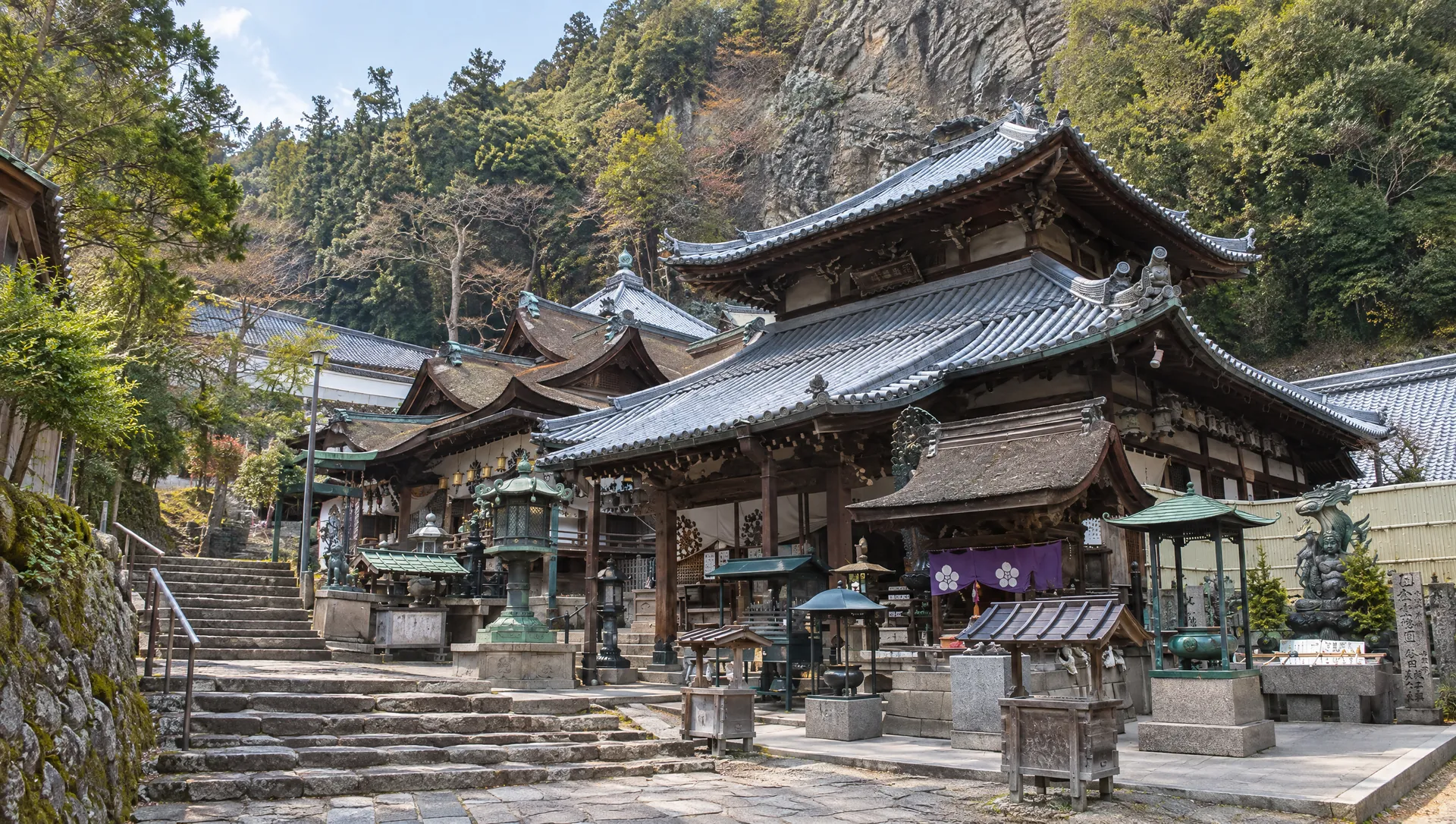 AI-generated visual study · not a documentary photograph
Discover Hozan-ji Temple
Hozan-ji is a living pilgrimage destination midway up Mount Ikoma. Its present form is associated with the monk Tankai's seventeenth-century revival; older accounts of ascetics at the rock cave are temple tradition, not proof that every standing structure dates to the seventh century. Visitors come to worship Kangiten, often called Ikoma Shoten, and to move between halls under the cliff. The cable car was built for this flow of pilgrims, but the last approach remains on foot and involves steps.
Understand the rock and the revival
The large Hannya-kutsu rock face rises behind the halls. Prefectural history describes a tradition linking the cave to En no Gyoja and later ascetic practice. The documented turning point for the present institution is Tankai's arrival in 1678. Nara Prefecture records a temporary hall in 1679 and says the precinct was developed over the following decade. Keep that history distinct from the older religious traditions attached to the cave: the origin story is not a construction date for every hall visible today.
Follow a living pilgrimage
The temple venerates Kangiten/Shoten and draws worshippers seeking help in business and daily life. Kintetsu says the first and sixteenth of each month are particularly lively worship days. Move respectfully through active prayer spaces, stay outside restricted buildings and do not treat devotees or ceremonies as a performance staged for tourists.
Look for Shishikaku without assuming entry
The 1884 Shishikaku guesthouse is a nationally Important Cultural Property, designed by master carpenter Yoshimura Matsutaro after he studied Western building methods in Yokohama. Its Japanese rooms sit behind an outwardly Western-style entrance, veranda, arched openings and coloured glass; the carved spiral stair is a detail to look for during an announced opening. It is not part of ordinary precinct access. The next published 2026 opening is 21–23 November, 9:00–15:30 (last reception 15:00), ¥500; verify before setting out.
Pick out the motifs and the view
Nara Prefecture's walking route suggests noticing carved radish and money-bag symbols associated with Kangiten, then pausing at viewpoints over the basin. These details reward a slower ascent, but the mountain precinct is not a step-free visit. The tourism association lists no ramp and no loan wheelchair; it lists an accessible toilet at the first car park. Check the parking approach and current facilities with the temple before travelling if mobility access is important.
Budget the station-to-temple climb
From Kintetsu Ikoma Station walk to Torii-mae Cable Station, ride the Hozanji Line to Hozanji Station, then climb the approach. Nara Prefecture, the tourism association and the city tourism guide each estimate about ten minutes for the final uphill walk; allow longer for the stone approach and steps. The historic 1918 first cable section is distinct from the onward Sanjo Line to the summit; you do not need a summit ticket to visit the temple.
Check access before choosing a car
The tourism association lists two free parking areas, with capacities of 50 and 250 vehicles, but does not identify which is best for each precinct route or whether a space will be available. It lists a multi-purpose toilet at the first car park, no ramp and no wheelchair loan. Because the temple sits on a steep slope, a car park or cable ride does not make every hall step-free. Contact the temple about the entrance and route you need.
A specific Shishikaku opening in November 2026
The prefectural special-opening calendar lists the nationally Important Cultural Property for 21–23 November 2026, 9:00–15:30 with final reception at 15:00, for ¥500. This is a dated event window; it does not mean the building is normally open, and the 500-yen charge is separate from the free precinct. Confirm the event is proceeding before travel.
What to look for
Hannya-kutsu cliff behind active worship halls
Rarely opened 1884 Shishikaku guesthouse
Pilgrimage approach via Japan's first cable-car section
Photo notes
Hozan-ji is an active prayer site. Neither the temple's reviewed website nor the public tourism pages grant reuse rights to their photographs or blanket permission to film rites or interiors. Observe posted restrictions, avoid photographing worshippers without consent and request permission for editorial coverage.
Make a day of it
Explore guides close to this map point, then check the actual route before travelling. Distances below are straight lines, not walking distances or travel times; map points may not be entrances.

Sources & editorial status
Original MyNara draft based on the linked sources. Sources reviewed 20 October 2026. Opening arrangements, prices and offers may change; use the operator's current information before travelling.
- Official Nara Travel Guide — identity and map point
- Hozan-ji operator — official site (not reachable during this check)
- Nara Prefecture — detailed history of Tankai and the 1678 revival
- Nara Prefecture — Shishikaku architecture and 2026 route overview
- Nara Prefecture — seasonal visiting guidance and route
- Nara Prefecture — 21–23 November 2026 Shishikaku opening
- Ikoma City — temple history and Nationally Important Cultural Property details
- Ikoma City — Shishikaku construction and architectural details
- Nara Prefecture Tourism Association — visitor details and accessibility
- Kintetsu Railway — cable-car connection and timetable