Kizō-in: A Shugendō Temple Above Yoshino's Main Street
Find a living Ōmine Shugendō temple, the Kumazawa Banzan poem marker and a quieter counterpoint to Zaō-dō.
 Verified site photographs are being prepared.
Discover Kizō-in: A Shugendō Temple Above Yoshino's Main Street
Kizō-in is a working temple tied to the Shugendō tradition of the Ōmine Mountains. Its own history calls it one of the institutions that support pilgrimage and traces its origin to the early ninth century, when Enchin is said to have founded a hall while entering Ōmine. This is a temple foundation account rather than the date of every structure now standing. On a Yoshino walk, it lets visitors connect the grand Zaō-dō precinct with the smaller religious houses that have sustained mountain practice and housed pilgrims.
Read the temple as part of a pilgrimage network
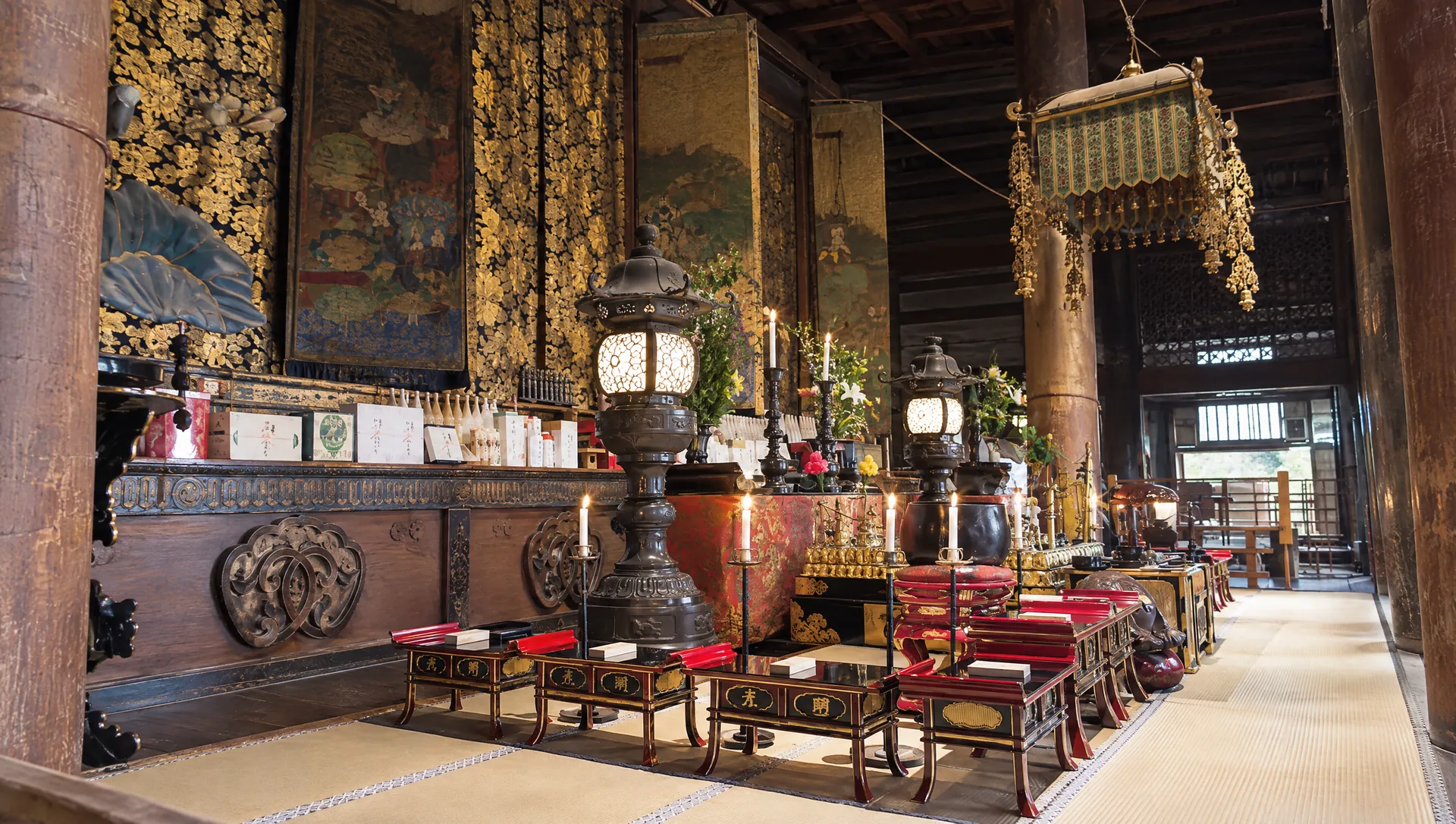
The temple identifies itself as a major house in the Honzan branch of Shugendō and one of the Ōmine mountain's supporting temples. It says Shōgoin leaders stayed here before their mountain entry and that Kizō-in assisted as a guide. Its principal image is En no Gyōja, flanked by Zaō Gongen and Fudō Myōō; the temple also names shrines within the precinct. The visitor should distinguish the public outer precinct from worship interiors and the separate mountain lodge, whose access is not established by a daytime Yoshino visit.
Look for the Banzan story at the entrance
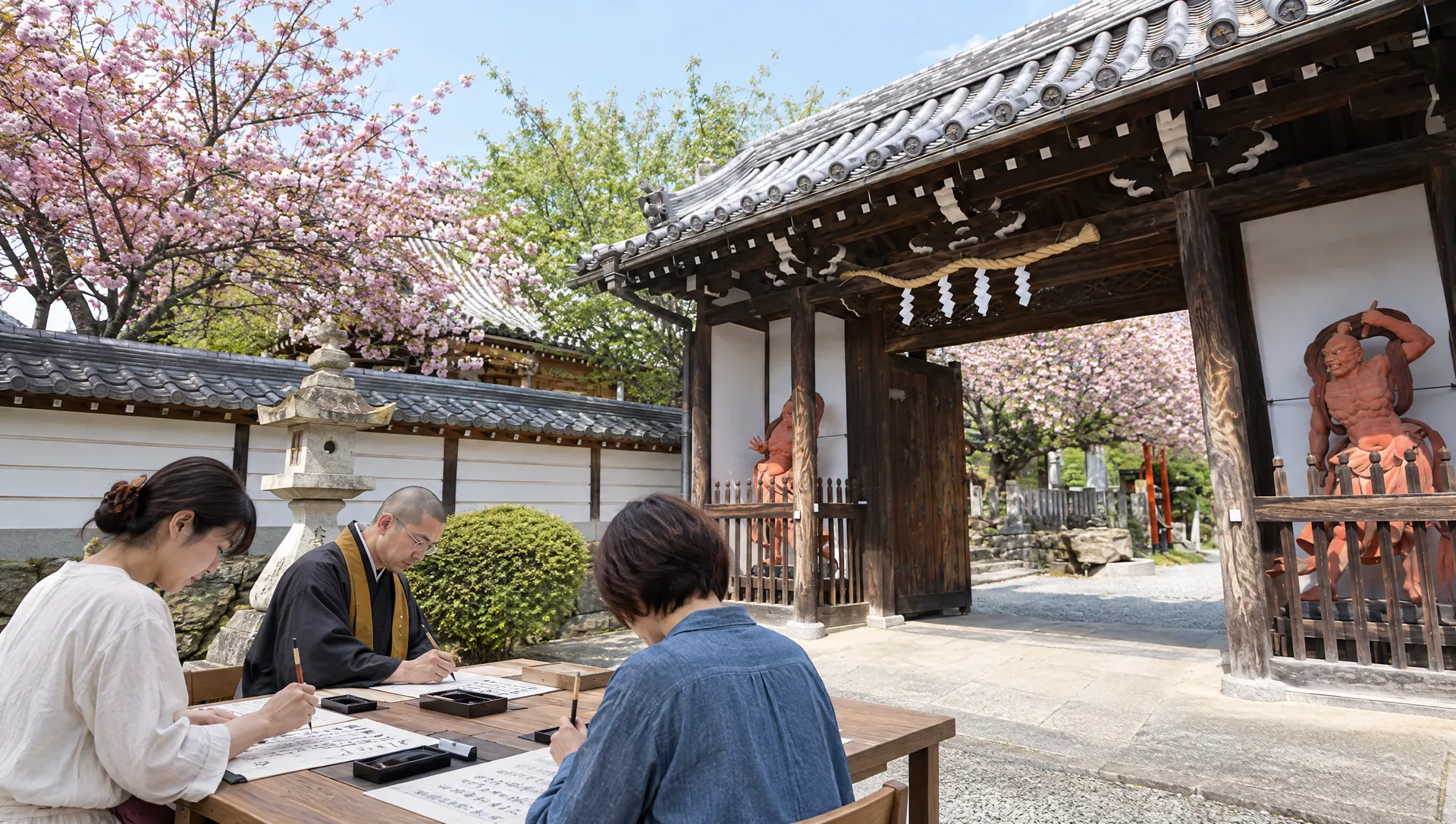
The operator recounts that the Confucian scholar Kumazawa Banzan spent more than a year here in the seventeenth century and left a poem about the Yoshino blossoms. The local association notes a poem monument near the entrance. The operator also preserves the memory of painter Mikuma Roka studying and painting Yoshino cherry varieties during a later long stay. These accounts give a visitor more to observe than blossoms alone, but they do not imply that her actual paintings are routinely exhibited or that a guest can enter private temple rooms.
Keep worship, lodging and mountain activity separate
The Yoshinoyama association says the precinct can be visited freely, yet lists no fixed interior visiting hours. It also notes temple lodging by direct enquiry. The operator's home separately gives a phone number and seasonal May-to-September period for its Ōmine mountain lodge; that is not the same address or a confirmed open bed in the Yoshino temple. Ask the temple about an overnight stay, room type, meal, group conditions, ceremony or guided mountain activity rather than deriving any of these from an old English directory's dormitory description.
Check the short-looking mountain approach
The local association estimates around twenty minutes from the upper Yoshinoyama ropeway station, while Visit Nara says forty minutes. Different route, pace and start assumptions may explain the gap; neither is a guaranteed walking time. The operator's access page gives 1254 Yoshinoyama and suggests searching Yoshino Naka-senbon parking, while the association also lists parking. Blossom-season road controls can override ordinary parking. The ropeway itself serves the lower mountain only when operating, so check its date and your return before starting.
What to look for
Ōmine Shugendō temple and En no Gyōja worship
Kumazawa Banzan poem monument and Yoshino literary memory
Upper-mountain stop with lodging by direct enquiry
Photo notes
MyNara has no licensed temple, statue, poem or lodging photographs. Ask before photographing worship interiors, religious activity or guests, and do not use the temple's own photos without rights clearance.
SEASONAL CALENDAR
Events connected with Kizō-in: A Shugendō Temple Above Yoshino's Main Street
These records are shared with MyNara’s event calendar, so dates and notices have one source. Recurring patterns are not confirmed dated editions; check the organizer’s latest guidance.
Kizō-in Shinpen Daibosatsu Memorial Goma Rite 2026
Kizō-in identifies the Shinpen Daibosatsu Memorial Great Goma as its largest annual observance. Its October 2026 notice invites many worshippers and sets the rite for December 6: reception from 09:00, assembly at Kinpusen-ji's Zaō-dō forecourt at 10:30, procession at 11:00 and goma from 11:30. The notice asks affiliated groups to report attendance by November 27. Kizō-in's 2025 notice explicitly said worship was open to all; the 2026 flyer does not spell out independent visitor positions, the exact goma ground, any fee or transport arrangements. Confirm these details with the temple before a special trip. The Yoshino Mountain Tourism Association lists about 450 yamabushi for this annual observance; that figure describes the ascetic procession, not audience size.
Check organizer informationMake a day of it
Explore guides close to this map point, then check the actual route before travelling. Distances below are straight lines, not walking distances or travel times; map points may not be entrances.
Sources & editorial status
Original MyNara draft based on the linked sources. Sources reviewed 19 October 2026. Opening arrangements, prices and offers may change; use the operator's current information before travelling.
- Kizō-in operator — history, principal images and Shugendō role
- Kizō-in operator — present address, contact and parking direction
- Kizō-in operator — distinct Ōmine lodge season and contact
- Yoshinoyama Tourism Association — precinct, poem marker and shorter walking estimate
- Visit Nara — English directory and longer walking estimate