Goro-goro Water and Chaya: A Managed Spring Collection Stop
Collect water at a managed Dorogawa spring site, then pause at its tea room; confirm drinking guidance and the current parking tariff.
 Verified site photographs are being prepared.
Discover Goro-goro Water and Chaya: A Managed Spring Collection Stop
Goro-goro Water is part of the Dorogawa spring group, chosen in 1985 among Japan's Meisui Hyakusen for its water environment and local care. The accessible visitor stop is the managed collection point at Goro-goro Chaya, below Goyomatsu Limestone Cave. The tea room uses the spring water for coffee and warabi-mochi. This is one venue with two related uses, not two extra destinations to count separately. Its name is tied in local tradition to the rumbling sound of water in the cave; that story is a cultural explanation, while present-day drinking suitability must follow current local guidance.
Understand what was selected
The Environment Ministry says the 1985 '100 famous waters' selection was designed to recognise water quality, setting and conservation, and it explicitly does not guarantee that every selected source is safe to drink today. Tenkawa Village identifies Goro-goro Water, Izumi-no-Mori and privately controlled Shin-sen-dō as the Dorogawa spring group. Do not try to enter Shin-sen-dō or collect from a private or sacred site. For this outing, use the managed collection taps at 686-139 and read the operator's current notices. Ask staff about untreated-water use, containers, storage and any boil advice before drinking or giving it to children.
Separate the tea room from the collection point
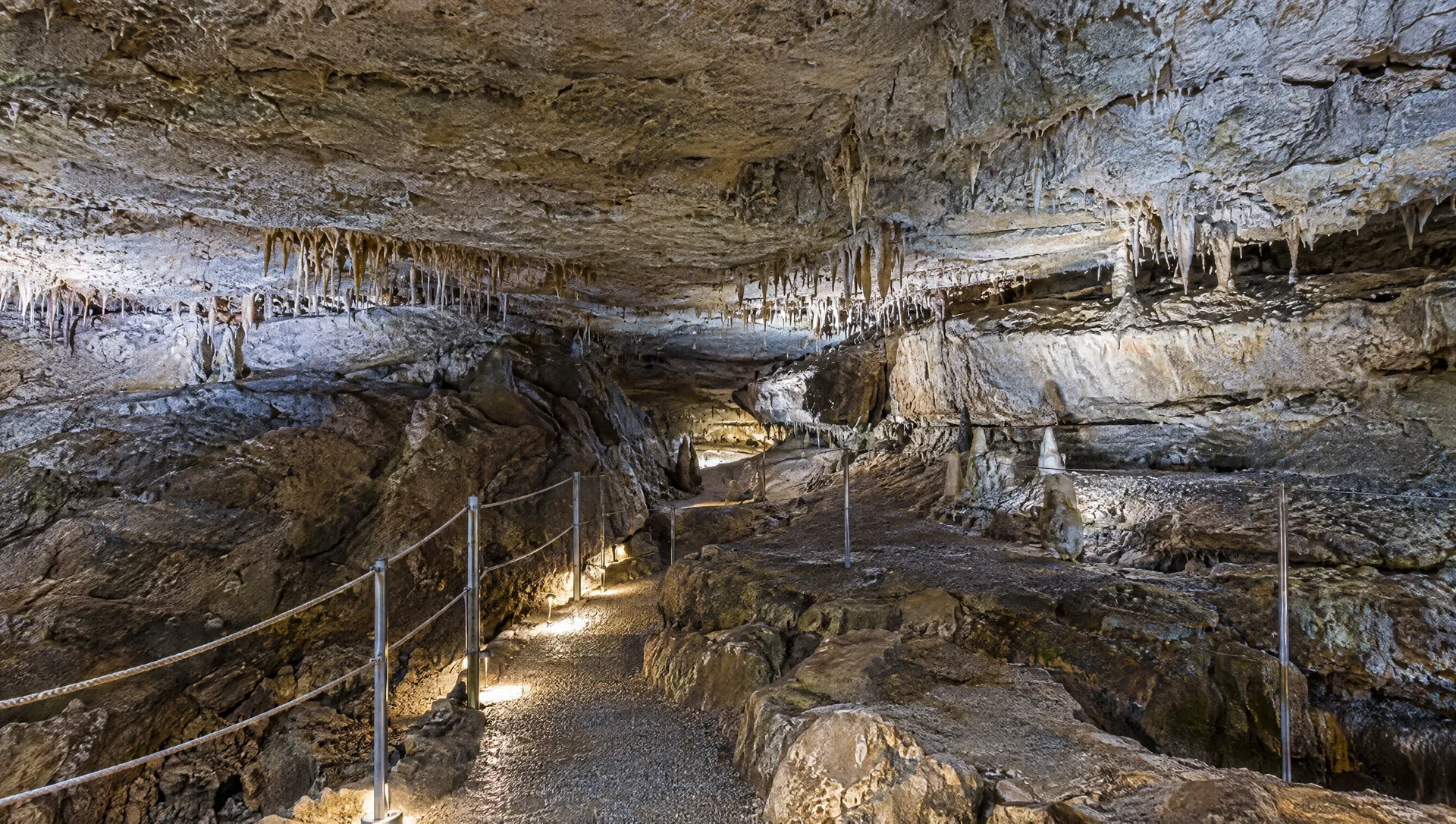
The village describes a tea room offering coffee brewed with Goro-goro Water and warabi-mochi, with the collection point on the same premises. These are examples, not a verified current menu or price list. A visitor who only wants a cup can ask whether there is a separate entry or parking arrangement rather than assuming a free stop. The spring itself is below Goyomatsu Cave; the cave's admission and optional monorail fare are separate. The village's walking course links them, but the cave has much shorter and seasonal opening windows.
Check the seasonal opening window
The village's current Japanese page lists 09:00–18:00, summer 08:00–18:00 from July through August, and winter 09:00–17:30 from October through February, with entry ending thirty minutes before closing. The operator's 2026 seasonal notice says winter hours begin on 1 October, while its standing facility page gives 09:00–18:00 (last entry 17:30), 08:00–18:00 from late July through August, and 09:00–17:30 from November through February. The exact October timetable therefore differs between the village and operator pages. More significantly, the operator's dated 24 June 2026 notice changes Goro-goro Chaya and the water collection point to Thursday closure from 1 October; the village's current Japanese page still says Wednesday, with holiday and July–August exceptions. The operator page gives year-end closure only. Call 0747-64-0188 to verify that day's hours and closure, especially on Wednesdays or Thursdays and in bad weather.
Resolve the parking or facility fee before driving in
The village's Japanese and English spot pages list a ¥500 facility contribution including parking. The operator's tariff page instead lists ordinary-car parking at ¥500 for up to 60 minutes and ¥1,200 for over 60 minutes. The two pages do not clarify whether pedestrians or tea-room-only customers pay the same contribution. Treat the operator's time-based car tariff as the current parking plan, and confirm how it applies to your visit before entering; do not assume the village's flat ¥500 listing covers a longer stay. The village advises leaving the car in designated parking and exploring the compact district on foot; queues can form in the busy season.
Plan the spring within a mountain-town day
The usual public-transport chain is Kintetsu rail to Shimoichiguchi, then a Nara Kotsu bus to Dorogawa Onsen and a further walk through the village. The reviewed primary pages do not give a measured bus-stop-to-tap time; allow for the walk and check the last bus. Drivers should use the Tenkawa Kawai approach advised by the village rather than a narrow shortcut over Konan Pass. If the cave is a priority, arrange the spring stop around the cave's morning or afternoon window, not the other way around. The map marker identifies the collection premises, not the exact tap or parking bay.
What to look for
Managed public collection point within the Dorogawa spring group
Tea-room coffee and warabi-mochi using spring water
Near Goyomatsu Cave, with different hours and charges
Photo notes
No spring, café, tap or customer image has been licensed to MyNara. Ask the operator before photographing the taps or café interior, and avoid obstructing people filling containers. Do not reproduce official map or spring photographs without permission.
SEASONAL CALENDAR
Events connected with Goro-goro Water and Chaya: A Managed Spring Collection Stop
These records are shared with MyNara’s event calendar, so dates and notices have one source. Recurring patterns are not confirmed dated editions; check the organizer’s latest guidance.
Tenkawa Meisui Festival
Tenkawa Village's Meisui Festival celebrates the Dorogawa spring-water group, which includes Goro-goro Water. Recent editions around Dorogawa Eco Museum Center have offered family fishing, fish-catching sessions, nature observation, craft activities, local food and live performance. The village's 2025 after-report recorded 166 fishing participants, 143 fish-catching participants, 101 woodcraft participants, 130 stone-painting participants and 51 nature-observation participants; these activity counts may overlap and are not an event-wide visitor total. For 2026, local television reported that the 150-person fish-catching capacity filled quickly. The event takes place around the museum-centre grounds, not at the Goro-goro Water collection premises. Check each year's venue, schedule, activity limits, fees and access details.
Check organizer informationMake a day of it
Explore guides close to this map point, then check the actual route before travelling. Distances below are straight lines, not walking distances or travel times; map points may not be entrances.

Sources & editorial status
Original MyNara draft based on the linked sources. Sources reviewed 20 October 2026. Opening arrangements, prices and offers may change; use the operator's current information before travelling.
- Tenkawa Village Japanese — collection point, seasonal hours, closure and contribution
- Tenkawa Village English — tea-room offer and different closure summary
- Dorogawa Property District — parking tiers and seasonal times
- Dorogawa Property District — dated 2026 closure and winter-hours notices
- Environment Ministry — 1985 Meisui purpose and drinking-safety caveat
- Tenkawa Village — Dorogawa spring group and private-source restriction
- Tenkawa Village — link to Goyomatsu Cave on local walking course
- Visit Nara — English directory identity and approximate map point