
Ohmiwa Jinja Shrine
Worship toward sacred Mount Miwa, with mountain entry governed by strict religious and safety rules.
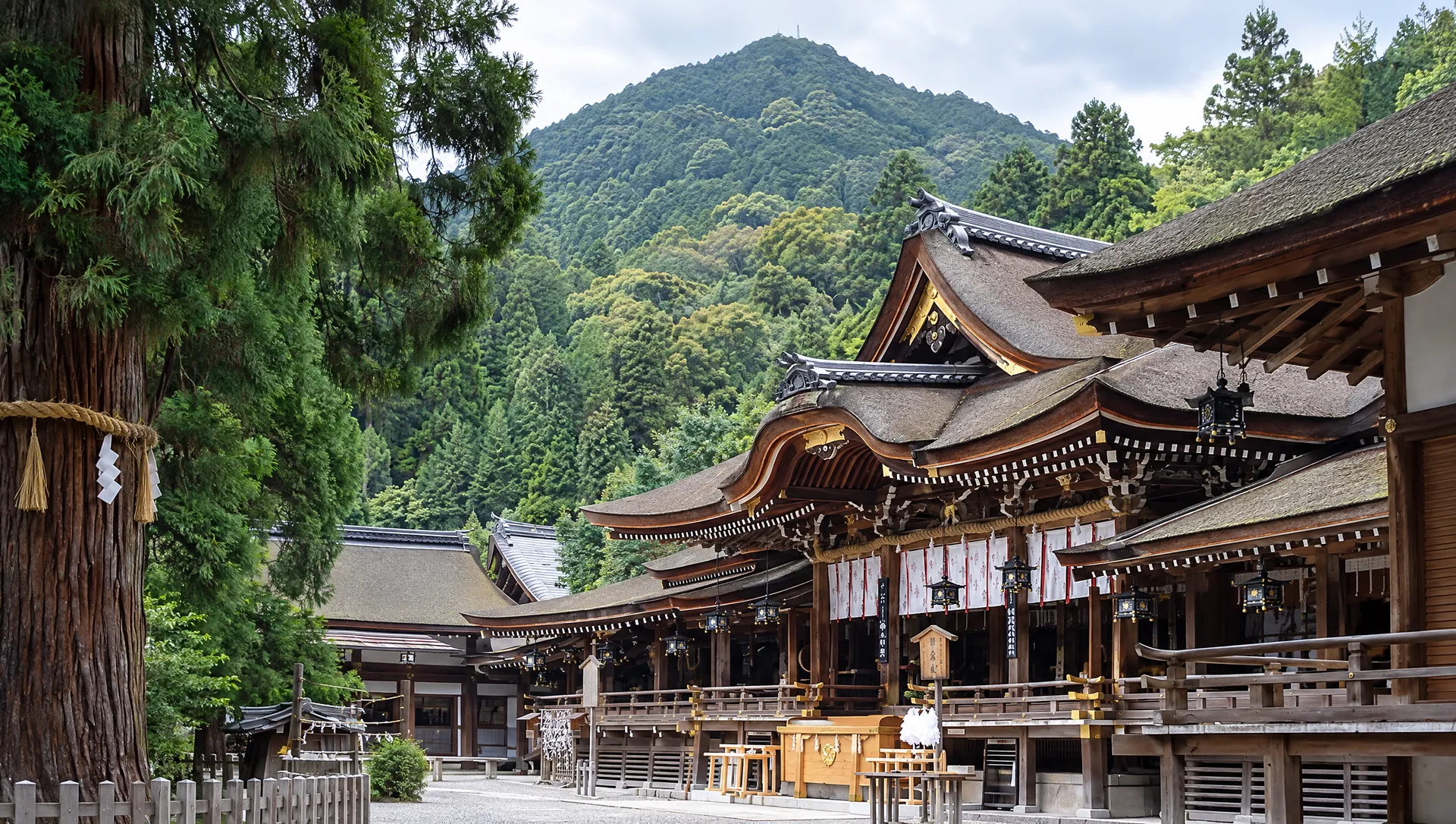 AI-generated visual study · not a documentary photograph
Discover Ohmiwa Jinja Shrine
Ohmiwa Jinja is built around Mount Miwa, which shrine tradition identifies as the dwelling place of Omononushi. Instead of a conventional main sanctuary, worshippers face the mountain through the worship hall and Mitsu-torii. The shrine’s creation story appears in the Kojiki and Nihon Shoki; it is a record of religious tradition, not an independently dated archaeological claim. Visitors can pray at the shrine without climbing. Entry to the sacred mountain is a separate, supervised act of worship with strict language, safety and conduct rules.
A mountain as the sacred presence
The shrine says its kami, Omononushi, resides on Mount Miwa; worship is directed toward the mountain rather than a conventional honden. The hall and the three-part Mitsu-torii make that relationship visible. The origin narrative is preserved in the Kojiki and Nihon Shoki and should be understood as shrine tradition. Visitors can experience this form of worship from the precinct without attempting the mountain entry.
The cedar ball and Miwa’s food culture
The shrine’s cedar grove and sacred mountain form part of a wider local tradition. A sugidama, or ball made from cedar branches, is associated with sake brewing and Omononushi worship; Miwa is also known for its somen noodles. These connections help explain the town around the shrine, but the shrine itself is a place of worship rather than a tasting venue. Look for local breweries and noodle restaurants separately in Sakurai.
Mountain entry has strict conditions
Entry registration is made at the shrine’s subsidiary Saijinja. The shrine frames the ascent as pilgrimage, not hiking or sightseeing; routes and photography are restricted and the slope can be strenuous. Foreign visitors must understand Shinto and undertake the ascent devoutly, understand Japanese instructions themselves or with a Japanese guide, and have a group member with a phone number reachable through Japan’s +81 system. Groups over about ten and tour itineraries are not accepted. Review the shrine’s complete current rules before planning; these conditions apply to the mountain, not ordinary shrine worship.
Check entry and transit on the day
For 2026, the shrine lists several no-entry dates, including 24 October and 23 November. It suspended entry during the hottest part of summer and temporarily shortened September reception for heat safety; interruptions can also occur for weather or shrine operations. The normal Sakurai Station–shrine bus ended in March 2026 except for special services. JR Miwa Station is the nearest rail stop; check live trains and the shrine’s notices before setting out.
Know where photography is allowed
The shrine permits personal snapshots in ordinary moderation in most of the precinct, but prohibits photos, video and audio inside the worship and prayer halls, especially during services. Mount Miwa is a designated no-photography area. Reporting, commercial or other publication-oriented shoots require advance permission; protect other visitors’ privacy and never reproduce shrine-owned photos without permission.
What to look for
Worship hall facing Mount Miwa
Mitsu-torii and sacred cedar tradition
Miwa's links to sake and somen culture
Photo notes
The shrine allows personal snapshots in ordinary moderation in most of the precinct. Photography, video and audio are prohibited inside the worship and prayer halls, especially during services, and throughout Mount Miwa. Reporting, commercial or other publication-oriented shoots need advance permission. Respect privacy and do not reuse shrine-owned images without permission.
Make a day of it
Explore guides close to this map point, then check the actual route before travelling. Distances below are straight lines, not walking distances or travel times; map points may not be entrances.

Sources & editorial status
Original MyNara draft based on the linked sources. Sources reviewed 20 October 2026. Opening arrangements, prices and offers may change; use the operator's current information before travelling.
- Ohmiwa Jinja — shrine and mountain worship
- Ohmiwa Jinja — prayer hours and offerings
- Ohmiwa Jinja — precinct photography rules
- Ohmiwa Jinja — filming, reporting and publication applications
- Ohmiwa Jinja — access and free parking
- Ohmiwa Jinja — visitor parking map
- Ohmiwa Jinja — history and sacred mountain
- Ohmiwa Jinja — mountain entry and foreign-visitor rules
- Ohmiwa Jinja — regular bus ended in March 2026
- Ohmiwa Jinja — filming and publishing conditions
- Nara Prefecture listing