
Toshodai-ji Temple
An eighth-century temple founded by the monk Ganjin in Nishinokyo.
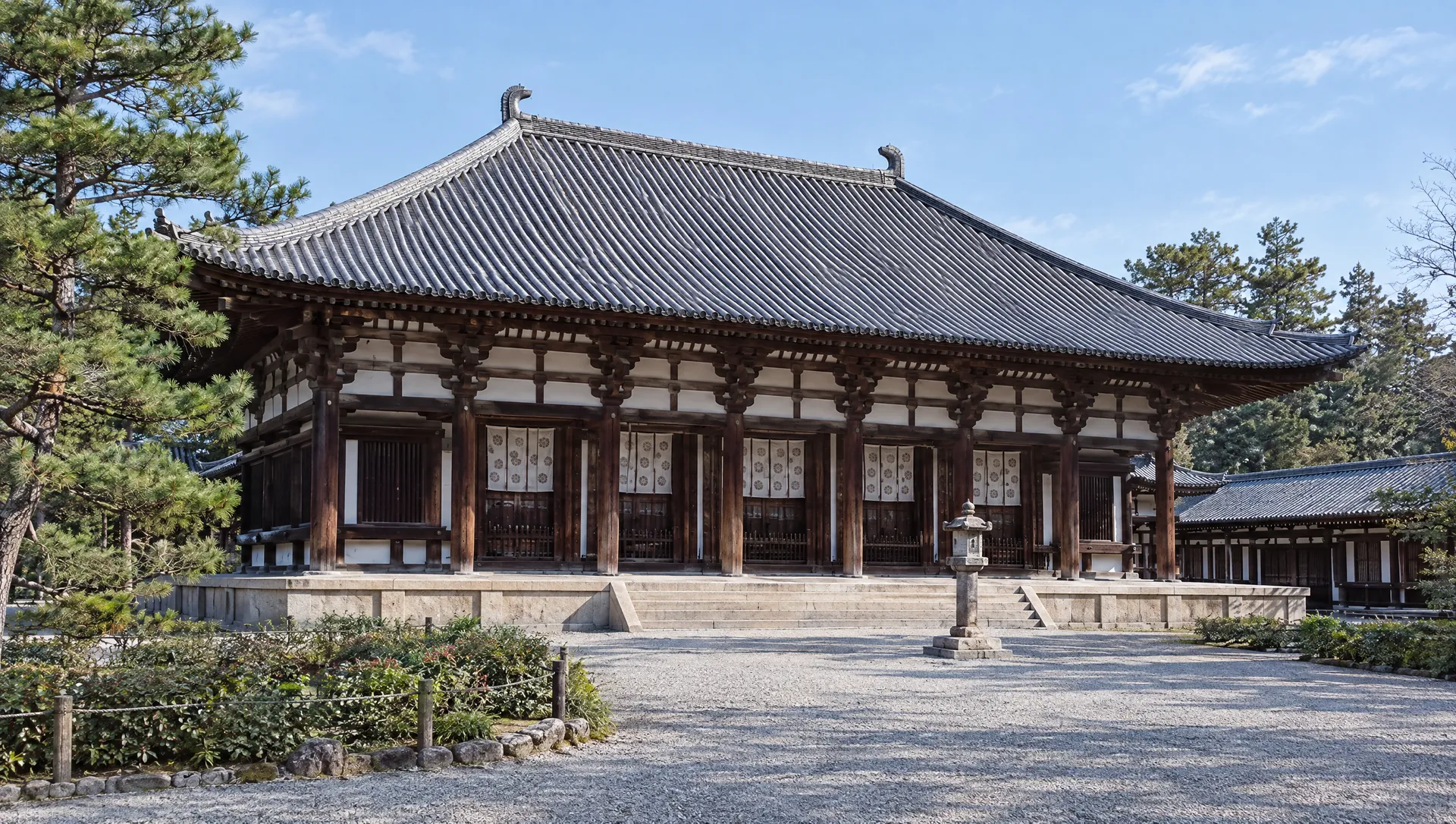 AI-generated visual study · not a documentary photograph
Discover Toshodai-ji Temple
Ganjin accepted an invitation to teach Buddhist precepts in Japan and reached Japan in 753 after five failed crossings over twelve years, during which he gradually lost his sight. After spending five years teaching at Todai-ji, he received the former residence of Prince Nitabe and opened a training centre here in 759. Toshodai-ji became the head temple of the Ritsu school. Its Golden Hall preserves an eighth-century temple design, while the Lecture Hall began as an assembly building in Heijo Palace before being moved and adapted for Buddhist use. The founder’s portrait and several other treasures are shown only on limited dates.
Read the Golden Hall from outside in
The National Treasure Golden Hall was completed in the later eighth century and retains its early form. It is seven bays wide and four bays deep, with an open front aisle and a hipped roof; the central bay is wider than those at either end. Inside, the National Treasure Rushana Buddha is flanked by Yakushi and a standing Thousand-Armed Kannon. The Rushana image is over three metres tall and its halo retains 862 small Buddhas; the Kannon stands 5.36 metres high and has 953 arms. The Yakushi image is an early-Heian work, a useful reminder that this hall’s collection spans more than one period. Pause at the façade, then compare the distinct scale and expression of the three central figures.
A palace building repurposed as a temple hall
The National Treasure Lecture Hall began as the East Assembly Hall in Heijo Palace and was moved and adapted for the temple. Its current appearance reflects substantial Kamakura-period alterations, so it is not a frozen eighth-century interior. The seated Maitreya is a Kamakura-period Important Cultural Property, while the hall also houses Nara-period guardian images. Read the building as a layered object: palace administration, temple worship and later rebuilding are all visible in its history.
Ganjin’s portrait is not an everyday display
The National Treasure seated portrait of Ganjin is kept in Mieido and normally has a short annual special opening around the founder’s memorial days in early June. The 2026 opening ran 5–7 June and has ended; the temple’s notice explains that visitor numbers were controlled by same-day timed tickets for individuals and advance booking for larger groups. Do not assume the portrait or Mieido’s Higashiyama Kaii paintings can be seen on an ordinary visit.
Look for relics in the Shariden and seasonal treasure hall
The two-storey Shariden, also called Koro, stands between the Golden Hall and Lecture Hall and is associated with relics brought by Ganjin. The New Treasure Hall is a separate reinforced-concrete museum opened in 1970, not an always-open extension of the main halls. Its published collection includes a wooden Dainichi Buddha formerly kept in the Golden Hall and late-Nara wooden sculptures associated with the old Lecture Hall, including figures with missing hands or heads whose surviving forms still reveal their carving. The temple lists seasonal opening periods and a separate fee; a collection page does not guarantee that every work is on view, so check the current notice before planning around a particular object.
A short special viewing this week
The temple announced a special opening of the inner sanctuary of the Worship Hall during its Shaka Nembutsu service on 21–23 October 2026. The extra viewing fee is ¥200. On 23 October, reception ends at 15:00; the viewing is suspended during the service itself. This dated notice is time-sensitive, so check the temple’s latest announcement before travelling.
Pair it with Yakushi-ji
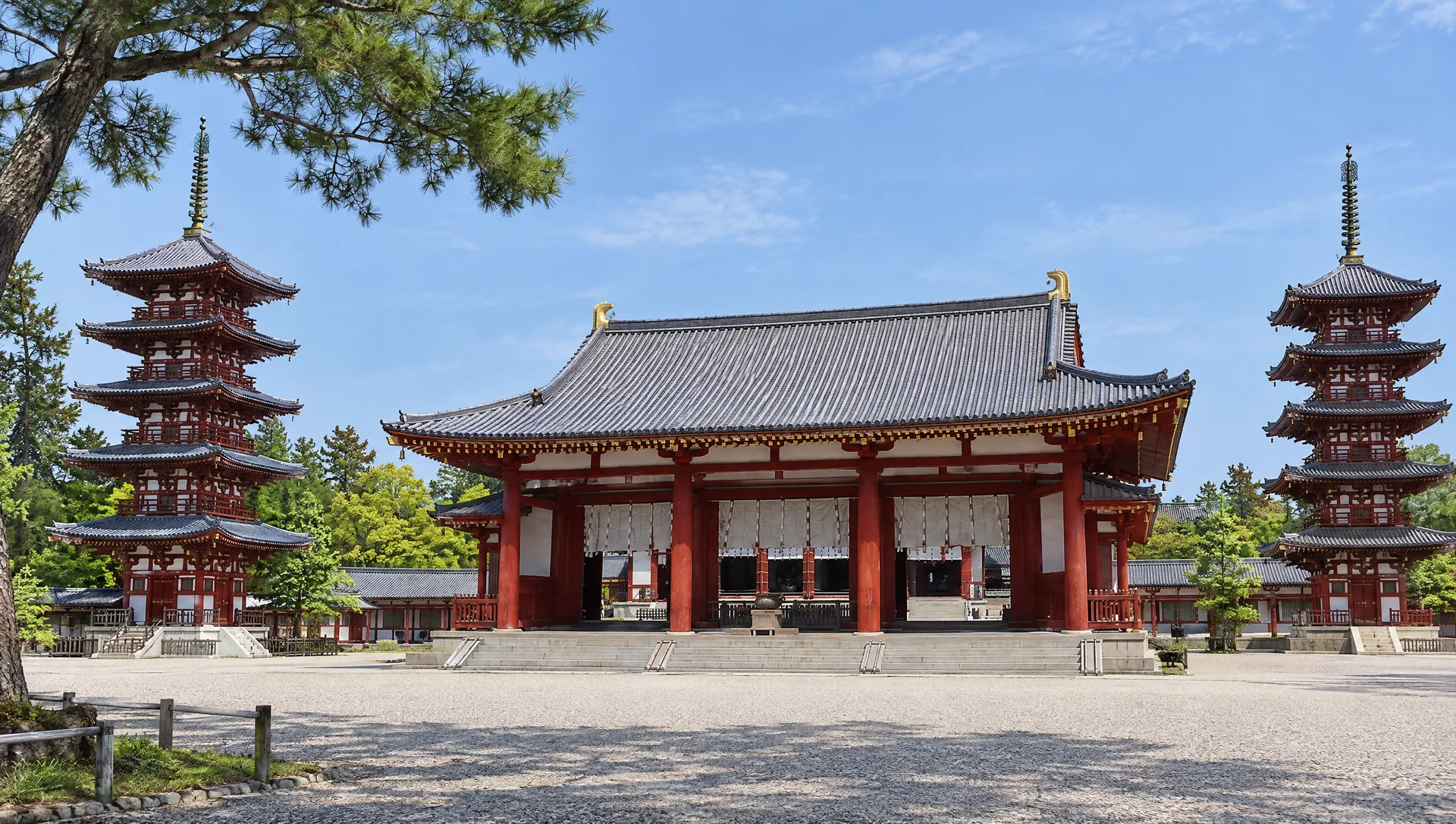
The two temples are close enough to form a walking circuit from Kintetsu Nishinokyo Station. Yakushi-ji's pagodas and healing-Buddha tradition make a useful contrast with Toshodai-ji's surviving halls and precept-school history. Each has its own admission and some displays cost extra.
What to look for
Nara-period Golden Hall
Lecture Hall transferred from Heijo Palace
Ganjin’s National Treasure portrait on limited dates
Photo notes
The temple’s copyright notice forbids reusing its website text, photographs and video in other media without permission. That notice does not fully specify personal photography inside each building; follow on-site rules, respect worship and ask the temple before reporting, commercial photography, publication or reuse.
SEASONAL CALENDAR
Events connected with Toshodai-ji Temple
These records are shared with MyNara’s event calendar, so dates and notices have one source. Recurring patterns are not confirmed dated editions; check the organizer’s latest guidance.
Shūya no Nara Tabi: World Heritage Night Openings (2026)
Nara City Tourism Association's seventh Shūya no Nara Tabi programme brings limited night visits to five World Heritage temples and a separately bookable Mount Wakakusa night-view bus. It began in 2020 and is promoted as a way to experience Nara's historic sites after dark. Each temple has different operating Saturdays, hours and admission; the official schedule below preserves those differences. Temple visits do not require reservations, but the bus does. At Gangō-ji, photography is allowed outdoors only; indoor photography and tripods, monopods or ladders are prohibited. Check the association's current notice for access and transport changes before travelling.
- Time
- Temple openings: Kōfuku-ji Oct 31 and Nov 7, 14, 21, 28, 17:30–21:00; Kasuga Taisha Nov 7, 14, 21, 28, 17:30–20:00; Gangō-ji on those four November Saturdays, 18:00–20:00; Tōshōdai-ji and Yakushi-ji Nov 7 and 21, 17:30–20:30. Optional night-view bus runs Oct 31 and each November Saturday; depart JR Nara 16:10 or Kintetsu Nara 16:15.
- Admission
- Separate admission at each temple: Kasuga Taisha ¥700; Kōfuku-ji adults ¥500, junior/senior high students ¥300, elementary pupils ¥200 (rear chamber costs the same again); Gangō-ji ¥700; Tōshōdai-ji ¥500; Yakushi-ji ¥1,000. Optional reserved round-trip bus: adults ¥2,000, children ¥1,000.
- Booking
- Advance reservation is not required for the five temple visits. The optional Mount Wakakusa bus requires advance booking through Nara Kotsu; check the official campaign page for the booking link and return arrangements. Each temple's session and ticket are separate.
Tōshōdai-ji Uchiwa-maki Fan Rite
Tōshōdai-ji holds this distinctive annual fan rite on May 19, the death anniversary of its restorer Kakujō. After the Chūkōki Bonmō-e memorial service, several hundred heart-shaped fans are scattered from the Shari-den bell tower. The temple says participation tickets are distributed on the day; the Nara City Tourism Association's 2026 notice scheduled the service for 13:00 and the fan rite for 15:00, with ticketed participation limited for safety to healthy people aged 20–60. Those terms describe the 2026 notice, not a guarantee for future years; check the temple's current instructions. The visitor listing does not state whether a separate event fee applies.
Check organizer informationNara–Nishinokyo Lotus Road
The Nara City Tourism Association coordinates a seasonal route linking Saidaiji, Kikō-ji, Tōshōdai-ji and Yakushi-ji, where lotus flowers bloom in temple precincts. Some editions offer a shared admission ticket, limited goshuin and related walking programmes; dates, ticket terms and participating activities vary by year. Check the association's current announcement before planning the route.
Check organizer informationMake a day of it
Explore guides close to this map point, then check the actual route before travelling. Distances below are straight lines, not walking distances or travel times; map points may not be entrances.
Sources & editorial status
Original MyNara draft based on the linked sources. Sources reviewed 20 October 2026. Opening arrangements, prices and offers may change; use the operator's current information before travelling.
- Toshodai-ji official guide
- Toshodai-ji history
- Toshodai-ji Golden Hall
- Toshodai-ji Lecture Hall
- Toshodai-ji admission and access
- Toshodai-ji New Treasure Hall collection and seasonal opening
- Toshodai-ji 2026 notices and special viewings
- Toshodai-ji Shariden
- Toshodai-ji copyright policy
- Nara Prefecture listing