Former Yagyu Domain Jinya Ruins
A free historic park marks the former residence and administrative centre of the Yagyu domain, built by Yagyu Munenori and lost to fire in 1747.
 Verified site photographs are being prepared.
Discover Former Yagyu Domain Jinya Ruins
The Yagyu domain's jinya was a residence and administrative base rather than a stone castle. Local history dates its completion to 1642 under Munenori, with later work by his son Munefuyu; a fire destroyed the complex in 1747, and a temporary structure remained until the domain ended in the Meiji period. What visitors see today is a small public historic park, not a preserved mansion: after schools moved from the site, Nara City commissioned a 1977–80 survey, excavation and landscape restoration. A specialist involved in that work explains that the cut-stone ground plan was laid out using excavation and an 18th-century map, while the well location was identified archaeologically. This distinction helps visitors read the display without mistaking every stone or garden feature for untouched remains.
Read the ground plan, not an imagined castle
The jinya was a domain residence and office compound, not a preserved castle tower or a fully reconstructed samurai mansion. Nara City's site interpretation explains that the visible stone lines indicate the former building plan and distinguishes excavated features from later landscape design. Read these as an interpretation of archaeological evidence, stay on public paths and do not climb or remove anything.
Separate excavated evidence from later garden design
A specialist involved in the 1977–80 restoration says school construction had removed most earlier traces. Excavation identified the former well; stone courses were then used to display building footprints with reference to an 18th-century plan. A dry pond on the north side was a later garden composition, not an excavated jinya feature. The Nara Prefectural Library's Yagyu archive separately lists a place called Kagami-ike but does not locate it precisely; the available records do not establish that it is the same as the jinya's dry pond or any water feature within the park.
Understand why the Yagyu needed a jinya
Yagyu Munenori became the first lord of the Yagyu domain. The local association dates the construction to 1642 and says it took three years; Munefuyu later enlarged it. A fire in 1747 destroyed the complex, which was only temporarily rebuilt before the domain was abolished. The association cites the Yagyu Domain Diary for the original compound's scale. These dates and dimensions are from local historical material, not visible remains alone.
Connect the ruins to the nearby village circuit
The Yagyu Tourism Association's local history walk places the jinya after Yagyu Yasaka Shrine and before Masakizaka training hall and Hōtokuji. This gives the park context among the domain's surviving landscape. Its suggested walking route is a local itinerary, not a live navigation service; check its current map, the terrain and your bus return before setting out.
A small public park with no ticket desk
Nara's tourism guide describes a historic park; the city assesses the jinya as a free municipal facility and no admission fee is listed. A city notice published 7 May 2026 confirms the Yagyu Tourism Association as designated manager of the jinya, former chief-retainer residence and visitor car park from 1 April 2026 through 31 March 2029. The manager's remit includes approving or limiting entry and use; the designation does not publish the park's daily hours, a reservation requirement or permission to enter archaeological features. No staffed opening hours, accessible path or photography policy were found for the grounds. Keep village roads clear and ask the association before publication-oriented photography.
What to look for
Visible footprint
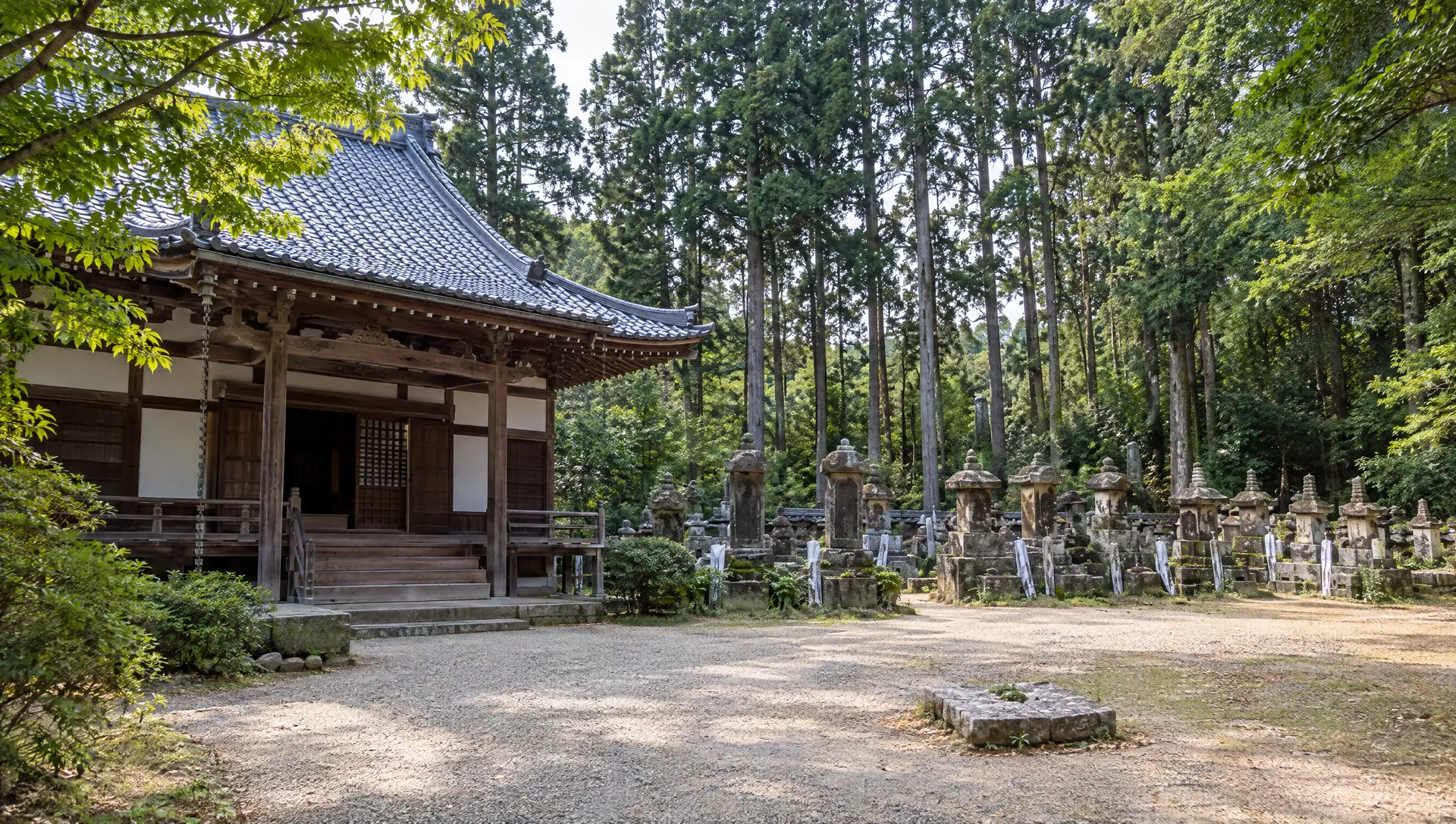
Low foundations and a well-like feature help visitors picture the former compound.
A domain's working centre
The site represents the residence and administration of the Yagyu domain.
Part of a village walk
The local association places the ruins between the shrine and other Yagyu heritage sites.
Photo notes
No photograph is licensed for MyNara. Follow the park's public-route rules and ask Nara City before publication-oriented photography. The Nara Prefectural Library's Yagyu archive lists a place called Kagami-ike but does not establish its exact location or a public route; it is not assigned as a separate visitor stop in this guide.
Make a day of it
Explore guides close to this map point, then check the actual route before travelling. Distances below are straight lines, not walking distances or travel times; map points may not be entrances.
Sources & editorial status
Original MyNara draft based on the linked sources. Sources reviewed 24 October 2026. Opening arrangements, prices and offers may change; use the operator's current information before travelling.
- Nara City tourism guide — former Yagyu domain jinya, public park and location
- Yagyu Tourism Association — current bus routes, station-to-village travel-time ranges and one-way adult fare (checked 2026-10-24)
- Nara City — final 2026–29 designation notice for the jinya, former chief-retainer residence and visitor car park; includes entry/use approval scope
- Nara City — Yagyu visitor parking location, hours and current posted rates
- Nara City — FY2023 Yagyu facility management evaluation, including no jinya use fee
- Yagyu Tourism Association — jinya history, fire and local walking routes
- Nara Prefecture Tourism Bureau — jinya visitor listing
- Yamanaka Isao — first-hand account of the 1977–80 jinya park survey, excavation and landscape restoration
- Nara Prefecture — Yagyu Miyaza annual festival and sacred dances
- Nara Prefectural Library — Yagyu local-history archive lists 鏡池 but does not resolve its exact location