Asuka-dera Temple
Meet the Asuka Buddha in the modest present-day hall, then read the much larger early temple in the village around it.
 Verified site photographs are being prepared.
Discover Asuka-dera Temple
Asuka-dera, also known historically as Hokoji, began with Soga no Umako's late-sixth-century Buddhist project. Excavation and the village's cultural-heritage record show a much larger early compound than the hall a visitor sees now. The bronze Shaka image, the Asuka Daibutsu, preserves important parts of an early-seventh-century casting, but later fire damage and repairs mean it is inaccurate to describe every visible surface as original. Seeing the statue and then stepping back into the former temple landscape makes the scale of this first full-fledged Japanese temple comprehensible.
A temple larger than its present hall
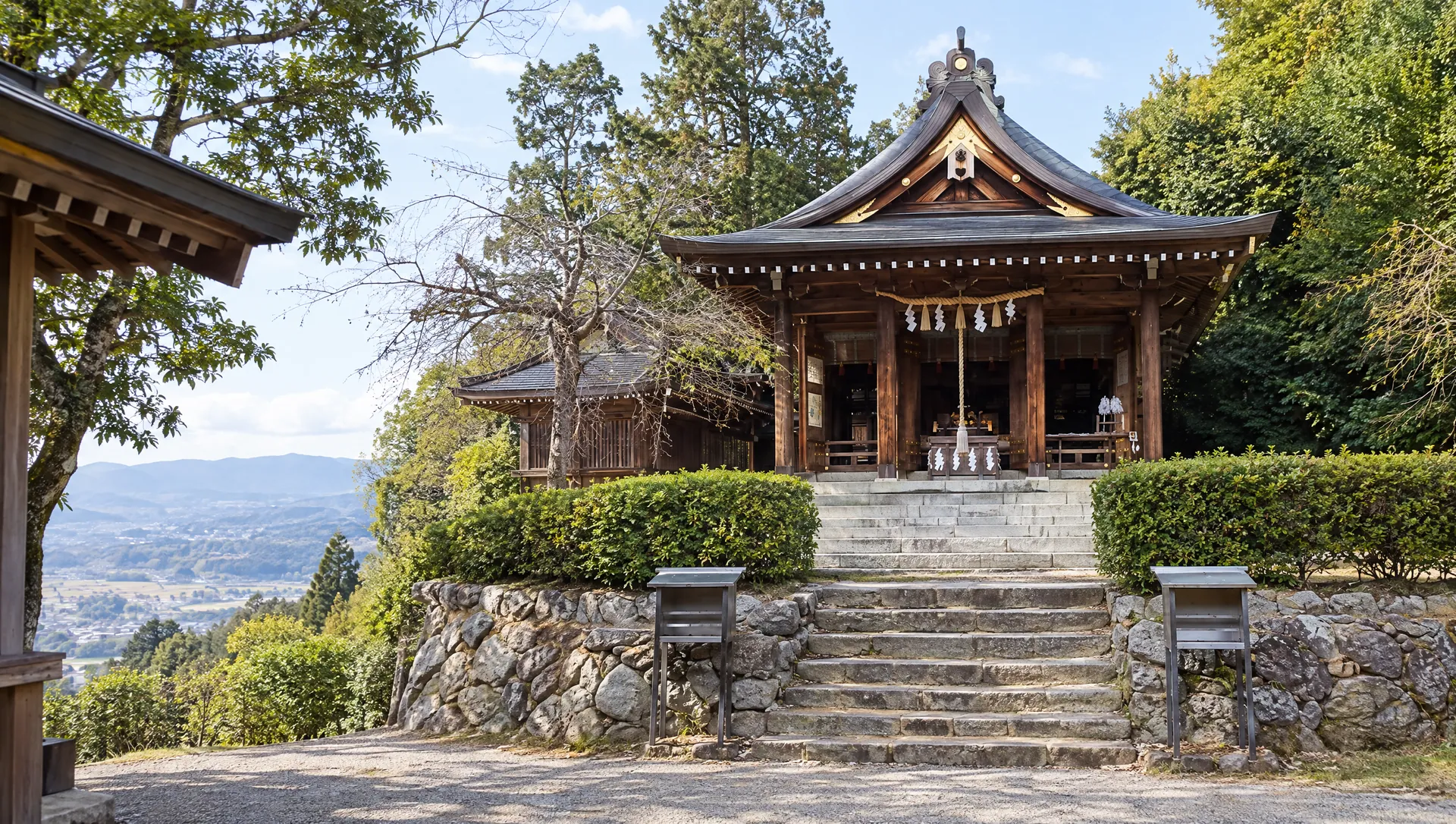
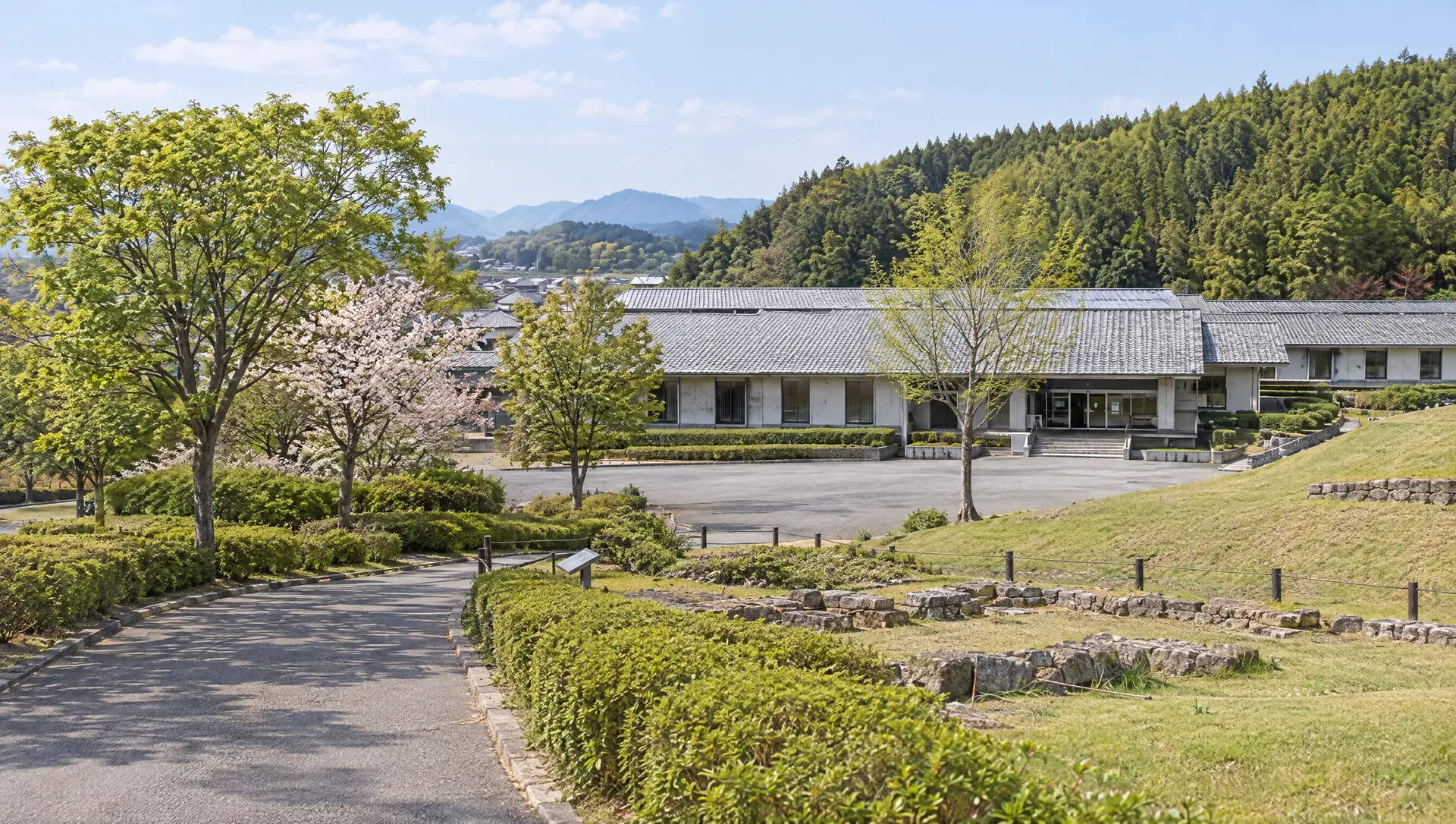
Asuka Village records the historic temple site as 46,184 square metres. The present paid visitor experience is much smaller: a compact worship hall and surviving foundation stones sit within the old enclosure, whose former reach extends into the surrounding village. The original complex had a central pagoda and three golden halls; the modern hall was rebuilt in 1826 after the medieval temple was lost. Reading the site as both a living temple and a protected archaeological landscape explains why the visible buildings do not match the scale of its history.
Look closely at the Asuka Buddha
Inside the hall is the bronze seated Shaka, about 2.75 metres high. Nara Prefecture identifies it as an Important Cultural Property and the oldest surviving Japanese cast Buddhist image. After the medieval fire, later repair shaped much of the statue as seen today; the prefecture identifies the face, left ear and three middle fingers of the right hand as parts that retain early material. Look at the figure as a layered object cared for across centuries, not an untouched time capsule.
Follow the move to Nara without losing Asuka
After the capital moved to Heijo-kyo, a new Gango-ji was built in Nara and inherited Asuka-dera's tradition. The village site did not vanish. Pairing Asuka-dera with Naramachi's Gango-ji lets a traveller distinguish the two present-day sites and understand why both appear in accounts of one temple lineage.
Walk west after the Buddha
A short walk west brings you to a five-ring stone monument traditionally associated with Soga no Iruka. The guidebooks describe it as his head mound, but that identification is a local tradition, not an archaeologically established burial. The surrounding lanes and fields help place early court politics and Buddhism in a real settlement rather than an isolated temple stop.
Use the bus to connect the village sites
The Asuka Daibutsu-mae stop is immediately by the temple entrance. Nara Kotsu's published model itinerary gives about 18 minutes from Kintetsu Kashiharajingu-mae Station's east exit; its local sightseeing bus continues to major village sites. Timetables change by weekday, weekend and season, so plan the return leg before beginning a multi-stop day. A one- or two-day bus pass may be useful when visiting several stops; check the current operator page for coverage and terms.
What to look for
Bronze Asuka Daibutsu with a complex repair history
Former three-hall and pagoda temple landscape
Connection to Naramachi's Gango-ji
Photo notes
A local visitor feature published in July 2026 reports that visitors may photograph the Buddha, but the temple's current visitor rules could not be verified directly; follow signs and staff instructions in the hall. Permission to take a personal photograph is separate from permission to use temple-supplied or archive images in MyNara. The Agency for Cultural Affairs content bank requires users of its Asukadera imagery to contact the temple about the specific proposed use in advance.
Make a day of it
Explore guides close to this map point, then check the actual route before travelling. Distances below are straight lines, not walking distances or travel times; map points may not be entrances.

Sources & editorial status
Original MyNara draft based on the linked sources. Sources reviewed 20 October 2026. Opening arrangements, prices and offers may change; use the operator's current information before travelling.
- Official Nara Travel Guide
- Asuka Village — protected site area and historic records
- Nara Prefecture cultural heritage — history, Buddha, fire damage and Gango-ji
- Nara's Japanese tourism guide — listed hours, admission, parking and accessibility
- Nara Kotsu — current Asuka bus model itinerary and travel time
- Nara Kotsu — Asuka sightseeing bus timetables and passes
- Local visitor feature — July 2026 on-site visit and personal photography report
- Agency for Cultural Affairs — Asukadera image-use conditions
- JNTO Asuka-dera guide