
Kawaradera Temple Ruins & Gufukuji
Trace the footprint of one of Asuka's great state temples, then see how its religious legacy continues at Gufukuji, where the first recorded sutra copying in Japan took place.
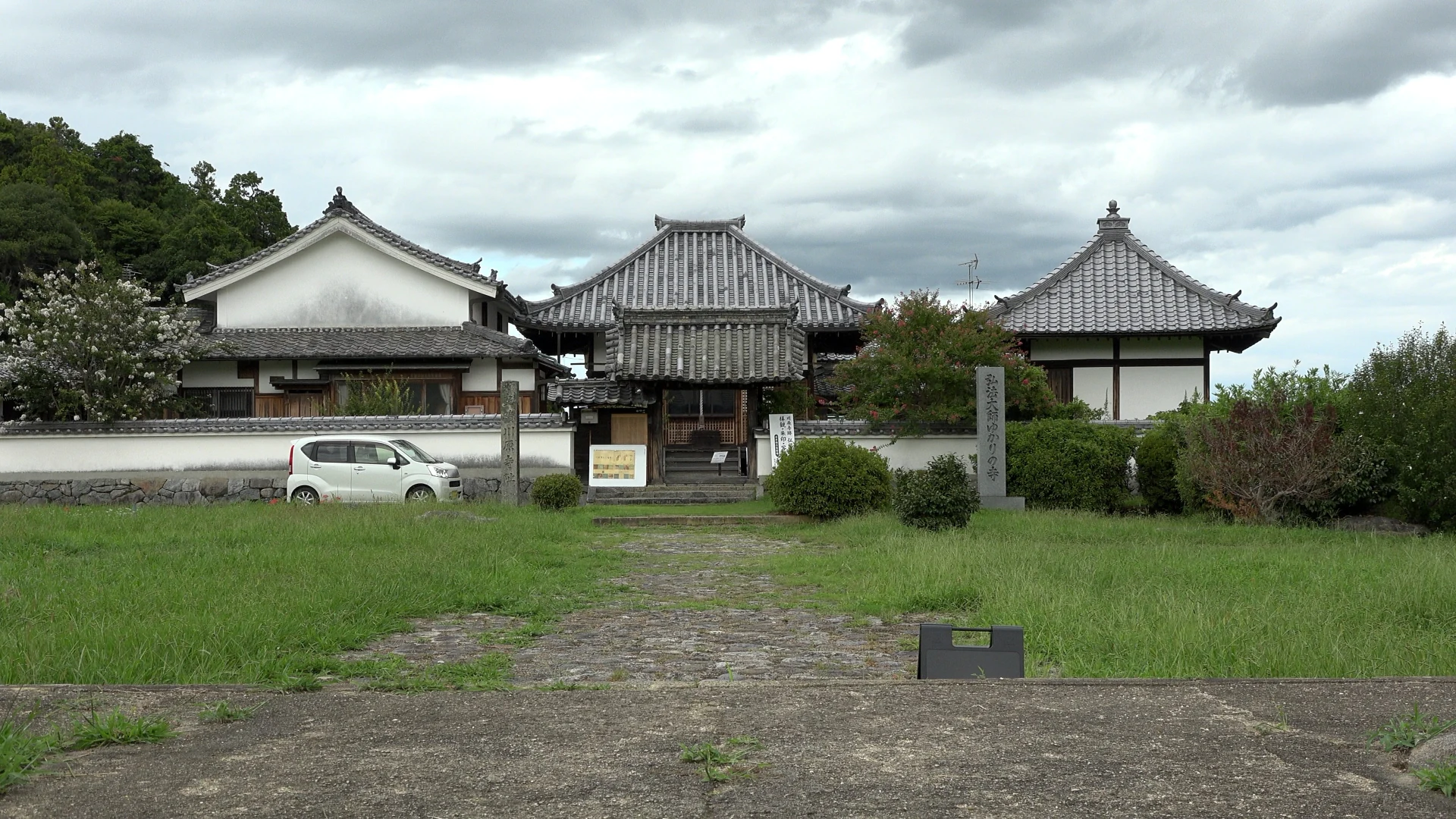 AI-generated representation · not a verified site photograph
Discover Kawaradera Temple Ruins & Gufukuji
Kawaradera is both an archaeological landscape and a living Buddhist temple. The large seventh-century complex stood across the Asuka River from the palace district and became one of the four great temples of the Fujiwara capital. Unlike the other three, it remained in Asuka when the capital moved in 710. Its exact founding circumstances are not settled: Nara Prefecture presents construction by Emperor Tenji to pray for his mother, Empress Saimei, as the leading theory, not a proven fact. Excavation revealed an unusual one-pagoda, two-main-hall layout. On 26 July 2026, the Kawara-dera Temple Site became one of the component parts of UNESCO's inscribed Ancient Capitals of Asuka and Fujiwara. The designation concerns the archaeological site; distinguish those remains from the active Gufukuji temple, which carries on Kawaradera's religious lineage.
Start with what the written record does and does not say
The Nara Prefecture history database says the temple's founding circumstances remain unclear. It presents a link to the former Asuka Kawara Palace and a memorial foundation by Emperor Tenji after Empress Saimei's death as the leading interpretation. The earliest cited entry is from 673, when copyists gathered here to copy the Buddhist canon. Later records connect the temple with court ceremonies and prayers for Emperor Tenmu. Keep the founding story as a well-supported theory, while the dated textual references are evidence that the temple was active by the late seventh century.
Read an unusual temple plan across today's open ground
Archaeological work identified a layout with one pagoda and two main halls, often called the Kawaradera-style arrangement. A cloister linked the gate and central hall; another hall and pagoda stood to either side, with a lecture hall and monks' quarters farther north. Nara Prefecture measures the precinct at about 333 metres north to south and more than 200 metres east to west. The restored foundations and stone bases make the ground plan legible, but they are not surviving full-height buildings. Walk the marked remains and avoid climbing or touching stones unless the temple explicitly permits it.
Find the 'agate' base and check before touching
The central hall's pale base stone is known locally as the agate stone, but Nara Prefecture identifies its material as white marble. The bases used elsewhere in the temple are a different local stone, quartz diorite. This contrast is more useful than assuming the named stone is literally agate. The operator highlights the base as a special feature and has described close contact with it; ask staff what touching is allowed on the day and follow any conservation instructions.
See how an ancient temple remains a place of worship
Kawaradera declined after the early medieval period and was repeatedly damaged by fire. The religious line continues at Gufukuji, the active temple on the historic precinct. The prefecture lists an 85-centimetre wooden Eleven-Faced Kannon as the principal image and early-Heian standing Tamon-ten and Jikoku-ten as Important Cultural Properties. Current sources reviewed do not promise that every image is displayed during ordinary admission, so ask the temple which halls and objects are open when you visit.
Try sutra copying at its early recorded setting
The temple's operator identifies the Gufukuji sutra hall with the 673 copying of the Buddhist canon recorded in the Nihon Shoki. Its visitor page offers templates for beginners, children and overseas visitors. Posted prices are ¥1,000 for the Heart Sutra, ¥700 for the Ten-phrase Kannon Sutra and ¥300 for the sacred-name text; sets including entry and matcha are listed at ¥2,200, ¥1,900 and ¥1,500 respectively. Ask about current availability, language help, time required and reservations before travelling.
Treat the Asuka meal as a booked group programme
The operator describes the Ancient Asuka Set Meal as a fully reserved option for groups of five or more; dining alone is not accepted. It lists ¥2,700 including entry, except during events and special viewings. Its posted cancellation terms are 50% for the preceding day and 100% on the day. This is a temple-arranged group programme, not a walk-in restaurant. Confirm the menu, dietary needs, booking, seating and cancellation terms directly with the temple.
Connect the temple to its setting across the village
The temple sits opposite the Asuka Palace area, near Tachibanadera and the lanes of Kawahara. These are separate heritage sites rather than one enclosed complex. The operator's access page lists the Akakame loop bus to Kawahara stop, about a two-minute walk, or Okahashimoto stop, about three minutes; it estimates around 12 minutes by bus from Asuka Station to Kawahara. From Asuka Station, the temple estimates about a 30-minute walk. Check the current bus schedule and the return trip before setting out.
Understand what the 2026 World Heritage inscription covers
UNESCO's July 2026 decision inscribed the Ancient Capitals of Asuka and Fujiwara as a serial property. UNESCO's official component map identifies Kawara-dera Temple Site as component 1757-008 among the Buddhist temple sites. This recognition concerns the archaeological remains and their value in the development of ancient Japanese state Buddhism; it does not turn every nearby building or the active Gufukuji temple into a separately listed component. The official property page gives the historic-site address only at village level, so use the temple operator's visitor directions for the open site and follow any conservation boundaries.
What to look for
A rare one-pagoda, two-hall plan
Walk the restored bases to understand how the large seventh-century precinct was arranged.
The white 'agate' base
Nara Prefecture identifies the famous central-hall stone as white marble, contrasting it with the other foundations.
A living sutra-copying practice
Gufukuji offers a bookable sutra-copying experience; confirm availability directly.
Photo notes
The official site does not establish general visitor photography permission. Ask staff before photographing halls, images or religious activities, and respect worshippers, residents, conservation areas and posted restrictions.
SEASONAL CALENDAR
Events connected with Kawaradera Temple Ruins & Gufukuji
These records are shared with MyNara’s event calendar, so dates and notices have one source. Recurring patterns are not confirmed dated editions; check the organizer’s latest guidance.
Asuka Half Marathon 2027
The organizer confirms a 21.0975 km half marathon from 09:00 to 12:30 on March 14, 2027, with a first-come capacity of 3,000 runners. The general entry filled on October 9, 2026, well before its original December deadline; the organizer's notice thanks applicants but does not publish the final number of accepted runners. The course starts and finishes at Kitora Tumulus Shijin-no-Yakata and passes the Tenmu and Jitō tombs, Kawaradera, Tachibanadera, Ishibutai, the Inabuchi terraces and Takamatsuzuka-area roads. This is useful to spectators and anyone planning to visit these sites that day, not an invitation to enter. The start/finish is a 20-minute walk from Kintetsu Asuka Station; there is no participant parking, road restrictions begin near the venue at 08:00, and station-area congestion is expected. A free general-visitor shuttle runs from the venue back to Asuka Station from 10:00 to 14:00, but not before the race. Check the organizer's latest access and course notices before travelling.
- Time
- Race: 09:00–12:30; roads near the main venue restricted from 08:00
- Admission
- Runner entry was ¥6,000; the general entry reached its 3,000-person cap and closed October 9, 2026. No spectator admission fee is stated.
- Booking
- General runner entry is closed after reaching capacity. The organizer does not publish a spectator registration process; follow its visitor-access guidance and do not enter the course.
Make a day of it
Explore guides close to this map point, then check the actual route before travelling. Distances below are straight lines, not walking distances or travel times; map points may not be entrances.
Sources & editorial status
Original MyNara draft based on the linked sources. Sources reviewed 24 October 2026. Opening arrangements, prices and offers may change; use the operator's current information before travelling.
- Kawaradera/Gufukuji — current entry price and experience overview
- Asuka Tourism Association — current visitor hours, closure caveat, and admission listing
- Kawaradera/Gufukuji — access, bus stops and route estimates
- Kawaradera/Gufukuji — sutra copying and posted prices
- Kawaradera/Gufukuji — reserved group meal and cancellation terms
- Kawaradera/Gufukuji — history and temple layout
- Kawaradera/Gufukuji — current closure and activity notices
- Nara Prefecture — Kawaradera site, archaeological plan, historic theory and cultural properties
- Asuka Village — National Historic Site record
- Asuka Village — 26 July 2026 inscription announcement for the Ancient Capitals of Asuka and Fujiwara
- UNESCO World Heritage Centre — inscription decision 48 COM 8B.19 for the Ancient Capitals of Asuka and Fujiwara
- UNESCO World Heritage Centre — official component map, Kawara-dera Temple Site (1757-008)
- Asuka-Fujiwara World Heritage Council — component 08, Kawara-dera Temple Site