Original Chūgū-ji Site: Temple Foundations and Three Pagodas
Walk the reconstructed foundations of Chūgū-ji's first site, then find a view that frames Ikaruga's three pagodas.
 Verified site photographs are being prepared.
Discover Original Chūgū-ji Site: Temple Foundations and Three Pagodas
The Chūgū-ji where visitors see the famous half-lotus bodhisattva today is not where its first buildings stood. A short journey east leads to an open historical park over the early nunnery's original grounds. Excavations revealed a tower and main hall arranged on a north–south axis; low, reconstructed platforms let you read that plan without pretending the seventh-century buildings survive. The park also has one of Ikaruga's most rewarding broad views: in clear conditions, Hōryū-ji's five-storey pagoda and the three-storey pagodas of Hōki-ji and Hōrin-ji can be seen within the same landscape. Treat this as a different visit from admission to the active Chūgū-ji temple, and use the park to put all four temples on a mental map.
Find the first Chūgū-ji beneath a park
Ikaruga's cultural-heritage centre dates the first temple to the first half of the seventh century and says Chūgū-ji moved to its present position in the early Edo period. Fields and a pond changed much of the original precinct after the move. Excavations beginning in 1963 identified the south half of a surviving earthen rise as the tower foundation and its north half as the main hall. The town dates construction from tiles and other finds, not from a surviving foundation inscription. Today the ground is interpreted in a public park, so it is the footprint and surrounding farmland, rather than an intact Asuka-period hall, that tell the story.
Read the north–south temple plan
The tower and main hall stood one behind the other in what local researchers call a Shitennō-ji-style layout. Ikaruga Town compares it with the earliest Hōryū-ji precinct, the Wakakusa Garandō. A lecture hall and cloister have not been found; the town's description suggests the plan may not have been completed, but absence in the excavated record is not proof that no later structure ever stood anywhere on the property. The two reconstructed platforms in the park make the sequence understandable from ground level. Do not mistake their present surfaces for untouched seventh-century masonry or claim to enter a restored ancient temple.
Look for Ikaruga's three towers
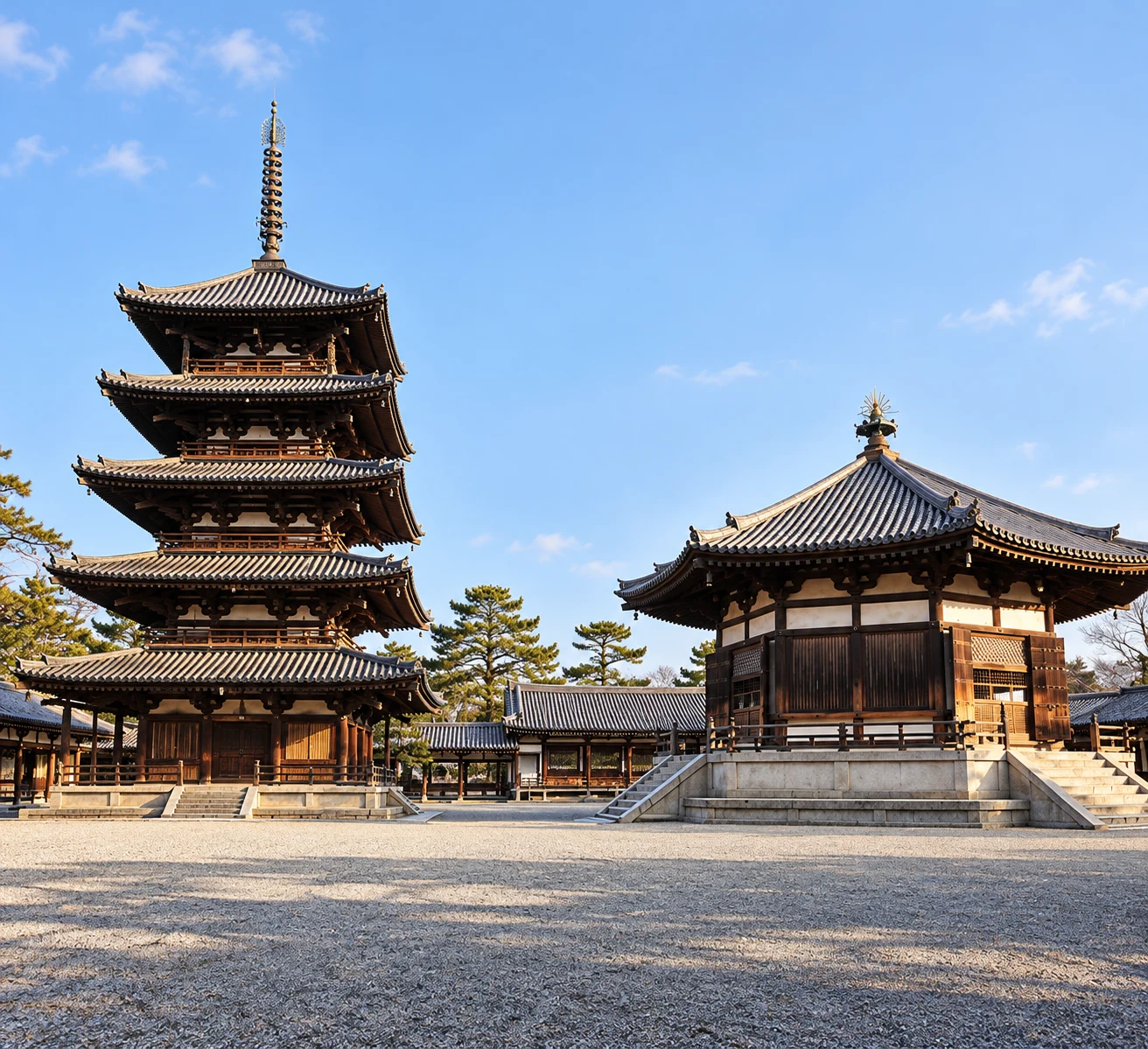
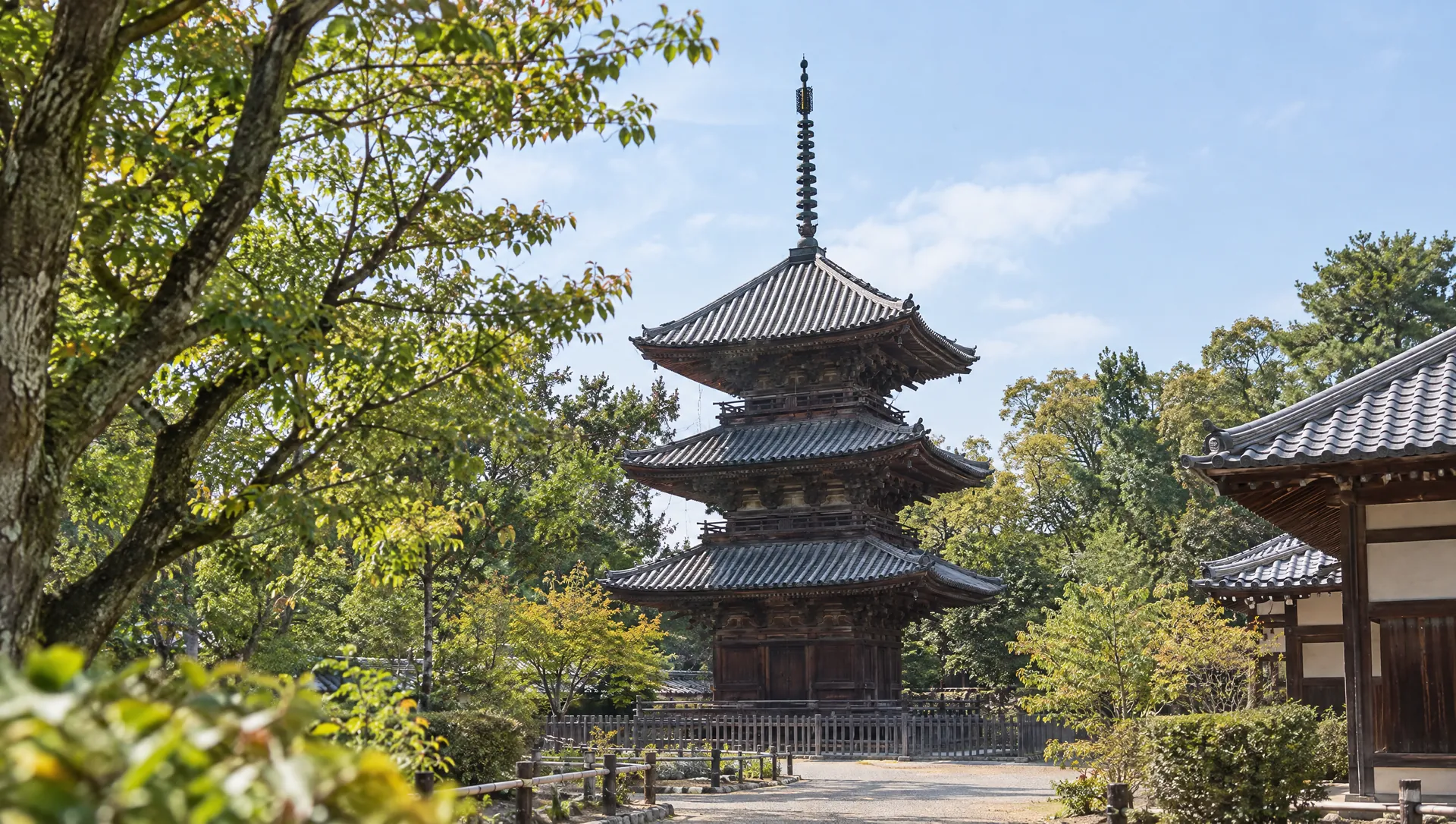
Nara Prefecture describes a corner of the park where the Hōryū-ji, Hōki-ji and Hōrin-ji pagodas can be seen together. This is a landscape view, not a promise that each detail will be obvious in haze or behind seasonal growth. It rewards daylight and a slow scan across the horizon. An evening visit might still be possible because the prefecture's 2023 park profile listed the grounds as open around the clock, but it also listed toilets only 9:00–17:00, and after-dark visibility, lighting and present access have not been verified. If the pagoda view matters, come during the day.
Understand the flowers and their limits
The park's open space and neighbouring fields are part of the experience, especially the cosmos grown by volunteers. Ikaruga Town's notice of 16 October 2026 reported only early buds in the historical-park area as of 13 October; it did not declare a current peak. Elsewhere near Hōki-ji it expected late October to early November, which is not a guaranteed bloom calendar for this park. The prefecture has also described carp streamers in spring and a November local market, but individual displays and events require a current announcement. This is a good pause even without flowers, because the excavated layout and temple panorama remain the site's core.
Choose the right bus stop and parking plan
The local tourism centre estimates about 25 minutes on foot from JR Hōryūji Station, or around ten minutes northeast on foot from the Chūgūji-mae bus stop. Nara Prefecture's 2023 park profile gives roughly 750 metres from that stop and says the Chūgūji-higashiguchi stop on a route from Kintetsu Kōriyama is close to the park. Check today's Nara Kotsu timetable and stop names before departure. The local guide says there is no ordinary on-site visitor car park. A town notice for the 2026 cosmos period proposes a free temporary historical-park lot, 9:00–17:00 from late October to early December, and a separate year-round free Mitsui tourist-motorcar lot, 8:30–17:00; verify opening and location before driving. Do not use Hōki-ji's worshipper parking for flower viewing.
What to look for
Reconstructed tower and main-hall platforms on the original nunnery ground
A park viewpoint for Hōryū-ji, Hōki-ji and Hōrin-ji pagodas
Volunteer-grown autumn cosmos when conditions allow
Photo notes
No original ruins, pagoda-panorama or cosmos photograph has been licensed to MyNara. Photograph from public paths without stepping into cultivated fields, blocking the paths or using a drone without the necessary manager permission. Reconstructed bases, seasonal displays and distant pagodas may not match old published photos.
Make a day of it
Explore guides close to this map point, then check the actual route before travelling. Distances below are straight lines, not walking distances or travel times; map points may not be entrances.
Sources & editorial status
Original MyNara draft based on the linked sources. Sources reviewed 19 October 2026. Opening arrangements, prices and offers may change; use the operator's current information before travelling.
- Ikaruga Town archaeology — first-site layout and national designation
- Ikaruga Cultural Heritage Center — excavation from 1963, foundations and move
- Hōryūji i Center — address, station/bus access and usual parking
- Nara Prefecture park profile (2023) — facilities, hours and three-pagoda view
- Ikaruga Town 2026 cosmos notice — dated bloom and seasonal parking