Ikaruga Shrine: Tenjin Worship beyond Hōryū-ji
Follow Hōryū-ji's village history to a small Tenjin shrine and a pond-side view of the five-storey pagoda.
 Verified site photographs are being prepared.
Discover Ikaruga Shrine: Tenjin Worship beyond Hōryū-ji
Ikaruga Shrine is a modest but revealing stop north of Hōryū-ji. Its worship of Sugawara no Michizane is linked by tradition to a tenth-century temple administrator, and its later life as the old village's guardian shrine shows how temple and neighbourhood histories overlap. The nearby Tenma Pond frames a view toward Hōryū-ji's pagoda. This is not another ticketed Hōryū-ji hall or a place where a festival can be promised every day: its interest lies in the quiet route, the older story of Tenjin worship and the continuing local community. Treat the shrine precinct and pond as one short, respectful detour on a wider Ikaruga walk.
Understand the Tenjin origin as a tradition
The prefecture records an Edo-period source saying the monk Tanshō, then involved with Hōryū-ji, enshrined Sugawara no Michizane during the Tenkyō era, 938–947, because of a claimed Sugawara family connection. An 1874 village-shrine record called it Tenmangū. Those texts explain the shrine's Tenjin association, but they are not proof that every present structure dates to the tenth century. The local tourism desk likewise describes the foundation as shrine tradition. Visit for the link between Buddhist temple management and the local deity rather than for an unverified ancient building date.
See how temple and village stayed connected
Before the Meiji separation of Shinto and Buddhism, Hōryū-ji managed worship here. The shrine then passed into village care and became a guardian place for the former Hōryūji village. The prefectural heritage record says other local shrines were combined with it. This changing relationship is unusually legible in the reported autumn procession: the mikoshi travels toward a resting place in Hōryū-ji's precinct and returns to the shrine. Sources differ in how they date or describe the annual festival, so confirm the current year's programme rather than planning around a fixed October day in an older record.
Look across Tenma Pond without treating it as a second ticket
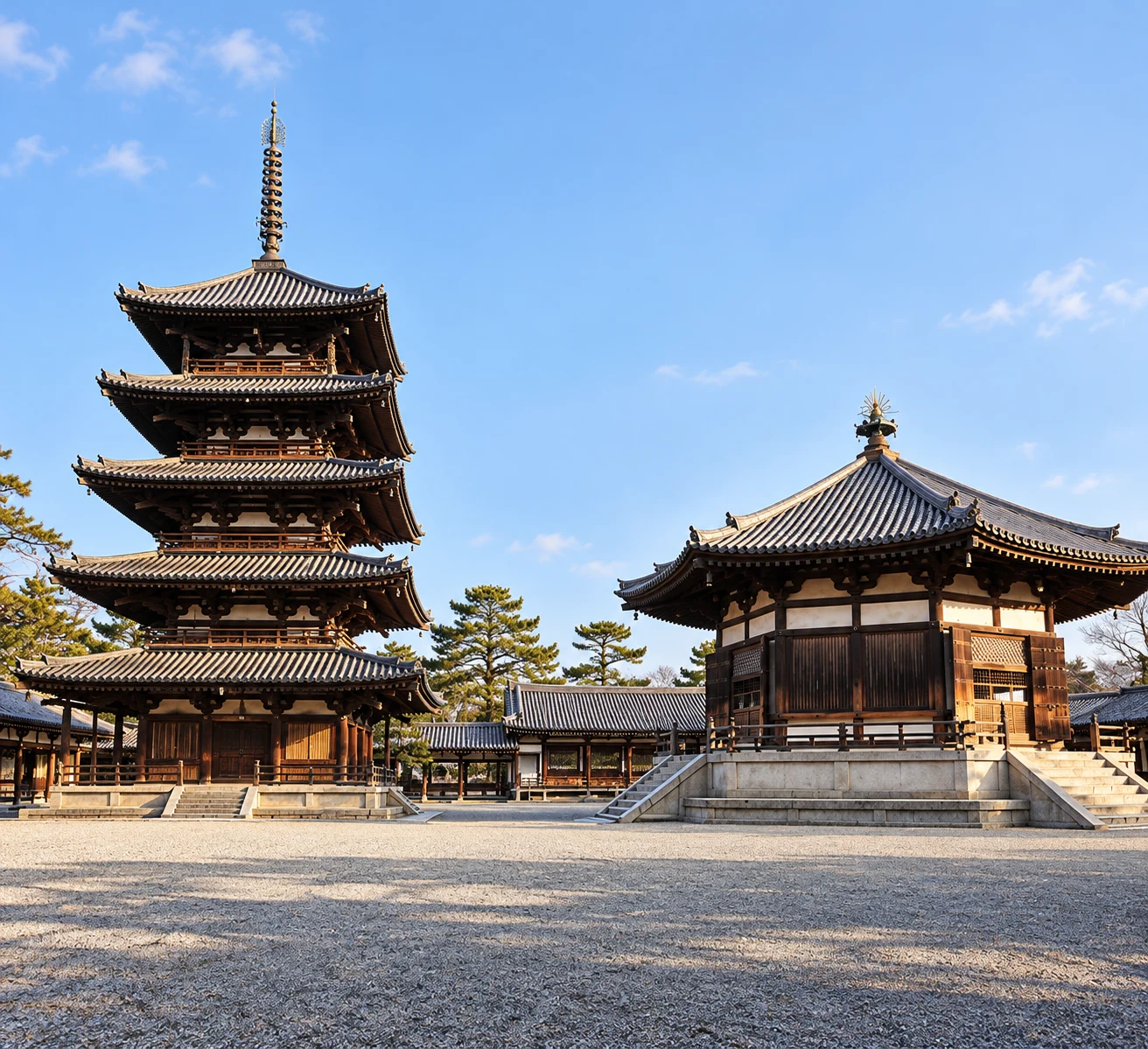
The local tourism centre points out a view of Hōryū-ji's five-storey pagoda from Tenma Pond in front of the shrine. Use the public side of the water and respect nearby homes and traffic when framing a photograph. The view and the shrine work together as one walk; the pagoda remains inside Hōryū-ji and has its own admission and photography rules. A pond-side view is weather- and vegetation-dependent, and the reviewed sources do not establish a formal viewing deck or guaranteed open sightline.
Plan a small detour, not a full museum visit
The tourism listing marks the shrine precinct as freely accessible and provides no dedicated visitor parking. It estimates around 30 minutes on foot from JR Hōryūji Station, or a bus to Hōryūji Sandō followed by roughly 15 minutes on foot. Visit Nara's English directory instead gives 25 minutes from the station; use those figures as rough route estimates, not a timetable promise. The shrine is on the route toward Matsuo-dera, but that temple is a separate hillside destination with a much longer approach. Check current bus departures and a pedestrian map before setting off.
Respect a local place of worship
Because this is a working neighbourhood shrine, ordinary free access should not be interpreted as permission to enter closed buildings, stage shoots or interrupt ceremonies. No reviewed primary source lists staffed hours, ritual bookings, accessibility features or public lavatories here. Look at posted notices on arrival and ask locally if a particular rite is the reason for visiting. The older prefectural festival account mentions a temple-linked procession, while the tourism centre simply places it around mid-October; dates, procession route and participation conditions require current confirmation.
What to look for
Tenjin history tied to the old Hōryūji village
Reported mikoshi route linking shrine and temple
Tenma Pond view toward Hōryū-ji's pagoda
Photo notes
The tourism centre identifies a pond-side pagoda view, but it does not license photographs for MyNara or state blanket permission for photography inside the shrine. Stay on public paths, avoid obstructing neighbours or worshippers, and follow event notices. Do not use Hōryū-ji grounds' photography rules as permission for this separate shrine, or vice versa.
Make a day of it
Explore guides close to this map point, then check the actual route before travelling. Distances below are straight lines, not walking distances or travel times; map points may not be entrances.
Sources & editorial status
Original MyNara draft based on the linked sources. Sources reviewed 19 October 2026. Opening arrangements, prices and offers may change; use the operator's current information before travelling.