Mount Miwa: A Sacred Pilgrimage with Conditions
Understand the mountain that serves as Ohmiwa Jinja's sacred body, and decide whether you meet the shrine's devotional, language, phone and safety conditions for entry.
 Verified site photographs are being prepared.
Discover Mount Miwa: A Sacred Pilgrimage with Conditions
Mount Miwa is not an ordinary summit to collect on a Nara sightseeing itinerary. Ohmiwa Jinja regards the entire mountain as its sacred body, the dwelling place of Ōmononushi. Its own account describes a 467-metre cone clothed in cedar, pine and cypress, with sacred rocks called iwakura. Names for the mountain appear in the Kojiki and Nihon Shoki; the old-text connection is a matter of religious and literary history, not a licence to wander the forest. Entry was long restricted. The shrine now allows conditional ascent for worship, but explicitly distinguishes it from tourism and recreational hiking. You can appreciate the mountain from the main shrine and visit Sai-jinja without applying to ascend. For someone who does wish to enter, understanding the rules before travelling is the essential first step.
Recognize what makes this mountain different
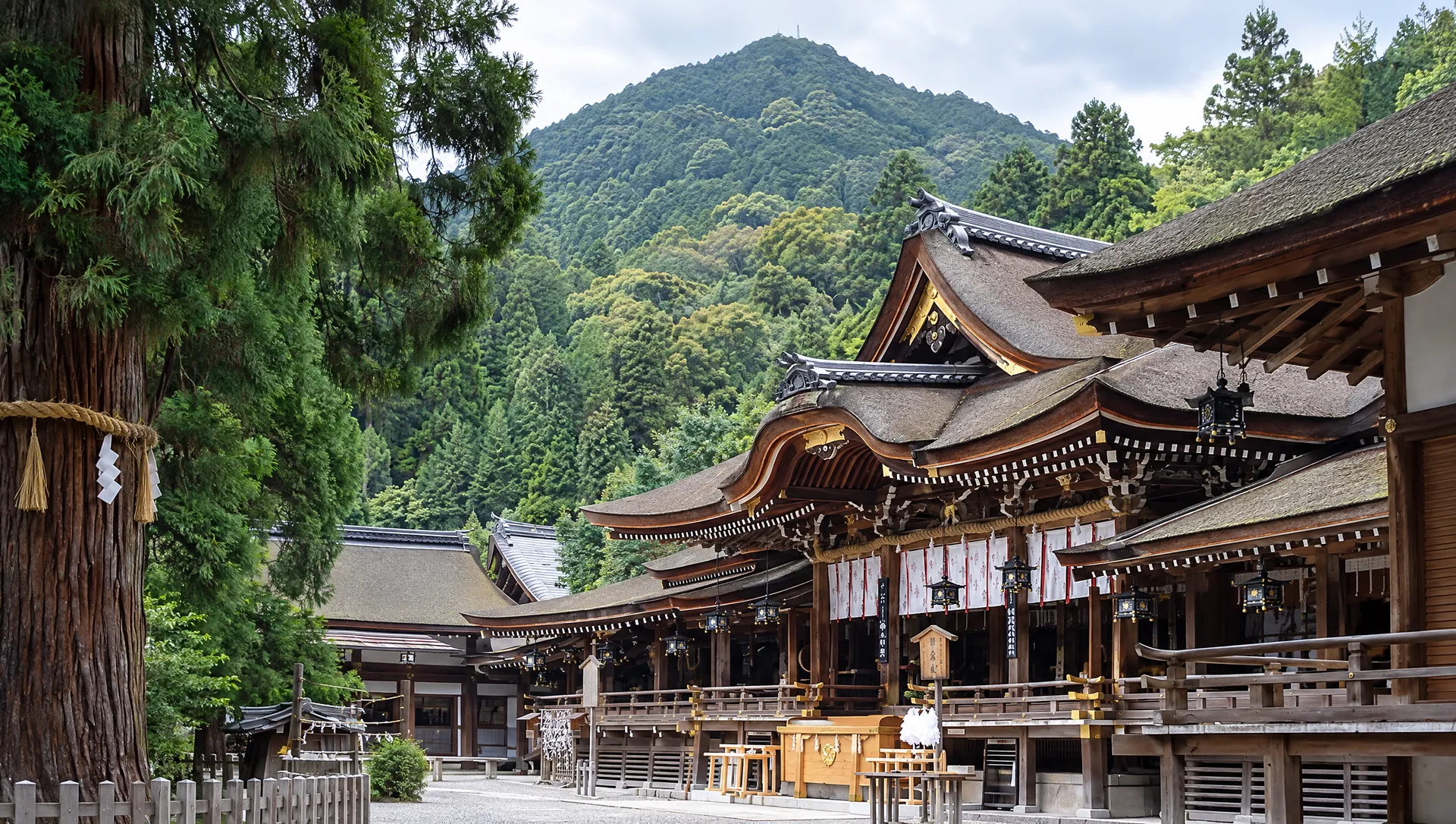
Ohmiwa Jinja does not centre worship on a conventional main-hall image: the mountain itself is revered as the deity's body. The shrine describes sacred cedars and iwakura rock sites on its slopes, and traditional shrine texts associate particular rocks with deities. This is the operator's religious interpretation, not a promise that visitors may seek out or photograph each rock. Stay with the route and instructions given at registration. A traveller interested in landscape and history but unable or unwilling to meet the entry conditions can still view the wooded profile from permitted public places and visit the main shrine and Sai-jinja. That is a meaningful visit in its own right, without suggesting that a ticket buys access to an ordinary hiking trail.
Apply at Sai-jinja only if you meet the conditions
Registration is at the subsidiary Sai-jinja, not at the mountain marker shown on this map. The shrine requires an application giving your name, address, mobile number and emergency contact. It says foreign visitors may enter only if they understand Shinto and undertake the ascent with a devout heart, fully understand the Japanese explanation themselves or with an interpreter, and have at least one person in their party reachable through a domestic Japanese (+81) phone number. The shrine does not allow the ascent to be incorporated into a tour itinerary and asks groups of roughly more than ten not to apply. These are the shrine's conditions, so a hired sightseeing guide, translated web page or international-roaming phone should not be assumed to satisfy them. Confirm eligibility directly before arranging travel.
Check the actual day, not an old directory schedule
Ohmiwa Jinja's 13 September 2026 notice says entry resumed on 15 September after a heat suspension and gave a 09:00–10:30 registration window with a 13:30 descent report for September. The operator's main page also contains a seasonal August–September notice with 2025 weekdays, so it is unsafe to extrapolate those times into October or another year. The shrine lists 24 October and 23 November among its 2026 no-entry days, and can stop entry for weather, heat, festivals or other reasons. The prefectural English directory, last updated 28 November 2025, still shows a different 09:00–12:00 / 15:00 schedule and ¥300; those are not verified as current. Call Ohmiwa Jinja and read its current notice or official social feed just before travelling for that day's eligibility, reception time, descent deadline and any fee. No confirmed October 2026 fee or standard hours are published in the sources checked here.
Prepare for a demanding, controlled ascent
At 467 metres, the summit sounds modest, yet the shrine warns that the slope is steep and rescues have been needed after falls or illness. Fallen branches, ticks and horseflies are among its stated hazards. Wear suitable shoes and protective clothing, bring water, follow the staff's route and return for the required descent report. The operator asks people who are unwell, recovering from illness, have relevant medical vulnerabilities, are inexperienced older climbers, or are alone with a young child to refrain. Weather and access can change abruptly, and rescue is difficult. MyNara cannot assess anyone's fitness or grant permission; if the conditions are uncertain, choose a shrine-ground visit instead. This is not a bookable adventure activity or a safe substitute for an accessible walking route.
Leave the camera outside the mountain
Ohmiwa Jinja explicitly names the mountain interior as a no-photography area. That applies even to otherwise permitted personal snapshots around parts of its precinct. Its broader visitor guidance also restricts photography in worship halls and during formal prayer, and asks visitors to protect worshippers' privacy. Publicly published or professional shooting in the precinct requires advance operator permission, which it says may take about a week to decide. MyNara has no site-specific image licence and must not reuse the shrine's images. Do not promote a hidden viewpoint or a 'best photo spot' inside the sacred forest; take any exterior photograph only from an allowed place, after checking local signs and people nearby.
What to look for
Sacred mountain regarded as Ohmiwa Jinja's divine body, not a recreational trail
Registration at Sai-jinja with specific foreign-visitor and Japanese-phone conditions
2026 closure dates, safety warnings and a strict no-photography interior
Photo notes
No MyNara-licensed Mount Miwa photograph. The shrine prohibits photographs within the mountain, and public/business photography elsewhere in its precinct requires advance permission. Do not reuse operator or prefectural photos; any exterior viewpoint must be checked against signs, privacy and publication permission.
Make a day of it
These are related stops near the map anchor, not measured stages of a route. Check the operator's access rules, current closures and signed paths before travelling.
Sources & editorial status
Original MyNara draft based on the linked sources. Sources reviewed 19 October 2026. Opening arrangements, prices and offers may change; use the operator's current information before travelling.
- Ohmiwa Jinja — sacred mountain history, height, woods and iwakura
- Ohmiwa Jinja — entry conditions, 2026 prohibited days, safety and foreign visitors
- Ohmiwa Jinja — 13 September 2026 reopening and September reception times
- Ohmiwa Jinja — shrine address and Miwa Station access
- Ohmiwa Jinja — regular Sakurai route-bus discontinuation
- Ohmiwa Jinja — visitor photography and mountain restriction
- Ohmiwa Jinja — public-production and publication permission
- Visit Nara A01190 — destination identity and older, superseded visitor timetable