
Abe Monju-in Temple
Meet Kaikei's towering Monju group, then choose a second pavilion visit and an Asuka-period tomb.
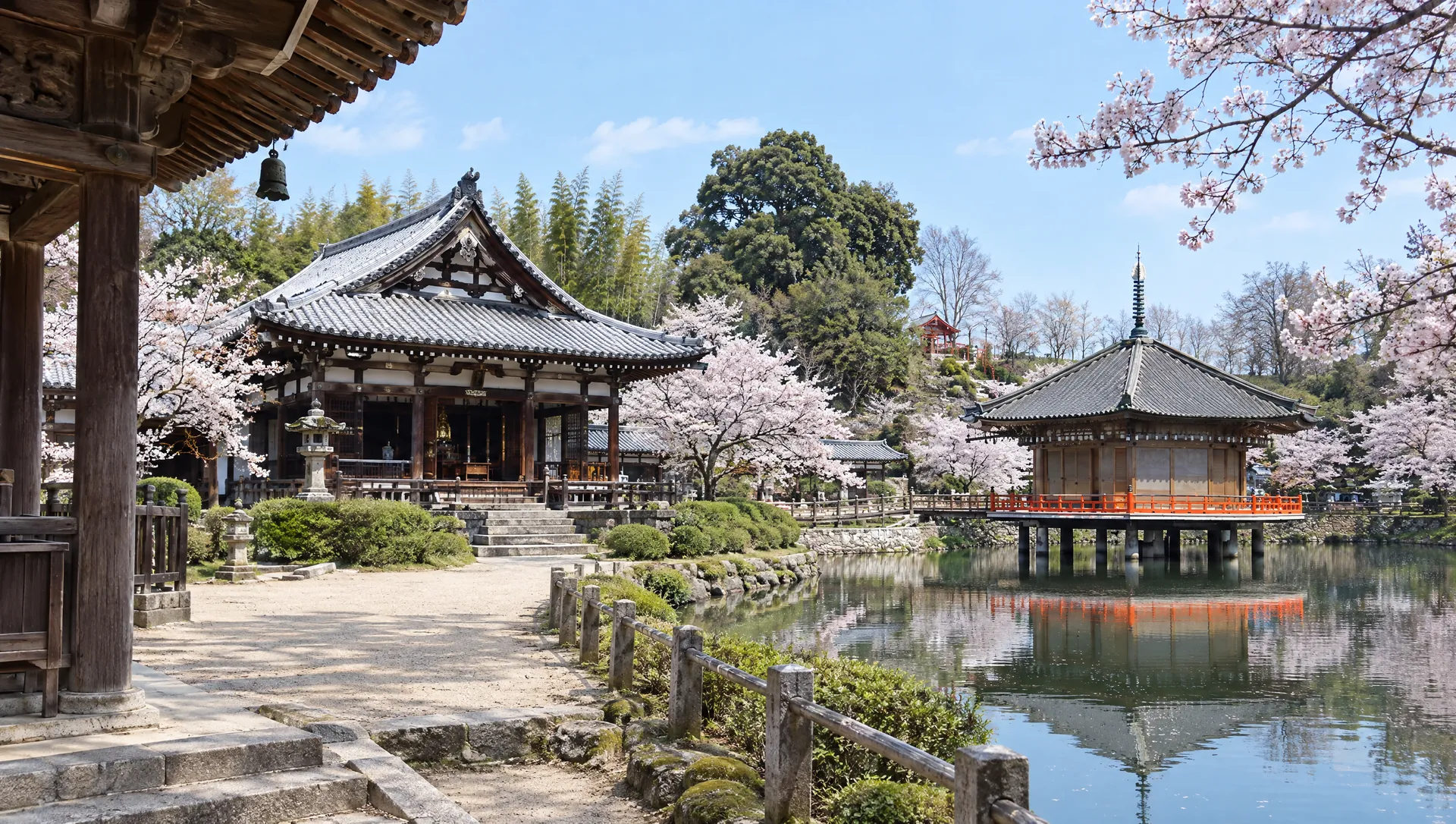 AI-generated visual study · not a documentary photograph
Discover Abe Monju-in Temple
Abe Monju-in is a working temple of prayers for wisdom, with several different visits within one precinct. The main hall contains a remarkable group of Monju riding a lion with four attendants, built around a sculpture signed and dated 1203 by Kaikei. The temple traces its foundation to 645, but says the first Abe-dera stood about 300 metres southwest; today's main hall is a 1665 rebuilding. The pond pavilion has a separate ticket, and the West Kofun has its own early history. Seeing these layers separately prevents a seventh-century foundation story from making the standing hall or sculpture seem equally old.
Read the five-figure Monju group
The National Treasure group presents Monju Bosatsu riding a lion as though travelling across a cloud sea, accompanied by four figures. An inscription inside the central figure dates Kaikei's work to 1203. The temple describes the combined figure and lion as about seven metres high. The wisdom association explains the many exam-success prayers, but the carved group also repays looking at how the attendants guide and accompany the central image.
Separate the first temple from this hall
The temple's own history credits Abe no Kurahashimaro with founding Abe-dera in 645 at a site southwest of the present grounds. The complex moved in the Kamakura period and was devastated by fire in 1563; the current main hall dates to 1665. This is a sequence of sites, buildings and objects, not a surviving seventh-century hall.
Choose the ticket before you enter
The operator sells the main hall and the Kinkaku Ukimido treasure pavilion separately, each at ¥700 for adults and ¥500 for primary-school pupils, or together for ¥1,200 and ¥800 respectively. The floating pavilion on the pond presents different devotional and historical material. Check the actual day's display and decide whether you want both before buying; the prefectural directory's single ¥700 figure does not cover the combined visit.
Pair the precinct with the West Kofun
The temple grounds contain the Abe Monju-in West Kofun, a special historic site with finely cut granite chamber stones. The temple associates it with Abe no Kurahashimaro, but that attribution is tradition rather than proof of who was buried. A separate MyNara guide explains the tomb in detail; do not confuse entry to its exterior precinct with a ticket to either temple interior.
Preview the precinct before choosing a route
The temple's official site provides a precinct map and a 360-degree Street View-style virtual tour. Use it to see how the main hall, pond pavilion, West Kofun, Hakusan Hall and visitor facilities sit in relation to one another before setting out. This helps with pacing, but it does not replace an on-site accessibility check: the temple says the main hall interior still has stairs even though the precinct itself is traversable by wheelchair, and temporary work can alter routes.
Plan around live worship and seasonal grounds
Stories linking Abe no Seimei to an observatory are presented by the temple as oral tradition. Prayer services remain part of the daily use. The operator's notice, last updated 5 December 2025, gives a 2024–2026 programme of seismic work to the main hall and the sculpture group; it says work around the principal image had ended and worship was possible, while other work could still change routes, noise or the prayer location. The notice does not establish whether all works are complete in October 2026, so ask before relying on an uninterrupted interior visit. The operator says wheelchair users can travel from the paid car park through the stone-paved and gravel precinct; an accessible toilet with a ramp is at the car park, and a handrail and ramp are provided beside the hall steps. The hall interior still requires climbing stairs. Seasonal flowers add a changing outdoor reason to return: on 18 October 2026 the temple reported its cosmos maze open and in season, while noting that bloom changes with weather and not every variety peaks together. Check the operator's dated update before travelling. A taxi-call phone is available at the shop.
What to look for
Kaikei's 1203 Monju-and-attendants National Treasure
Separate pond pavilion and combined-ticket decision
West Kofun and the older Abe-dera site story
Photo notes
The temple's reviewed visitor pages do not grant photography or publication rights for its National Treasure sculpture or hall. Follow on-site signs, avoid interrupting worship and ask the temple before commercial filming or using its images in MyNara. No licensed temple photograph has been obtained for this guide.
Make a day of it
Explore guides close to this map point, then check the actual route before travelling. Distances below are straight lines, not walking distances or travel times; map points may not be entrances.

Sources & editorial status
Original MyNara draft based on the linked sources. Sources reviewed 20 October 2026. Opening arrangements, prices and offers may change; use the operator's current information before travelling.
- Official Nara Travel Guide
- Temple operator — history, former site and standing hall
- Temple operator — Monju group and other treasures
- Temple operator — separate admission, hours, electronic payments and mobility
- Temple operator — official precinct map and virtual tour
- Temple operator — rail approach and parking
- Temple operator — hall conservation notice
- Temple operator — dated cosmos maze update (18 Oct 2026)
- Temple operator — Seimei oral tradition