Former Yagyu Domain Chief Retainer's Residence
A late-Edo-period samurai residence with a tall stone wall, preserved rooms and displays about the Yagyu domain and its chief retainer.
 Verified site photographs are being prepared.
Discover Former Yagyu Domain Chief Retainer's Residence
This house belonged to Oyamada Shurei, a chief retainer credited by Nara City and the Yagyu Tourism Association with helping restore the finances of the Yagyu domain. Its imposing stone wall is dated by an inscription to 1841 and attributed to stonemasons from Owari. The residence later passed into private hands; novelist Sōhachi Yamaoka owned it from 1964 and developed ideas for the television drama Spring on the Hill here. His family donated it to Nara City in 1980, and the city restored and opened it to the public in 1981. The surviving house is listed as one Edo-period building among Nara Prefecture's designated tangible cultural properties, designated on 14 March 1984. Today the building also houses the Yagyu Tourism Association and displays material about the domain.
Start with the stone wall and its inscription
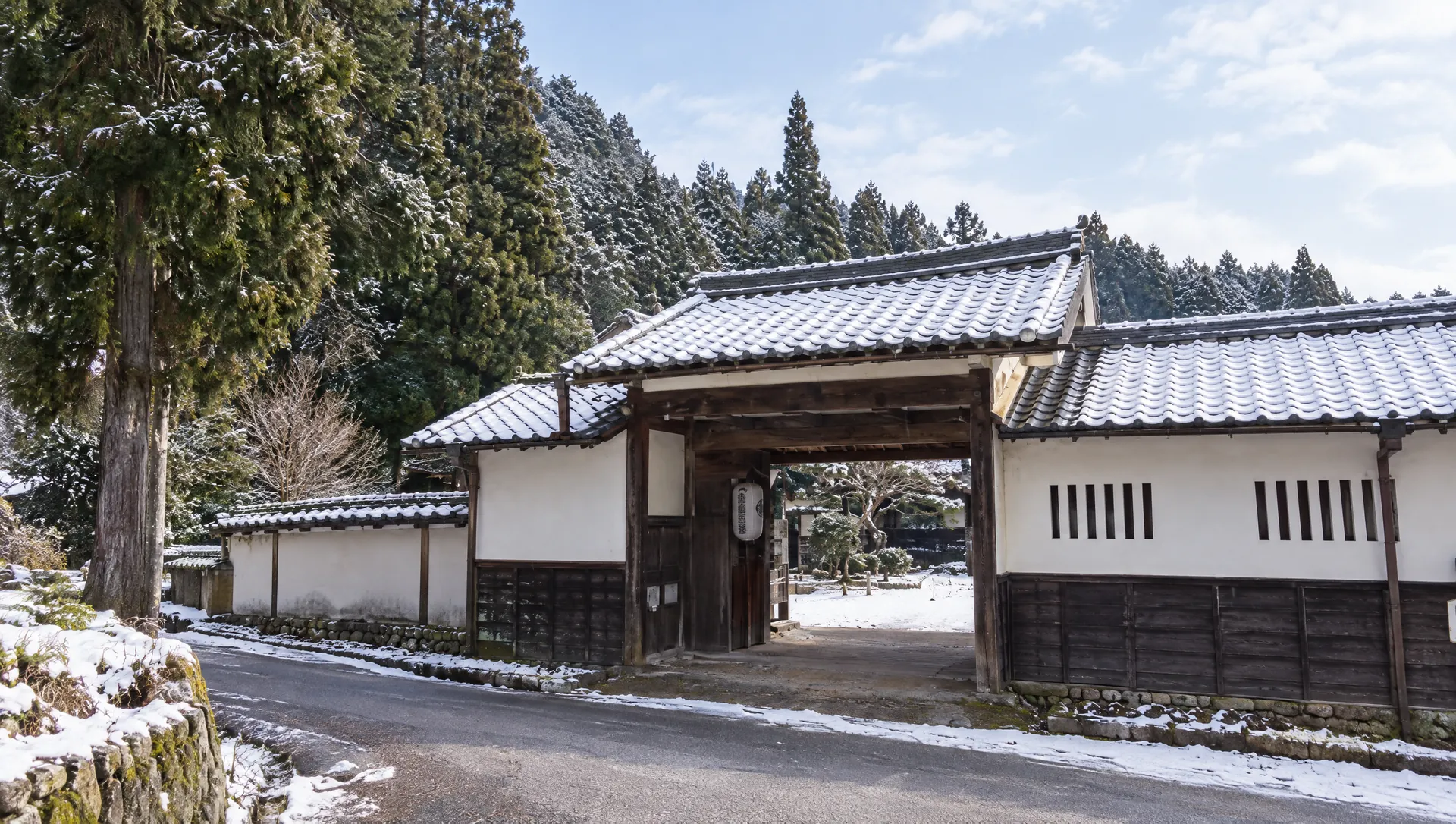
The outer wall is a defining part of the visit. The Yagyu Tourism Association reports that an inscription dates its construction to 1841 and credits Owari stonemasons. The wall is evidence of a high-status residence, not a defensive castle fortification. Take time to compare the heavy stonework with the wooden house behind it.
Keep the wall's date separate from the house's
The 1841 date belongs to the stone wall's inscription. A Nara City utilization study published in October 2025 dates the timber main house to its 1848 raising. The prefectural cultural-property designation covers the main house and front gate, and Nara City records the surviving building as one Edo-period structure. These dates describe different parts of the property; do not call the house itself an 1841 building.
Meet the administrator behind the house
The residence is associated with Oyamada Shurei, the Yagyu domain's chief retainer who helped restore its finances. It helps explain how the small domain functioned beyond the well-known sword tradition. Materials on the premises cover Shurei, the Yagyu domain and novelist Sōhachi Yamaoka; the official city guide identifies the house as a former samurai residence and municipal cultural site.
Look at the house as a lived-in structure
Inside, the timber rooms, thresholds and changing views across the Yagyu settlement make the building's scale and domestic layout legible. Treat the exhibits and rooms as a historic interior, not a film set. Do not touch display material, cross closed thresholds or photograph where staff or signs prohibit it. Ask the association about current interior photography rules before taking pictures.
A modern literary and screen-history chapter
After Sōhachi Yamaoka acquired the house in 1964, he used it while developing the novel that inspired the NHK historical drama Spring on the Hill. His family donated it to Nara City in 1980. This later chapter explains why the residence is also associated with modern storytelling, separate from its Edo-period construction and the life of Oyamada Shurei.
Read the house as a protected building
Nara City's cultural-property register lists the former residence as one Edo-period building designated a Nara Prefecture tangible cultural property on 14 March 1984. The register establishes the building's formal status; the city tourism listing separately provides today's admission and opening details. The designation does not mean every room or object is always on display.
Check for repair-related changes before travelling
A Nara City utilization study published in October 2025 reports that the property needs substantial repair after more than forty years without major work, and sets out a multi-year assessment and reuse-planning process. This does not by itself mean the house is closed: the current city visitor listing still publishes public opening hours and admission, and a May 2026 city notice confirms the Yagyu Tourism Association's management of the house and related visitor facilities through March 2029. Because repairs could affect rooms or access, check the latest notice before making a special trip.
What to look for
1841 stonework
The wall inscription records a date and Owari stonemasons.
A chief retainer's home
The house connects a local governing official with the history of the Yagyu domain.
Historic rooms and exhibits
The city and local association preserve interior spaces and Yagyu-related material.
Photo notes
The current visitor listing does not establish a blanket photography policy for the interior. Ask the association before publication-oriented photography, and follow staff instructions inside. No third-party image is licensed for MyNara.
Make a day of it
Explore guides close to this map point, then check the actual route before travelling. Distances below are straight lines, not walking distances or travel times; map points may not be entrances.
Sources & editorial status
Original MyNara draft based on the linked sources. Sources reviewed 24 October 2026. Opening arrangements, prices and offers may change; use the operator's current information before travelling.
- Nara City Tourism Association — current hours, prices, access and contact
- Yagyu Tourism Association — house history and admission
- Nara City — prefectural designation (14 March 1984) and Edo-period building status
- Nara City — current manager designation for the 2026–29 term
- Nara City — 2025 utilization study: 1848 timber-house date, main-house/front-gate designation and repair planning
- Nara City Tourism Association — current hours, closures, admission, concessions and bus-stop walk
- Yagyu Tourism Association — Nara-station bus stops, routes 100/94/102, live bus navigation and parking guidance
- Nara Kotsu — live route and timetable search
- OpenStreetMap — approximate residence locator