
Tachibanadera Temple: Shōtoku Tradition and the Two-Faced Stone
Visit a living temple linked by tradition to Prince Shōtoku, with an early temple plan, painted ceiling and the distinct Nimen-seki stone.
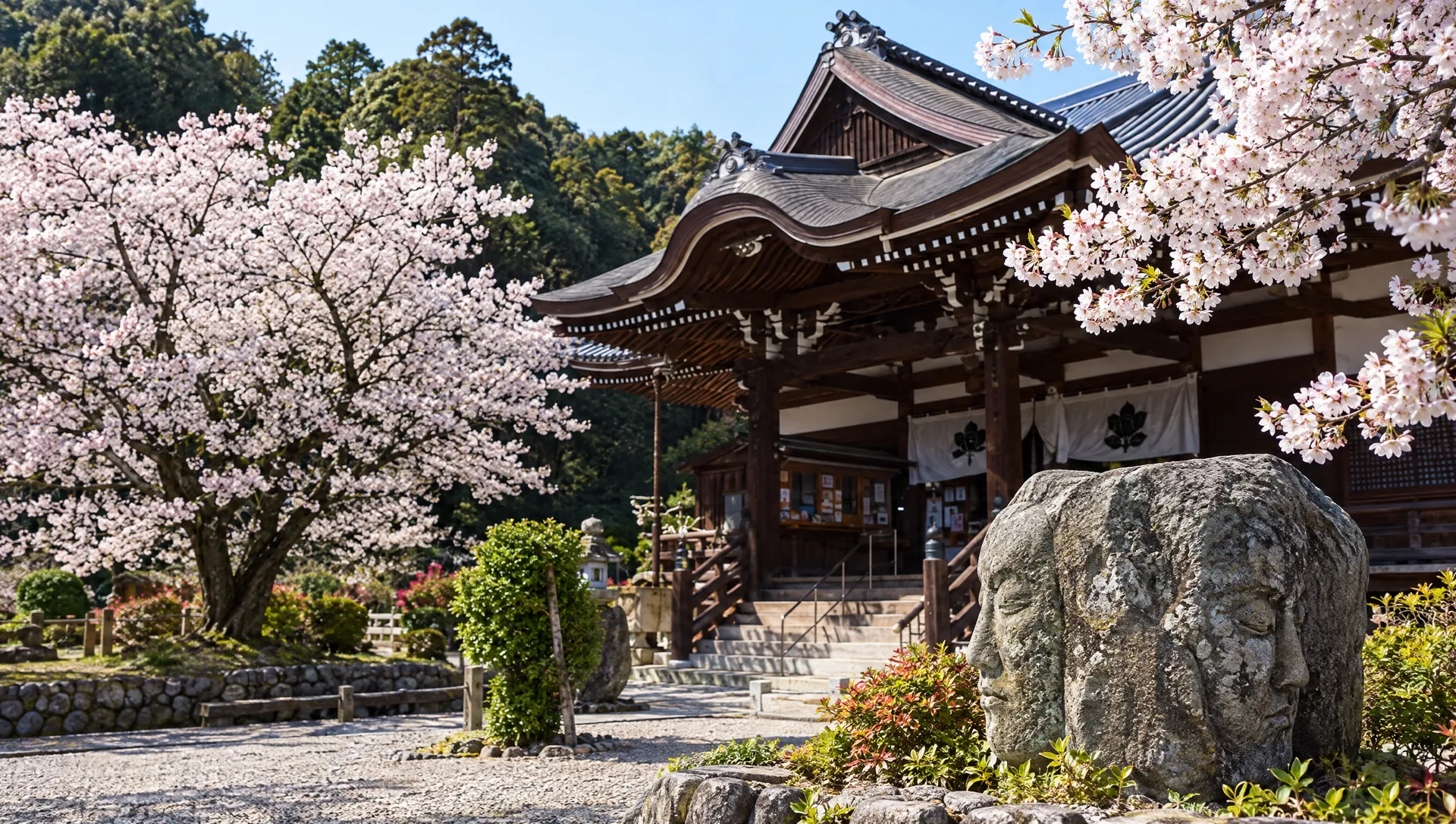 AI-generated visual study · not a documentary photograph
Discover Tachibanadera Temple: Shōtoku Tradition and the Two-Faced Stone
Tachibanadera is traditionally associated with the birthplace of Prince Shōtoku, a key figure in the early history of Buddhism in Japan. The temple itself states that connection as a transmitted account; archaeological and documentary sources do not establish an exact foundation event. A visit can hold both stories at once: read the excavated layout of a once-larger temple, enter the present precinct as a place of worship and seek out the stone with two faces. Current admission is set by the temple, which announced an adult increase effective 1 April 2026.
Tradition and excavated history are different evidence
The temple says Shōtoku was born at a palace on this site in 572. The Asuka preservation foundation explains that excavations reveal a near east–west arrangement of gate, pagoda, main hall and lecture hall, but the precise circumstances of foundation remain unclear. Nara's Japanese tourism guide dates the earliest documentary appearance to 680. Treat a specific 606 foundation date in some older English summaries as a claim requiring qualification, not a secure starting year.
Find two very different focal points
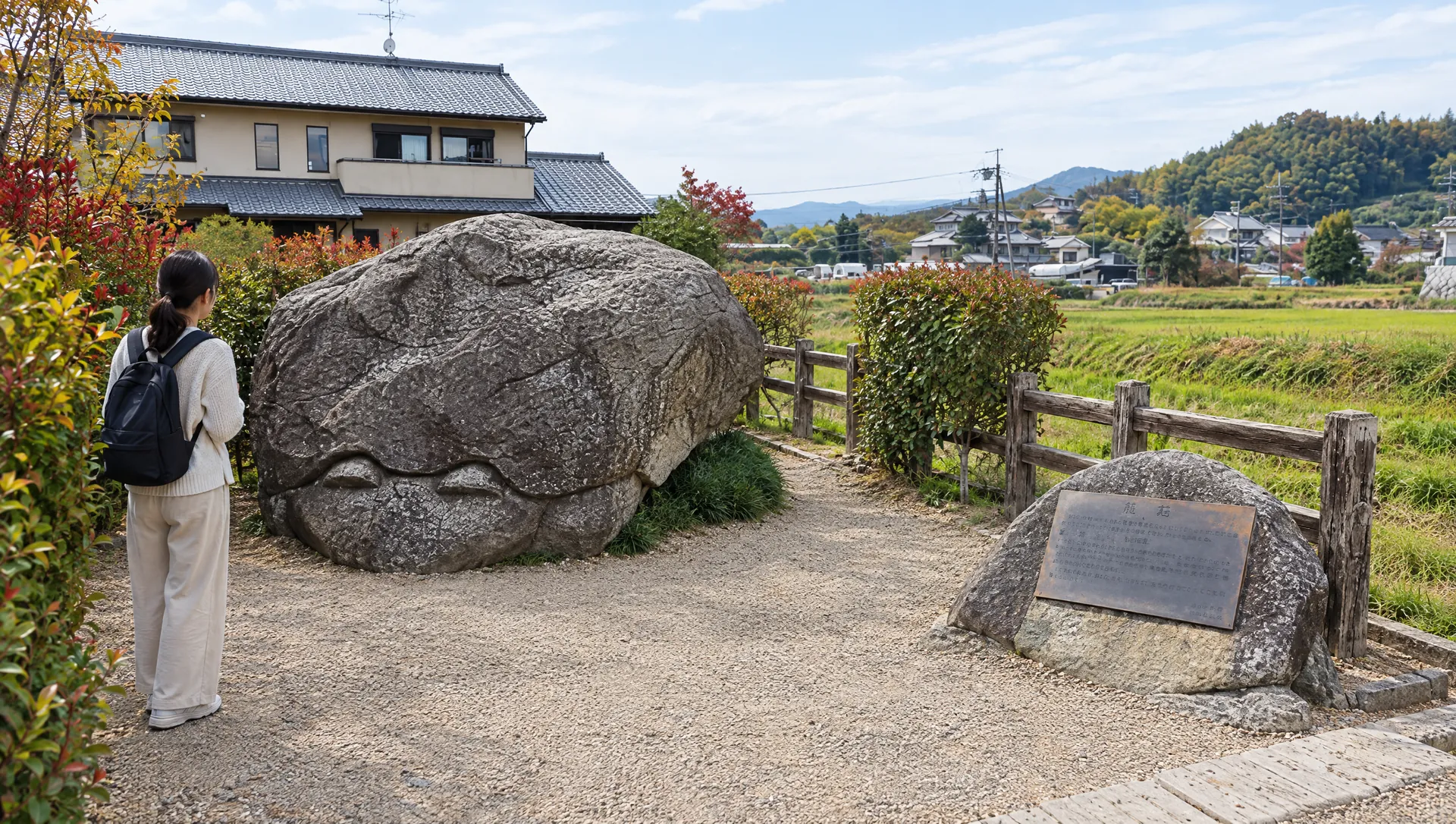
The present Taishiden enshrines a seated image of Shōtoku, which the temple identifies as an Important Cultural Property. In the precinct stands Nimen-seki, a roughly metre-high stone with two faces often interpreted as good and evil. It is inside the ticketed temple grounds and must not be confused with Kameishi, the separate outdoor tortoise-like boulder in Kawahara. The Ōjō-in painted ceiling is another feature highlighted by the village; access to particular interiors may change during services.
Read the precinct as layers of rebuilding
The early east–west plan established by excavations is not a floor plan of all buildings standing today. Nara's guide describes an Edo-period rebuilding of the main hall and a surviving pagoda foundation stone. Look for these layers rather than imagining the complete seventh-century compound still intact. Special openings of collections or buildings are date-specific; check the temple's notice for any exhibition, rather than treating one seasonal event as permanent access.
Use the temple's current price, not a stale directory
The temple's own website announces adult/college admission rising from ¥400 to ¥500 from 1 April 2026; the village and Japanese prefectural guide confirm ¥500 for the current period. Its older English Visit Nara entry still says ¥400, and the preservation foundation still displays ¥350. The village lists 09:00–17:00 with reception ending at 16:30, subject to exceptional closure. Verify the live temple notice or telephone 0744-54-2026 before a budget-sensitive visit.
Check what is open this season
Nara Prefecture's 2026 listing schedules the Shōsōden treasure-store special opening for 17 October–3 November, 09:00–17:00 with reception to 16:30. It names a standing image traditionally attributed to Nichira and a silk-painted biography of Shōtoku among the treasures. The listing shows the same individual admission prices as the temple's current tariff; confirm on the day whether the collection or route has changed, and do not assume this seasonal opening continues after 3 November.
What to look for
Shōtoku birthplace tradition with archaeological context
Two-faced Nimen-seki stone inside the temple
Ōjō-in ceiling and layered temple precinct
Photo notes
No temple image or ceiling painting is licensed for MyNara. Check on-site rules before photographing interiors, the Shōtoku image, ceremonies or other worshippers. Seek temple permission for commercial or published interior images.
SEASONAL CALENDAR
Events connected with Tachibanadera Temple: Shōtoku Tradition and the Two-Faced Stone
These records are shared with MyNara’s event calendar, so dates and notices have one source. Recurring patterns are not confirmed dated editions; check the organizer’s latest guidance.
Asuka Half Marathon 2027
The organizer confirms a 21.0975 km half marathon from 09:00 to 12:30 on March 14, 2027, with a first-come capacity of 3,000 runners. The general entry filled on October 9, 2026, well before its original December deadline; the organizer's notice thanks applicants but does not publish the final number of accepted runners. The course starts and finishes at Kitora Tumulus Shijin-no-Yakata and passes the Tenmu and Jitō tombs, Kawaradera, Tachibanadera, Ishibutai, the Inabuchi terraces and Takamatsuzuka-area roads. This is useful to spectators and anyone planning to visit these sites that day, not an invitation to enter. The start/finish is a 20-minute walk from Kintetsu Asuka Station; there is no participant parking, road restrictions begin near the venue at 08:00, and station-area congestion is expected. A free general-visitor shuttle runs from the venue back to Asuka Station from 10:00 to 14:00, but not before the race. Check the organizer's latest access and course notices before travelling.
- Time
- Race: 09:00–12:30; roads near the main venue restricted from 08:00
- Admission
- Runner entry was ¥6,000; the general entry reached its 3,000-person cap and closed October 9, 2026. No spectator admission fee is stated.
- Booking
- General runner entry is closed after reaching capacity. The organizer does not publish a spectator registration process; follow its visitor-access guidance and do not enter the course.
Make a day of it
Explore guides close to this map point, then check the actual route before travelling. Distances below are straight lines, not walking distances or travel times; map points may not be entrances.
Sources & editorial status
Original MyNara draft based on the linked sources. Sources reviewed 20 October 2026. Opening arrangements, prices and offers may change; use the operator's current information before travelling.
- Temple operator — Shōtoku tradition, address, contact and April 2026 fee change
- Asuka tourism association — current fee, hours, Nimen-seki and Ōjō-in
- Asuka preservation foundation — excavated plan, uncertainties and loop-bus approach
- Nara Japanese tourism bureau — 2026 fee and early documentary evidence
- Nara Prefecture — 2026 Shōsōden treasure-store opening and admission
- Official Nara Travel Guide — venue identity A00856 and older English fee for comparison