Susanoo Shrine and Hase's Great Ginkgo
Leave Hasedera's main street for a small hillside shrine, a protected ginkgo and a view back across the valley.
 Verified site photographs are being prepared.
Discover Susanoo Shrine and Hase's Great Ginkgo
Across the Hatsuse River from Hasedera, Susanoo Shrine makes a quieter companion to the great temple. The climb matters as much as the building: Sakurai's tourism association points to a view of Hasedera from the steps and to an immense ginkgo inside the shrine grounds. Sakurai City lists that tree, rather than the shrine as a whole, among the prefecture's designated natural monuments. Visit to understand one local strand of Hase's religious landscape, without expecting a staffed attraction or a guaranteed autumn colour show.
Look back at Hasedera from the approach
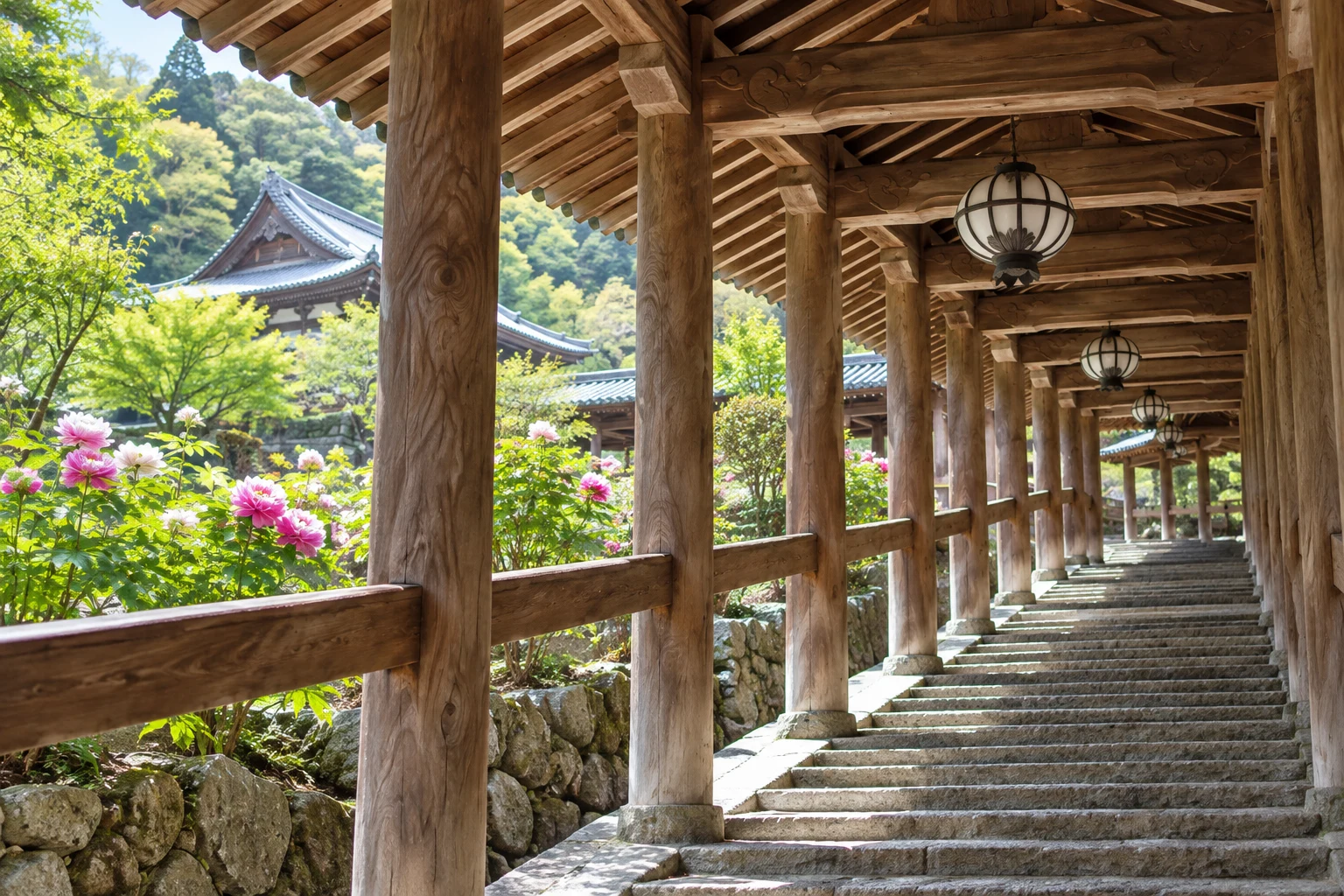
The shrine is on the Yoki Mountain side of the river, opposite Hasedera. The local tourism association recommends pausing on the approach steps for a wider view of the temple and valley. This is a stair climb, not a level riverfront photo stop. Allow time to descend safely, particularly after rain, and avoid blocking the path for worshippers or neighbours.
Meet a protected living landmark
The association describes the ginkgo as roughly 40 metres tall with a trunk circumference around 7.2 metres. Sakurai City's cultural-property inventory confirms the 'giant ginkgo of Hase' as a prefecturally designated natural monument in Susanoo Shrine's grounds. Those measurements are reported figures rather than a new survey. Fallen leaves and canopy colour depend on weather; the tree is worth considering outside the short autumn peak too.
Read the founding account as tradition
The association relays a shrine tradition that the sanctuary was established during the Tenryaku years, 947–957, as worship of Susanoo was linked to the foundation story of Yoki Tenman Shrine. It also records later Gion-related worship and the local name 'Gottera-san'. The tradition explains how local people connected the two hillsides; it is not archaeological proof of a surviving tenth-century building. The Nara shrine register confirms Susanoo as the principal deity at today's address.
Make a careful extension of a temple-town walk
Sakurai City names Susanoo Shrine at 79 Hase as a separate stop on its Hasedera-area walking event, alongside Yoki Tenman Shrine, Hōki-in and Hase Yamaguchi Shrine. Its event dates, stamps and coupons are limited to that programme and are not a standing visitor service. Use the shrine name and current on-site signs to find the approach; a map point alone does not identify the bottom of the steps.
What to look for
Hasedera valley view from the stair approach
Prefecture-designated giant ginkgo
Local Susanoo and Yoki Tenman foundation traditions
Photo notes
No shrine or ginkgo photo is licensed to MyNara. Take your own exterior images only where local notices permit, without blocking the steps or photographing worshippers. The association requires separate shrine permission for reuse of its shrine photographs.
Make a day of it
Explore guides close to this map point, then check the actual route before travelling. Distances below are straight lines, not walking distances or travel times; map points may not be entrances.

Sources & editorial status
Original MyNara draft based on the linked sources. Sources reviewed 20 October 2026. Opening arrangements, prices and offers may change; use the operator's current information before travelling.
- Sakurai Tourism Association — shrine, ginkgo, view and local tradition
- Sakurai City — prefecture-designated giant ginkgo inventory
- Sakurai City — 2026 town-walk addresses and event limits
- Nara shrine register — name, deity and address
- Hasedera operator — rail approach to the temple
- Sakurai City Library — local-history study of Susanoo Shrine compiled from Hasedera records
- OpenStreetMap — approximate shrine node, © contributors, ODbL