
Murou Ryuketsu Shrine
Visit a cedar-shaded water shrine whose history joins imperial rain prayers, Murouji and a sacred cave farther uphill.
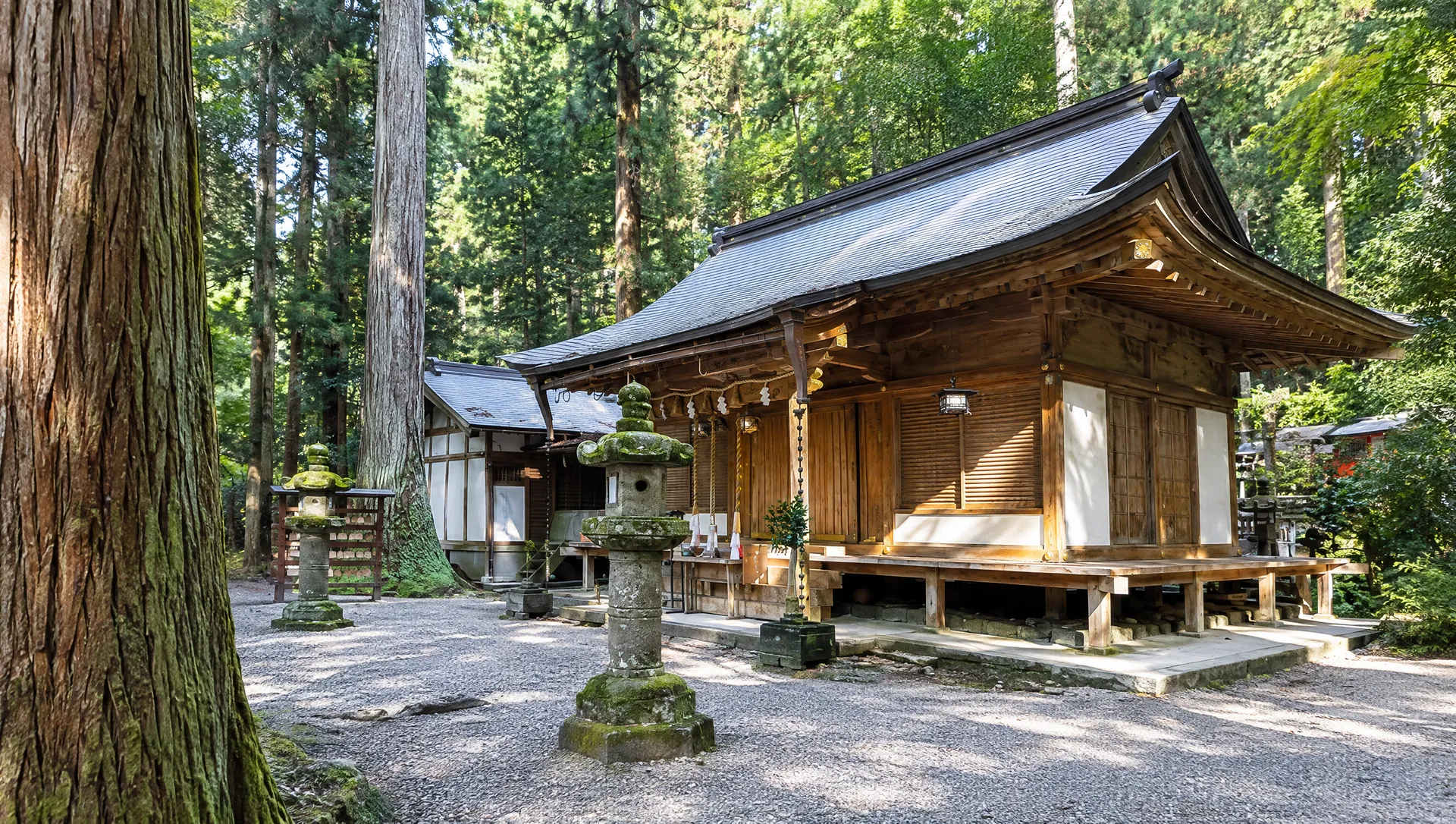 AI-generated visual study · not a documentary photograph
Discover Murou Ryuketsu Shrine
Murou Ryuketsu Shrine is rooted in reverence for water in the valley above Murouji. Uda City's tourism office identifies its deity as Takaokami and records rain-prayer rites associated with the court between the Nara and Heian periods. The shrine and Murouji were historically linked, but the separate Myokissho Ryuketsu cave lies beyond the shrine, up a road and forest-road approach. Its present main sanctuary is a former Kasuga Wakamiya building, giving a visitor a tangible architectural connection to another Nara sacred site without confusing the transferred structure with the much older worship tradition.
Read the valley through water worship
The city's visitor account names Takaokami as the water deity and describes official prayers for rain. A municipal cultural-property study traces worship at the rock chamber and notes the shrine's relationship with Murouji over many centuries. This does not mean the current buildings stood here in antiquity: the old cult of the cave and the surviving architecture are different layers of history. The cedar setting and approach make that distinction easier to grasp than a quick stop at the road.
Look for a transferred Kasuga Wakamiya sanctuary
Uda City's heritage register identifies the main building as the former sanctuary of Kasuga Wakamiya. It dates construction there to 1652 and says inscriptions support its re-erection at Murou in 1671. The city's shorter tourism page gives 1671 as the transfer year. This is a protected building, not an invitation to enter its enclosed sacred area. View the form and setting from the permitted public approach.
Connect shrine, temple and cave without merging them
The city says Murouji was historically regarded as the shrine's jingū-ji, a Buddhist temple connected to a Shinto sanctuary. Myokissho Ryuketsu, the rock chamber associated with the dragon and rain, is a further destination from this shrine, reached by a road and forest road. A bus stop beside the shrine is therefore not the cave entrance. If visiting both, budget a separate uphill walk and a return, and treat the shrine and the cave as distinct stops.
Follow the autumn procession as a local tradition
Nara's official tourism guide describes the October festival procession from the Tenjin shrine inside Murou-ji to Murou Ryuketsu Shrine, where male and female lion figures perform. The prefectural folk-heritage archive identifies this as the prefecture-designated Murou Lion Kagura. Uda City's calendar places the rite in mid-October but warns that dates and arrangements can change; neither source confirms a 2026 visitor schedule or viewing rules. Check the city or shrine before travelling for the festival, and do not expect a performance during an ordinary visit.
Use the bus terminus with care
Uda City's access listing directs visitors from Kintetsu Muroguchi-Ono Station by a Ryuketsu Shrine-bound bus to its final stop, immediately by the shrine, and lists free parking. Nara Kotsu's autumn 2026 information estimates about 14 minutes from Muroguchi-Ono Station to Murouji and a further 5 minutes to the shrine; its listed adult fares are ¥560 from the station and ¥220 from Murouji. Those are operator-published seasonal figures, not a year-round timetable. Check the exact date, service and return connection before travelling; buses are limited. The Nara Prefecture visitor listing describes the shrine as open at any time with no admission fee, while the city page does not state routine hours or a price. Neither listing overrides worship, ceremony or temporary access controls. Do not extrapolate the cave's road access from the shrine's car park.
What to look for
Water-deity and rain-prayer history
Former Kasuga Wakamiya main sanctuary re-erected in 1671
Starting point for a separate walk to Myokissho Ryuketsu
Photo notes
The shrine and cultural-property images have not been licensed for MyNara. Take personal photographs only where permitted by signs and worship etiquette; do not enter an enclosed sanctuary or photograph worshippers without consent. Obtain shrine permission before commercial filming or using a tripod that obstructs passage.
Make a day of it
Explore guides close to this map point, then check the actual route before travelling. Distances below are straight lines, not walking distances or travel times; map points may not be entrances.
Sources & editorial status
Original MyNara draft based on the linked sources. Sources reviewed 24 October 2026. Opening arrangements, prices and offers may change; use the operator's current information before travelling.
- Uda City tourism — deity, history, address, bus and parking
- Nara Prefecture Tourism Bureau — current published hours (open at any time), no admission fee and October lion-dance procession (checked 2026-10-24)
- Nara Kotsu — Route 44 seasonal service, station-to-shrine fare and contact; timetable must be checked for the travel date
- Nara Prefecture folk-heritage archive — Murou lion kagura designation and recorded location
- Uda City — seasonal calendar places Murou Ryuketsu Shrine festival in mid-October and warns dates can change
- Uda City cultural properties — main sanctuary construction and re-erection
- Geoshape historical-place dataset — approximate coordinate for Murou 1297
- Uda City tourism — separate cave and thirty-minute approach