
Takagi Residence: An Upper-Storey Merchant House in Imaicho
Look for the entrance sign before stepping inside a rare two-storey merchant house with a separate formal doorway.
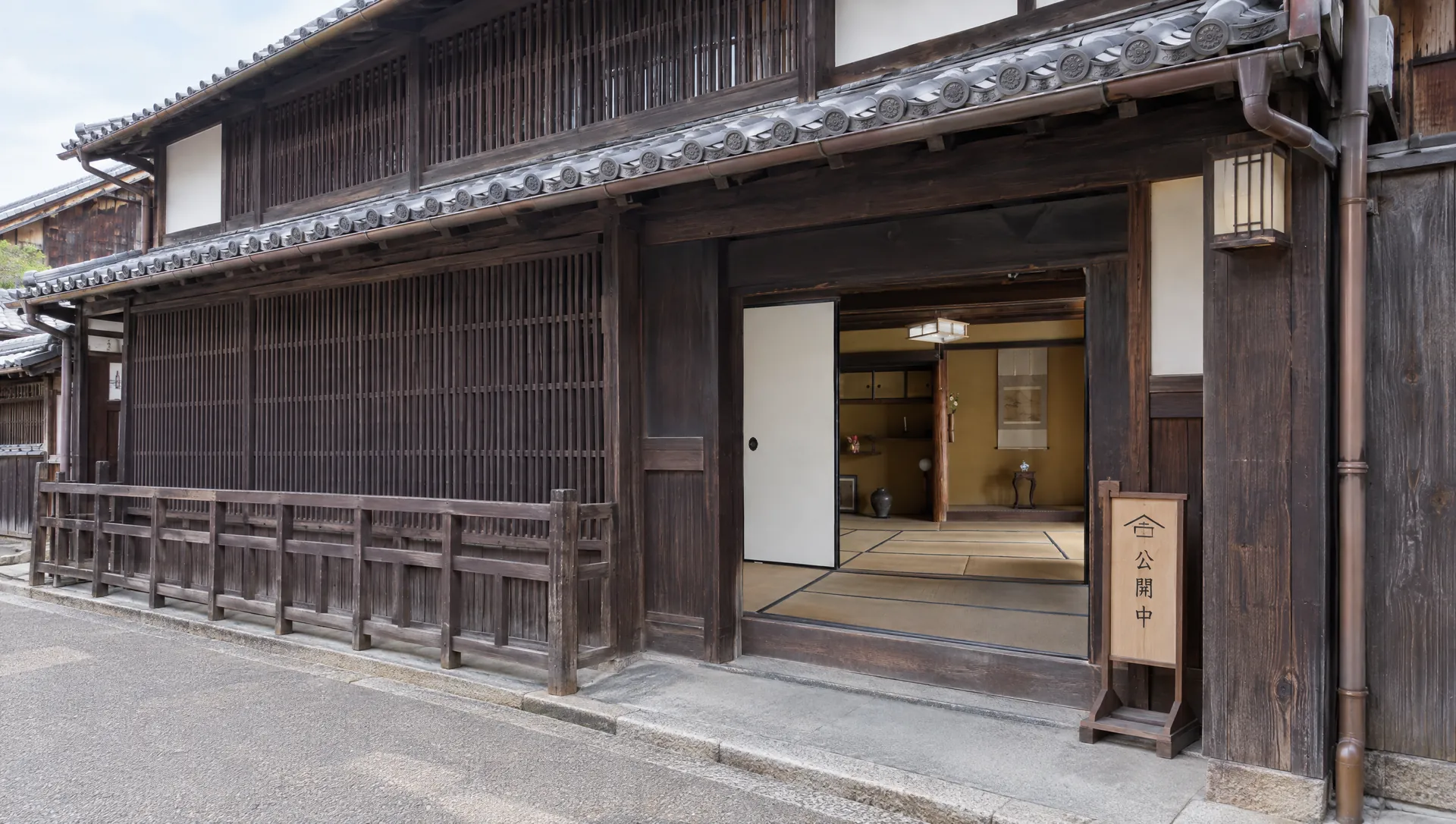 AI-generated visual study · not a documentary photograph
Discover Takagi Residence: An Upper-Storey Merchant House in Imaicho
At the eastern end of Imaicho's Chūsonbō-dōri, Takagi Residence offers a rare chance to enter an individually owned merchant house, but only when its entrance sign says the interior is open. The Takagi branch was associated with the Shijōya household: it helped the main family brewery and later also ran a soy-sauce business. A deep shop-and-work area, separate reception entrance and finished upstairs rooms show how trade, domestic life and formal hospitality coexisted. The exact construction chronology is disputed across Kashihara City's own records, so this guide describes the house as a late-Edo-period merchant residence without claiming a single build year.
Read the house from the street first
The building stands at the eastern end of Chūsonbō-dōri. Kashihara City describes a tile-roofed, staggered-gable, two-storey main house with a six-room layout beside an earthen-floor work area. Instead of judging it only by its lattice, look for the wall and formal entrance beside the main house. The city links this entrance with a route into reception rooms, evidence of how an affluent merchant household handled visitors separately from daily shop activity.
Keep the construction date in perspective
Kashihara City's national-property list, updated 31 August 2026, classifies the house as late eighteenth-century and records its Important Cultural Property designation on 15 May 1972. The separate building description says the family branch formed around the Tenpō era (1830–1844), places construction in the early nineteenth century, and dates the second-floor fit-out to the century's end. Those statements do not give one consistent build date. This guide therefore uses the broader late-Edo period. The house is a listed residence, not a brewery tour or tasting venue.
Look upstairs for a different kind of room
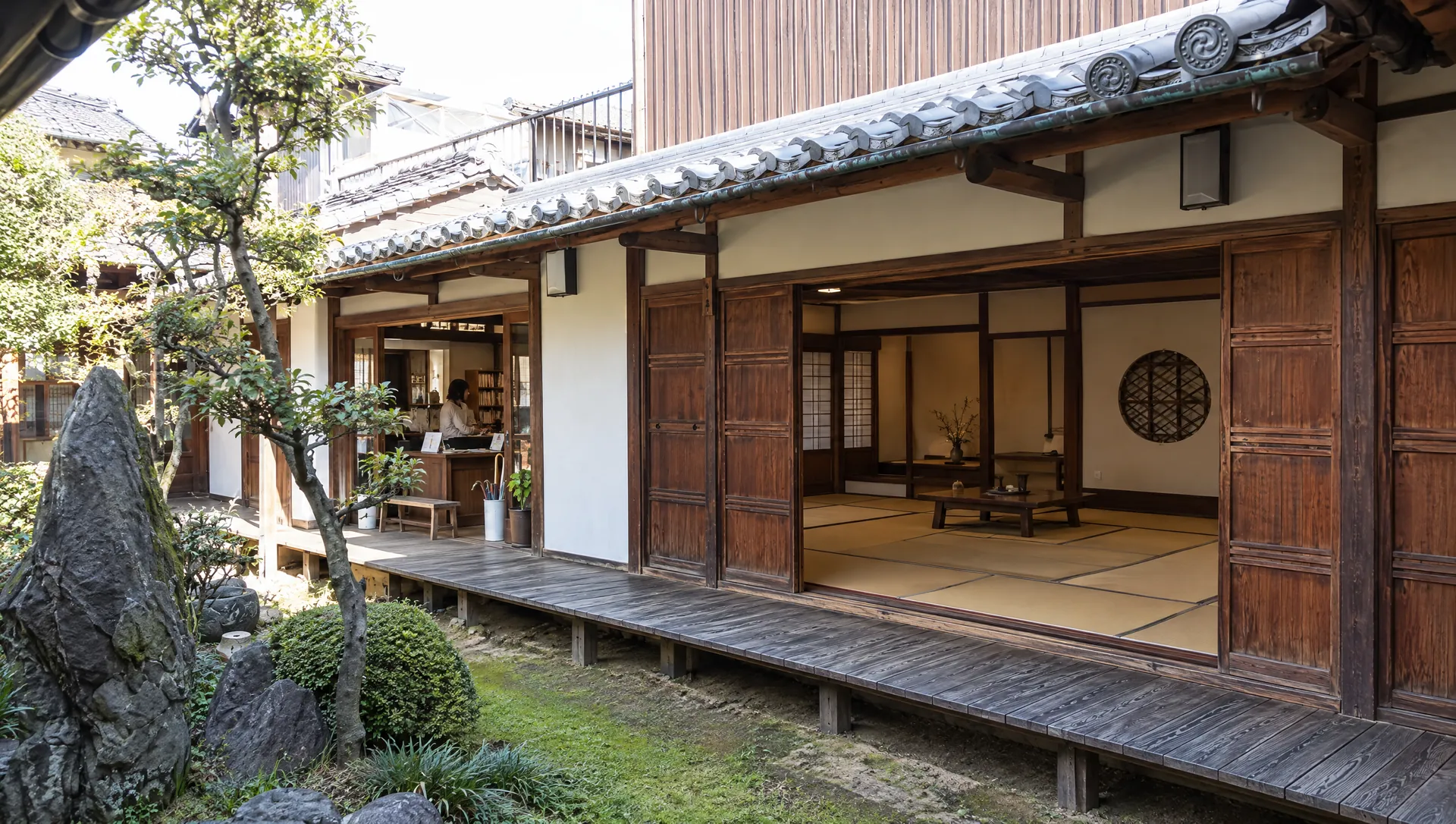
The city describes two rows of six rooms on both floors, with an earthen-floor zone on the first floor, a fence and gate beside the main house, and a formal route into the reception room. The 2025 Japan Heritage feature describes high ceilings, light openings and a rope-operated shoji blind, as well as historic household goods and arms. These details are illustrative of that report, not a guarantee that every item remains on display. If the interior is open, compare the work side, the formal entrance and the more finished upstairs rooms.
Use the open sign, not a fixed timetable
The city's March 2026 visitor sheet lists a nominal 09:00–17:00 window but an irregular closure pattern. It says to enter only when the sign at the entrance reads 内部公開中 (interior open). Kashihara's tourism association also describes irregular opening and quotes an admission of ¥400, paid without cards; the private operator may change that amount. If access to the rooms matters to your trip, call 0744-22-3380 first and ask both whether the house is open and what admission is charged.
Make a respectful Imaicho walk
The prefectural guide estimates about six minutes on foot from Kintetsu Yagi-Nishiguchi. The town's heritage houses are not all publicly open: some still serve private owners, and Toyoda Residence is separately reported closed. The city asks visitors to leave cars at the Imaicho Machinami Hiroba lot because the historic streets are narrow. Pair Takagi with a city-run house or the townscape centre if you need a more predictable interior stop, and never enter an unsigned doorway.
What to look for
Nationally designated late-Edo merchant residence
Side entrance and upper rooms reveal the house's layered use
Interior access governed by the entrance sign
Photo notes
No image of the house or exhibits is licensed for MyNara. Seek the householder's permission before interior photographs, filming or publication; keep private entrances and neighbours out of a planned shoot unless permitted.
SEASONAL CALENDAR
Events connected with Takagi Residence: An Upper-Storey Merchant House in Imaicho
These records are shared with MyNara’s event calendar, so dates and notices have one source. Recurring patterns are not confirmed dated editions; check the organizer’s latest guidance.
Imaicho Townscape Walk
Kashihara City describes this town-wide May festival as a chance to experience Imaicho's history and culture in its nationally designated historic district. The programme can include a period-costume tea procession, a recreated Rokusai market, tea service, street art, performances and openings at selected historic houses. The Agency for Cultural Affairs' profile of the district reports more than 10,000 visitors annually. The usual window is the second Saturday through the third Sunday in May, with the main events on the third Sunday; check the current city or preservation-society notice for the next dates, open buildings, fees and traffic arrangements. The district is the venue; nearby shops and residences are not automatically participating venues.
Check organizer informationMake a day of it
Explore guides close to this map point, then check the actual route before travelling. Distances below are straight lines, not walking distances or travel times; map points may not be entrances.
Sources & editorial status
Original MyNara draft based on the linked sources. Sources reviewed 20 October 2026. Opening arrangements, prices and offers may change; use the operator's current information before travelling.
- Kashihara City — building history, plan and Important Cultural Property status
- Kashihara City — March 2026 access sheet and interior-open sign
- Kashihara Tourism Association — irregular opening, admission quote and parking
- Official Nara Travel Guide — A00992, station walk and separate venue
- Kashihara City — national cultural property register and designation date
- Japan Heritage Portal — 2025 route feature (historical context; verify address separately)