Shimo-Hirata Manyōshū Stele: A Song of a Swift River
Read an intimate Manyōshū poem at a rest point on Asuka's walking path, while keeping the ancient river's uncertain course separate from the modern landscape.
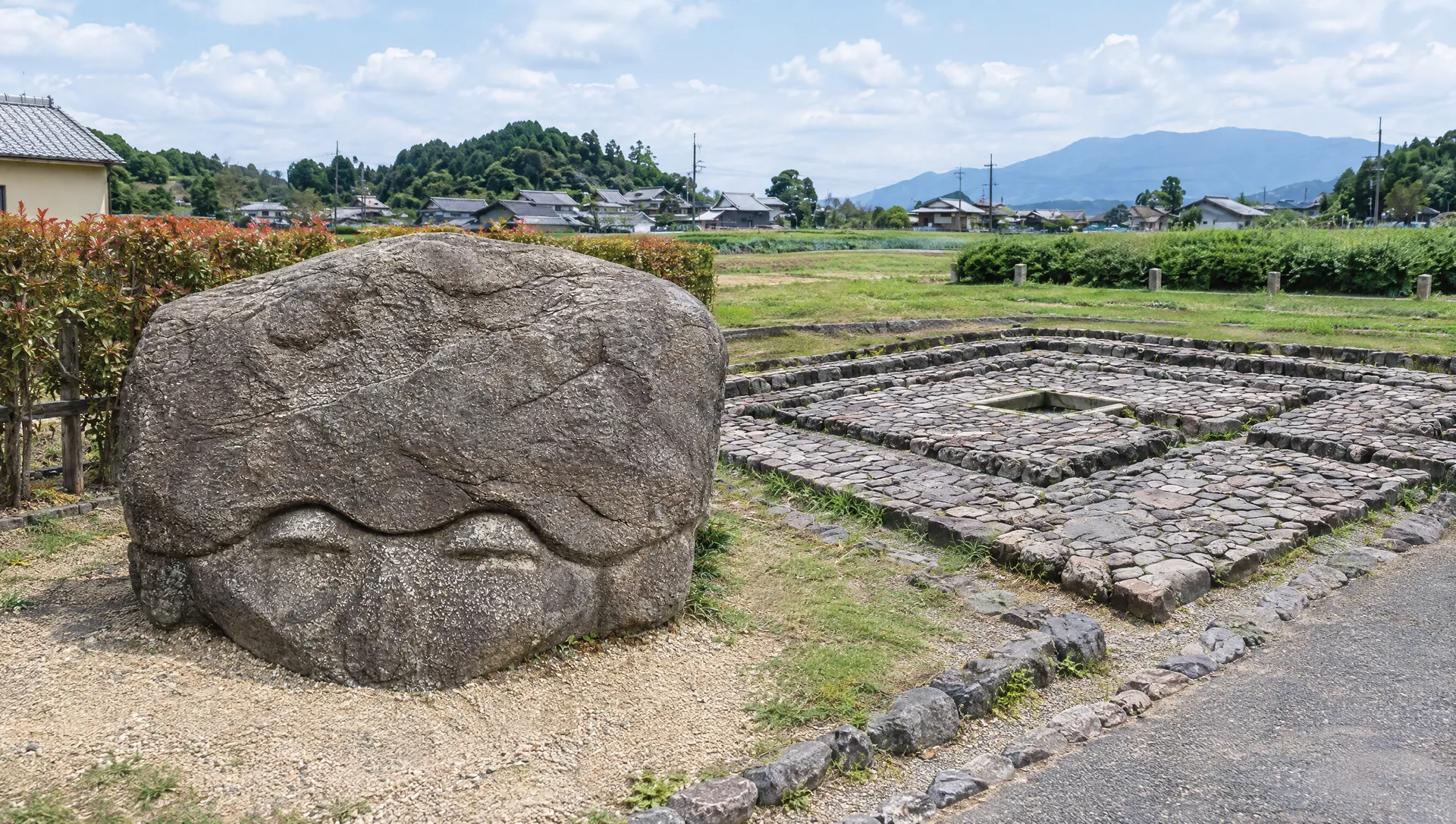
 Verified site photographs are being prepared.
Discover Shimo-Hirata Manyōshū Stele: A Song of a Swift River
A stone in the Shimo-Hirata rest area records an anonymous Manyōshū poem about the swift shallows of Hinokuma River and the risk of being seen taking a loved one's hand. The inscription is a modern monument on the Asuka Circular Walking Path, not an ancient artefact. Asuka Village's landscape plan records the poem as Book 7, poem 1109 and places its stele west of the mausoleum designated for Emperor Kinmei. The same plan is explicit that the course of the ancient Hinokuma River is no longer known: scholars have proposed both a stream through the Hinokuma district and an older name for the Takatori River. The location of this stone does not prove where the ancient poem's river flowed.
Look closely at the inscription
The carved text begins ‘さ檜隈 檜隈川の瀬を速み’ and continues with the speaker wondering whether taking someone's hand at a fast crossing will invite gossip. The anonymous voice gives the monument an unusually direct human subject: desire, a practical river crossing and the watchfulness of other people. The park's interpretation describes it as a meeting and romance poem. That reading follows the wording, but the text names no historical couple or specific event.
The stone is a modern memorial with its own history
Asuka Village's November 2023 newsletter identifies this as the Hinokuma River Manyō stele at the Shimo-Hirata rest area on the Asuka Circular Walking Path. It records that MBS Radio established the monument on 27 May 1991 to mark the tenth anniversary of its Radio Walk, with the poem written in the hand of Manyō scholar Takashi Inukai. The anonymous ancient poem and the twentieth-century act of preserving its landscape are two distinct layers of the visit; the stele is not an excavated relic from the Manyō period.
A literary place-name is not a modern river survey
The village plan places this poem among songs associated with the Hinokuma landscape, but says the ancient river's exact route cannot now be determined. It records competing explanations, including the present Hinokuma stream corridor and the Takatori River as a former or alternate course. Do not use a nearby modern watercourse to identify the ancient river or imply that the stele stands beside the original crossing.
Reach the wider area, then verify the final walk
The 2026 Nara Kotsu timetable lists the Takamatsuzuka stop on the Asuka loop-bus route; this is an area-level approach, not a stop at the stele. A 2024 National Government Park walk connected its museum, Shimo-Hirata and Takamatsuzuka over about four kilometres, but that dated event does not guarantee a currently open or step-free route. Check the live bus schedule and park notices, then confirm the last leg and any detour with the Park Management Center before relying on this walk.
Treat the stone and landscape with care
The checked sources do not list a ticket, staffed opening hours, a dedicated toilet or a parking bay for this individual rest area. Keep to signed public paths, do not enter the mausoleum grounds or neighbouring fields, and leave the narrow village roads clear. The park requires advance permission for organised or location filming; casual visitors should follow current park rules and obtain permission for commercial shoots.
What to look for
A legible stele for Manyōshū 7:1109 at Shimo-Hirata
An intimate poem interpreted through its language, not assigned to a named couple
A documented stop on Asuka's walking network, with the ancient river route left unresolved
Photo notes
Follow park signs; the park requires prior application for location filming and certain organised uses. For casual photography, do not obstruct walkers, enter the mausoleum grounds, disturb residents or leave the path for a closer angle.
Make a day of it
Explore guides close to this map point, then check the actual route before travelling. Distances below are straight lines, not walking distances or travel times; map points may not be entrances.
Sources & editorial status
Original MyNara draft based on the linked sources. Sources reviewed 24 October 2026. Opening arrangements, prices and offers may change; use the operator's current information before travelling.
- Asuka Village — landscape plan: poem 7:1109, Shimo-Hirata stele location and uncertainty about the ancient river
- Asuka Village — November 2023 newsletter: stele location, dedication date and MBS Radio Walk history
- Asuka preservation foundation — 2025 visitor newsletter: Hinokuma poem stele at Shimo-Hirata rest area
- Asuka Historical National Government Park — poem, interpretation, Shimo-Hirata and 4 km walk (dated 2024 event)
- Nara Kotsu — 2026 Asuka loop-bus timetable and Takamatsuzuka stop; the stop is an area reference, not the stele entrance (checked 2026-10-24)
- Asuka Historical National Government Park — current walking-course overview; distances and times are estimates
- Asuka Historical National Government Park — rules and prohibited entry
- Asuka Historical National Government Park — filming permits and location-shoot requirements
- Google Maps — 犬養 万葉歌碑 下平田; map point used for approximate coordinates