
Nara Park: Beyond the Deer and the Great Buddha
Use the free parkland as a route through lawns, ponds, deer habitat and sacred sites, while checking each temple, museum and mountain entrance separately.
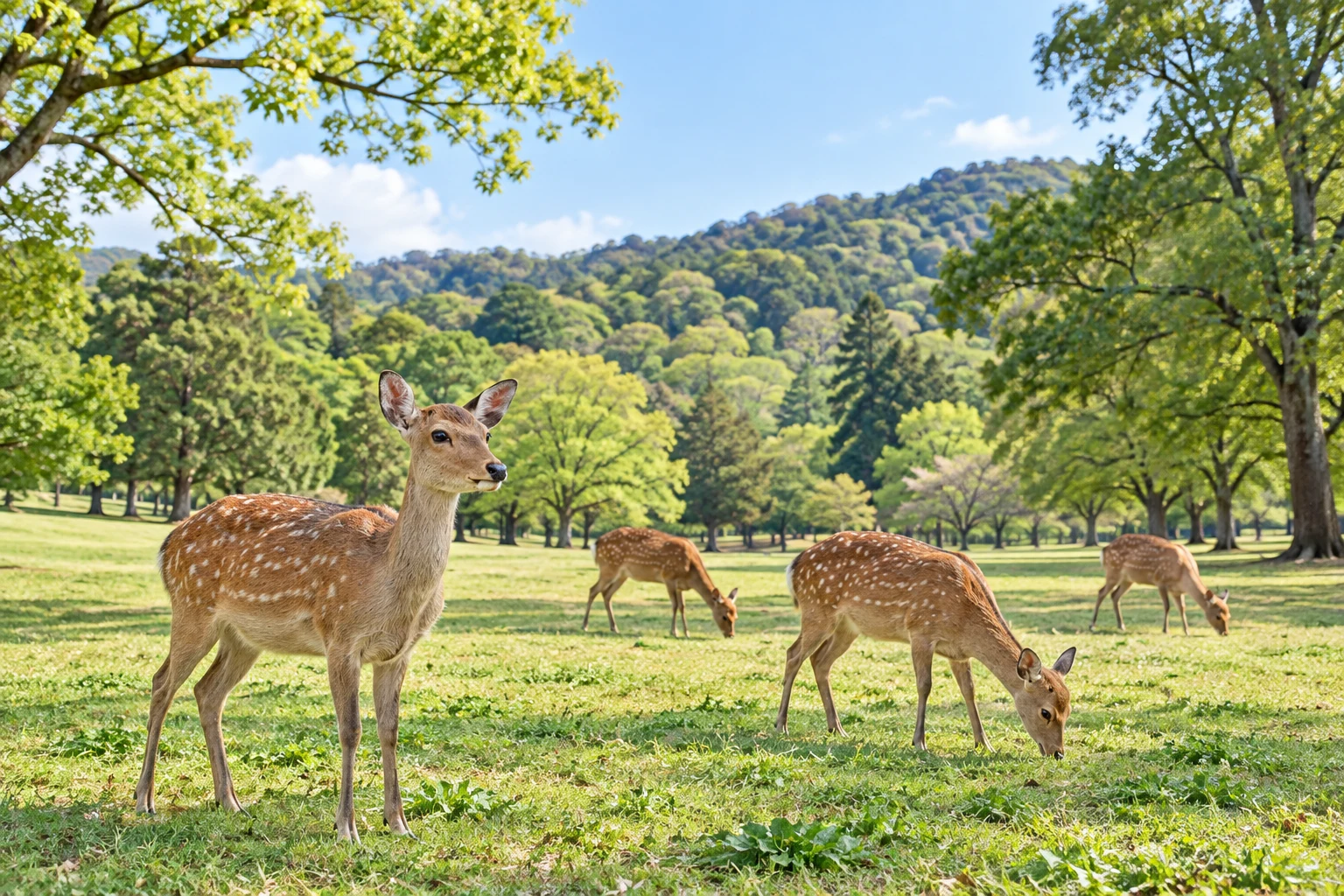 AI-generated visual study · inspired by official Nara travel-guide photos; not a documentary photograph
Discover Nara Park: Beyond the Deer and the Great Buddha
Nara Park is often reduced to a five-minute deer photograph, yet the public landscape joins temple approaches, garden lawns, ponds and wooded hills. The prefecture's 9 October 2026 overview says the legally designated prefectural urban park covers 511.33 hectares, while the broader area people commonly call 'Nara Park', including adjacent temples and cultural premises, spans about 660 hectares. Those numbers describe different boundaries rather than competing visitor routes. The prefectural park opened in 1880, centuries after Nara's eighth-century capital and the religious complexes around it. Its open grounds cost nothing and are accessible around the clock, but individual halls, museums, gardens and Mt Wakakusa have their own opening and admission rules. Understanding that difference lets a traveller keep walking well beyond the first deer gathering without arriving at a closed or separately ticketed door.
Read the park as a landscape, not one attraction ticket
The prefecture describes nine garden or lawn areas, from Noborioji near the rail approach to Asajigahara by Sagi Pond, Ukigumo between the Great South Gate and the hills, and Kasugano by the eastern shrine approach. Some named gardens have gates and their own opening times; the public lawns and every garden should not be treated as a single 24-hour site. These places frame views rather than duplicate the paid collections within Tōdai-ji, Kōfuku-ji, Kasuga Taisha or Nara National Museum. A useful first route is Kintetsu Nara Station to Noborioji's lawns, then the museum and Ukigumo, with an actual temple or museum ticket chosen according to opening time. A quieter extension heads south through Asajigahara to Sagi Pond and its Ukimido pavilion. The park is broad enough that crossing to a different precinct costs time; the pin at this page's coordinate is only a central orientation marker and not an entrance for every site.
Understand why the deer are here, then give them space
Kasuga Taisha's white-deer arrival story explains why deer came to be respected in Nara; it is a religious legend, not an account of how every living animal behaves. The prefecture says today's deer are nationally designated natural monuments and wild animals, not a tame petting herd. Nara City's tourism association explains that grass and leaves are their normal food. Only purpose-made shika senbei crackers should be offered, and visitors should not tease animals by withholding a visible cracker, feed bread or other human food, reach for antlers, or leave a plastic bag that a deer may swallow. Small children need close supervision, and an animal can bite or butt when excited. Put paper maps and food wrappers away before approaching. A deer encounter can be meaningful without feeding or touching one.
Use the open grounds and the separately managed edges
The Nara City tourism association calls the public park open and free 365 days a year, 24 hours a day. That does not make all connected experiences free or open overnight. The prefecture separately lists paid or time-limited facilities, including Mt Wakakusa's gate, parking, and the Okuyama road; its temple and museum neighbours set their own calendars. A night visit to lawns is not a substitute for checking paths, lighting and the last bus, and a mountain walk should not be inferred from parkland hours. The prefectural map and toilet list show different operators for facilities near the same path. Choose an intended hall, garden or climb from its own guide rather than assuming a single 'Nara Park admission' covers it.
Look for Nara Yaezakura across the foothills
Nara Prefecture's visitor bureau describes about 800 Nara Yaezakura trees spread across several places at the foot of Mount Wakakusa, rather than one single viewing tree. Its seasonal guide gives late April to early May as the usual bloom window, while its annual wording allows mid-April to early May; weather shifts the actual display. Use the spring flower guide as a broad area lead, not a pinpoint for an individual tree.
Make the east–west approach work for you
Nara City's visitor listing estimates around eight minutes on foot from Kintetsu Nara Station to the park edge and around twenty from JR Nara Station; these are edge-of-park estimates, not walks to Tōdai-ji's hall or Kasuga Taisha's inner worship area. From JR Nara, an outer-loop city bus can shorten the initial approach, but the right stop depends on the first destination. The prefecture provides a current walking map, a route-time map and a toilet map; use these for a multi-stop visit. Some lawns are gentle while older stone approaches, gravel, hills and the forest path are not equivalent accessible surfaces. Check a particular building's step-free doorway and restroom with its operator. Drivers should use a designated car park rather than entering the park with a vehicle; the prefecture publishes capacity and day-specific fees for its Noborioji lot, which can change on special dates.
Protect the place when making photographs
Open lawns, deer and temple buildings share a crowded public setting. The prefectural ordinance prohibits littering, taking plants, harming wildlife, entering closed areas, bringing vehicles outside designated routes, fires and certain smoking. Nara City asks visitors to take rubbish away because the park has no general bins. Respect a shrine's or museum's own restrictions even when standing in the wider park. A personal snapshot should not involve chasing a deer, blocking the approach or photographing strangers at close range. The prefectural office says still or video shoots can require a park-activity permit regardless of whether they are commercial; staged work, equipment or a publication shoot should be checked against its permit guide in advance. Existing official photographs and walking maps are not automatically licensed for MyNara reuse.
What to look for
Free lawns and ponds with separate temple, museum and mountain rules
Wild-deer etiquette rooted in a living sacred landscape
Nara Yaezakura spread across the Wakakusayama foothills in late spring
Two distinct area measures: 511.33-hectare prefectural park and a broader roughly 660-hectare district
Photo notes
No licensed MyNara photograph of the park, deer, temples or visitors is held. The prefecture's photography-permit page says still and video work can require an activity permit, including non-commercial shoots; review its guide for any planned production. Do not stage a deer interaction, obstruct paths or reuse official photos or map graphics without appropriate rights. Separate temple and museum photo rules also apply.
SEASONAL CALENDAR
Events connected with Nara Park: Beyond the Deer and the Great Buddha
These records are shared with MyNara’s event calendar, so dates and notices have one source. Recurring patterns are not confirmed dated editions; check the organizer’s latest guidance.
Kōfuku-ji Hokuen-dō Autumn Special Opening
Kōfuku-ji's 2026 autumn opening lets visitors see the normally closed octagonal hall and its celebrated Kamakura-period sculptures. The temple lists 09:00–17:00 admission, with final entry at 16:45; tickets are ¥500 for adults/university students, ¥300 for junior/high-school students and ¥200 for elementary pupils. Crowds may cause temporary entry limits.
Check organizer informationThe 78th Annual Exhibition of Shōsō-in Treasures
The museum's annual autumn exhibition presents selected objects from the Shōsō-in collection, including courtly craft, ritual objects and documentary evidence from eighth-century Nara. It is held in the East and West New Wings, not at the Shōsō-in storehouse. Timed-entry admission is required for most visitors; listed hours are 08:00–18:00 and until 20:00 on Fridays, Saturdays, Sundays and holidays. Ticket availability and the final-entry cutoff can change by date, so check the official page before travelling.
- Time
- 08:00–18:00; until 20:00 on Fridays, Saturdays, Sundays and holidays. Last entry is 60 minutes before closing.
- Admission
- Timed-entry admission: adults ¥2,000; university/high-school students ¥1,500; elementary/junior-high students ¥500. Same-day tickets, if available, cost ¥2,200 / ¥1,700 / ¥700 respectively; late-entry rates and eligible free admission apply.
- Booking
- Most visitors need a timed-entry ticket for a specified date and entry window. Buy online or through Lawson Ticket; same-day tickets are sold only if that time slot has capacity. Check availability before travelling.
Shūya no Nara Tabi: World Heritage Night Openings (2026)
Nara City Tourism Association's seventh Shūya no Nara Tabi programme brings limited night visits to five World Heritage temples and a separately bookable Mount Wakakusa night-view bus. It began in 2020 and is promoted as a way to experience Nara's historic sites after dark. Each temple has different operating Saturdays, hours and admission; the official schedule below preserves those differences. Temple visits do not require reservations, but the bus does. At Gangō-ji, photography is allowed outdoors only; indoor photography and tripods, monopods or ladders are prohibited. Check the association's current notice for access and transport changes before travelling.
- Time
- Temple openings: Kōfuku-ji Oct 31 and Nov 7, 14, 21, 28, 17:30–21:00; Kasuga Taisha Nov 7, 14, 21, 28, 17:30–20:00; Gangō-ji on those four November Saturdays, 18:00–20:00; Tōshōdai-ji and Yakushi-ji Nov 7 and 21, 17:30–20:30. Optional night-view bus runs Oct 31 and each November Saturday; depart JR Nara 16:10 or Kintetsu Nara 16:15.
- Admission
- Separate admission at each temple: Kasuga Taisha ¥700; Kōfuku-ji adults ¥500, junior/senior high students ¥300, elementary pupils ¥200 (rear chamber costs the same again); Gangō-ji ¥700; Tōshōdai-ji ¥500; Yakushi-ji ¥1,000. Optional reserved round-trip bus: adults ¥2,000, children ¥1,000.
- Booking
- Advance reservation is not required for the five temple visits. The optional Mount Wakakusa bus requires advance booking through Nara Kotsu; check the official campaign page for the booking link and return arrangements. Each temple's session and ticket are separate.
Kōfuku-ji Tōkon-dō Rear Chamber Special Opening
For the 1,300th anniversary of the Eastern Golden Hall, Kōfuku-ji will open its normally closed rear chamber, including the wooden statue of Shōryōchi Taishō. The 2026 opening runs 09:00–17:00, with final ticket sales at 16:45. The special ticket is ¥1,000 for adults, ¥600 for junior/high-school students and ¥400 for elementary pupils; a four-site combination ticket is also offered. Check current entry and ticketing details before visiting.
- Time
- 09:00–17:00; ticket sales end at 16:45.
- Admission
- Special opening: adults ¥1,000, junior/high-school students ¥600, elementary pupils ¥400. A four-site combination ticket is also available.
- Booking
- The operator directs visitors to buy tickets from the vending machine at the temple's Kanjinjo; its notice does not require advance reservation.
Autumn Heijō-kyō Tempyo Procession: Pilgrimage to Tōdai-ji (2026)
The 2026 procession commemorates Emperor Shōmu and Empress Kōmyō, whose era is associated with Tōdai-ji's founding; the organizer expects about 120 participants. The announced route starts at JR Nara Station, follows Sanjō Street and the Kasuga Taisha approach, passes Ukigumo Enchi and Tōdai-ji, then continues via Kasugano Enchi to Nara Kasugano International Forum. A separate Nara-period market and costume experience is scheduled at Ukigumo Enchi from 10:00 to 16:00. The procession participant application has closed. No spectator ticket or reserved viewing area is specified; the notices also do not state the public admission conditions inside the Great Buddha Hall during the procession, so confirm before travel. The Tourism Association says severe weather cancels the programme and there is no event parking. This single 2026 edition does not establish an annual autumn recurrence.
- Time
- Procession approx. 13:00–16:00; Ukigumo Enchi market and Tempyo costume experience 10:00–16:00
- Admission
- No spectator or Ukigumo Enchi experience fee is stated in the reviewed notices. This does not confirm free entry to the interior of Tōdai-ji's Great Buddha Hall.
- Booking
- Applications to join the procession closed in September 2026. The organizer does not specify whether advance arrangements are needed to watch the route or take part in the Ukigumo Enchi experience; reconfirm with the committee.
Traditional Deer Antler-Cutting Event at Rokuen (2026)
The Nara Deer Preservation Foundation's 2026 notice confirms that this traditional deer-management demonstration moved from October to November beginning in 2025. Sessions run 11:45–15:00, with entry from 11:15 and last admission at 14:30. Admission is ¥1,000 for adults and ¥500 for elementary-school children; standing room is divided into timed rotations. Light rain does not stop the event, but severe weather may cancel it. The venue is not barrier-free, pets and tripods are prohibited, and there is no parking. This dated notice is the current edition of an annual tradition; future dates and terms are not assumed. Confirm the operator's notice for changes before travel.
Check organizer informationWinter Deer Gathering at Tobihino (December 2026)
The Nara Deer Preservation Foundation lists a free, reservation-free programme organized by the Nara Prefecture Ryokan and Hotel Association's Nara branch. Sessions are at 10:00 once per day from December 1 through 14, except December 13. Rain is permitted, while severe weather or organizer decisions may change or cancel the programme. The listed venue is Tobihino in the Kasuga Taisha precinct; check the organizer's notice before travel. ANDO HOTEL's general seasonal page describes a guest shuttle for December 1–14 but omits the December 13 exception; the hotel has not confirmed whether its shuttle runs that day, so verify directly and do not assume service on December 13.
Check organizer informationNara Marathon 2026
The 17th Nara Marathon is scheduled across two days. The 2026 Expo is planned for December 12, 10:00–20:00, and December 13, 07:00–15:30, in a temporary area in front of Rohto Field Nara. The organizer describes food and product sales for runners and general visitors, exhibits, hands-on activities and stage programming; the current notice does not state an admission fee. The mini race starts at 14:00 on December 12. On December 13, the marathon and pair relay start at 09:00 and the World Heritage 10K at 09:30. The official start/finish and runner check-in venue is Rohto Nara Konoike Park. The organizer's 10K route description confirms that runners pass through Nara Park, along the Kasuga Taisha approach and by Tōdai-ji; the full course also meets the park's deer at its early and late stages. The park is route context, not the race's start or event venue. Runner registration windows have passed; Expo attendance is separate from runner entry. Road restrictions are planned on December 13, so check the organizer's traffic-control map before travelling or choosing a viewing point.
- Time
- Expo: December 12, 10:00–20:00; December 13, 07:00–15:30. Race starts: December 12 mini race 14:00; December 13 marathon/pair relay 09:00 and World Heritage 10K 09:30.
- Admission
- No Expo or spectator admission price is stated. Runner entry fees vary by race; marathon entry was ¥13,500–¥15,000, excluding applicable entry fees.
- Booking
- Runner registration closed July 9, 2026. The organizer describes the Expo as open to runners and general visitors but does not state a visitor-ticket or reservation process; confirm with the organizer before making a special trip.
Kasuga Wakamiya Onmatsuri 2026
Kasuga's annual four-day December festival reaches its 891st edition on December 15–18, 2026. On December 17, the Owatarishiki procession is scheduled to leave the prefectural government area at noon and reach the Otabisho after travelling through central Nara; the Otabisho Festival begins around 14:30, followed by performances into the evening. The 2026 guide lists an official viewing stand at Todai-ji Enchi in front of the prefectural office (¥2,000, 11:30–12:30), as well as seats at the first torii and Otabisho. Other seats cost ¥5,000–¥10,000; same-day allocation depends on remaining seats. The published booking period runs through December 14; verify live availability and weather updates. The midnight Sengyo-no-gi is conducted in darkness: photography and personal lights are prohibited.
Check organizer informationTōdai-ji New Year's Eve Bell Ringing (2026–27)
Nara City Tourism Association lists the bell ringing at Tōdai-ji from midnight on January 1, 2027. Its current year-end guide says groups of about eight take turns using four small ropes to ring the bell 108 times. Tōdai-ji's annual instructions say places are first-come and that commemorative printed slips are normally distributed from around 22:30 on December 31; people who leave the queue and fail to reassemble by 23:45 may lose their place. The temple has not published a separate 2026–27 notice in the sources checked, so reconfirm queue, access and timing before travelling. The notices do not state a fee.
- Time
- From 00:00 on January 1, 2027
- Admission
- Not stated in the checked notices.
- Booking
- The temple's current annual guidance describes first-come participation and printed slips distributed from around 22:30 on December 31; it warns that visitors must reassemble by 23:45 after obtaining a slip. Confirm the 2026–27 queue arrangements with the temple.
Winter Deer Gathering at Tobihino (January–February 2027)
The Nara Deer Preservation Foundation lists ten sessions: January 10, 11, 17 and 31; February 7, 11, 14, 21, 23 and 28. There is no session on January 24. The free programme starts at 10:00 once per listed day and does not require a reservation; rain is permitted, while severe weather or organizer decisions may change or cancel it. The venue is Tobihino in the Kasuga Taisha precinct. Confirm current notices before travelling.
Check organizer informationWakakusa Yamayaki 2027
The 2027 edition is officially scheduled for Saturday, January 23. The sacred-fire procession leaves Tobihino at about 17:05 and passes Mizuya Bridge at about 17:25 en route to Nogami Shrine. The organizer identifies Kasugano Enchi and Ukigumo Enchi among the free public viewing areas in Nara Park; tickets are required for the paid foothill gate and Nara Park Bus Terminal rooftop zones. Free areas are expected to be very crowded, and the organizer prohibits leisure sheets and reserving spaces in all viewing areas. Individual public ticket prices are not yet published and are expected in early November. Mizuya Chaya is by the bridge, but the organizer does not identify the shop as a venue or viewing area; opening and access during the procession are unconfirmed. Weather or safety instructions can change the event. Nara Okuyama Driveway's Shin-Wakakusayama Course will close from 14:00 to 20:00, while the Takamadoyama Course remains open; this is a traffic restriction, not an event at the driveway.
Check organizer informationKasuga Taisha Setsubun Mantoro (2027)
Kasuga Taisha's annual Setsubun Mantoro lights about 3,000 stone and hanging lanterns in prayer. The shrine and Nara City Tourism Association list the 2027 special visit from around 18:00; the shrine's annual guide also lists bugaku around 17:30 and a planned 20:30 closing. A special inner-corridor visit is listed at ¥700, with lantern offerings available from ¥3,000. Schedules and access can change; check the shrine's latest notice.
- Time
- Lanterns from about 18:00; closing planned for 20:30
- Admission
- ¥700 for the special inner-corridor visit according to the shrine's annual guide; a lantern offering is available from ¥3,000. Reconfirm current terms.
- Booking
- No advance booking is stated for the general event. The annual calendar lists a paid special inner-corridor visit; confirm entry procedures and any crowd limits with the shrine.
Nigatsu-dō Setsubun (2027)
Tōdai-ji's Nigatsu-dō is scheduled to hold its Setsubun rites on February 3, 2027. The temple's annual programme and the Nara City Tourism Association's dated notice list the burning of old talismans around 10:00, bean-throwing after the 14:00 service, and a star-protection rite at 18:00. The public bean distribution is from a temporary stage in the plaza in front of Hokke-dō; crowd limits may apply. The published schedule can change, and no separate event fee or reservation procedure is stated. Check Tōdai-ji's latest notice before travelling.
- Time
- Old-talisman burning around 10:00; bean-throwing after the 14:00 service; star rite at 18:00
- Admission
- No event-specific fee is stated in the checked notices; confirm any separate admission arrangements with Tōdai-ji.
- Booking
- No reservation procedure is stated. The temple warns that crowd capacity can limit access to the bean-throwing area; follow current on-site directions.
Shiawase Kairō Nara Rurie (2027)
The Nara City Tourism Association lists the 2027 Shiawase Kairō Nara Rurie for February 8–14, 18:00–21:00, across the Nara Park area and names Kasuga Taisha, Kōfuku-ji and Tōdai-ji. The listing describes illuminated routes, evening temple visits, a market, guided lantern walks and a final-day Nara Park birthday fireworks programme; the event committee has not yet published its 2027 programme on its own site, so confirm which activities, sites, fees, booking rules and weather arrangements will operate before travelling. Use public transport because crowding is expected and there is no dedicated event parking. This is an announced schedule, not a claim that the event has occurred.
- Time
- 18:00–21:00
- Admission
- The 2027 listing does not specify event admission, individual temple-entry charges or paid-program prices.
- Booking
- The organizer has not published the 2027 programme or reservation terms. Check its official site for activity-specific booking and access details.
Tōdai-ji Shuni-e and Otaimatsu (2027)
Tōdai-ji's 1,276th Shuni-e is listed for March 1–14, 2027 at Nigatsu-dō. The Nara City Tourism Association's current notice says Otaimatsu viewing is generally permitted March 1–14 except March 12, but viewing areas have capacity limits: once the main lawn and plaza fill, visitors are directed to a second viewing area, and viewing ends when that area also fills. On March 12, visitors should avoid attending because severe crowding is expected; the second area can close when full and listening inside the hall is limited to authorised people. The temple says schedules and restrictions can change. No booking or event fee is stated in the checked notices; verify the latest temple guidance before travel. Do not photograph or record where the temple prohibits it.
- Admission
- No event-specific fee is stated in the checked notices; confirm any separate admission arrangements with Tōdai-ji.
- Booking
- No reservation process is stated. Viewing is capacity controlled and may stop when both designated areas fill; on March 12 the temple asks people to avoid attendance and limits hall listening to authorised persons.
Light-up Promenade Nara
Nara Prefecture and the Nara City Tourism Association describe an outdoor illumination route linking Kasuga Taisha's first torii, Tōdai-ji, Nara National Museum, Sarusawa Pond, Ukimidō, Heijō Palace and Yakushi-ji. The prefecture says most sites are lit year-round, while Tōdai-ji is seasonal; its 2026 notice gives a separate July–September window for the Great Buddha Hall and Nandaimon. The Tourism Association currently says Ukimidō's lighting is temporarily suspended for LED conversion, but publishes no start date or expected restart; contact Nara Park Office before planning an evening visit specifically for the illuminated pavilion. The illumination shows exterior buildings and landmarks: it does not grant night entry to temple or museum interiors. Times and individual sites can change, so check the prefectural page before setting out. This annual listing is a pattern, not a promise that every site is lit on every night.
Check organizer informationBasara Festival: Nara's Summer Street-Dance Festival
The Nara City Tourism Association describes Basara Festival as a street-dance-led summer festival held in Nara since 1999, with performances, offerings and parades at locations including Tōdai-ji, Kasuga Taisha and Sanjō Street. Nara City's civic plan calls it one of the city's summer features and lists an 80,000-visitor target, which is a target rather than an attendance figure. The organizer confirmed that the 2026 festival took place on August 29–30 and published photos afterward. No 2027 schedule is available yet; check the organizer for routes, viewing areas, access and any updated rules. The organizer says audiences should watch from designated spectator areas; equipment and video-posting restrictions apply to filming.
- Admission
- No spectator fee is stated in the official event and viewing pages reviewed; confirm the next edition's terms with the organizer.
Nara Daimonji Okuribi
Nara City Tourism Association identifies this as an annual August 15 observance that began in 1960. A joint Shinto-Buddhist memorial ceremony is held at Tobihino, followed by the lighting of the large 'Dai' character on Mount Takamado. The association says the bonfire can be seen from Nara Park, including Ukimidō, and other locations around Nara City; these are viewing areas, not the ceremony or ignition venue. General viewing fees and access conditions are not specified in the annual listing. Check the current notice for weather changes, crowding, road restrictions and any designated viewing terms.
- Time
- Memorial service from around 19:00; bonfire ignition scheduled for 20:00
Nara Tokae Lantern Festival
The organizer's official FAQ lists August 5–14 each year, and the Nara City Tourism Association describes this as a summer festival held across Nara Park. The organizer's area guide explicitly identifies Sarusawa Pond and the 52-step approach as one of its venues. In 2026, the nine venues also included Ukimido and Sagi Pond, Nara National Museum's forecourt, Kōfuku-ji, Tōdai-ji, Kasuga Taisha, and other park areas. Some venues open only on specific days; rain, strong wind or other conditions can cancel part or all of the display. Check the current year's venue map, dates and crowd guidance. The general notice does not state an admission charge; optional candle-lighting experiences may have separate terms.
Check organizer informationUneme Festival
At Uneme Shrine beside Sarusawa Pond, a procession and a pair of music-bearing boats honour the spirit of a court lady in local legend. Kasuga Taisha's official annual calendar identifies this as the festival of its subsidiary Uneme Shrine; the actual procession and rites take place at Sarusawa Pond, not at the main shrine. The festival follows the mid-autumn moon and its Gregorian dates vary; the shrine and Nara City Tourism Association publish the year's programme and viewing details. Sarusawa Pond Yoshidaya advertised pond-facing rooms for watching the 2023 edition, but no current or later viewing offer is confirmed; ask the inn about the specific year's rooms and availability.
Check organizer informationNara Craft Beer Festival (2026)
The seventh Nara Craft Beer Festival brought breweries from Nara and elsewhere to Ukigumo Enchi in Nara Park. The 2026 notice listed 14 breweries and many food vendors. Admission was free; anyone buying beer needed the festival's reusable cup, listed at ¥100. Food booths used separate serving rules, and payment methods varied by vendor. The organizer said rain would not stop the event, while severe weather or a natural disaster could cancel it. A beer-offering rite took place at Himuro Shrine on the morning of October 3, a separate ceremony from the festival grounds. The 2026 edition has ended; the organizer describes the festival as having been held since 2018, but no next date is confirmed here.
Check organizer informationMake a day of it
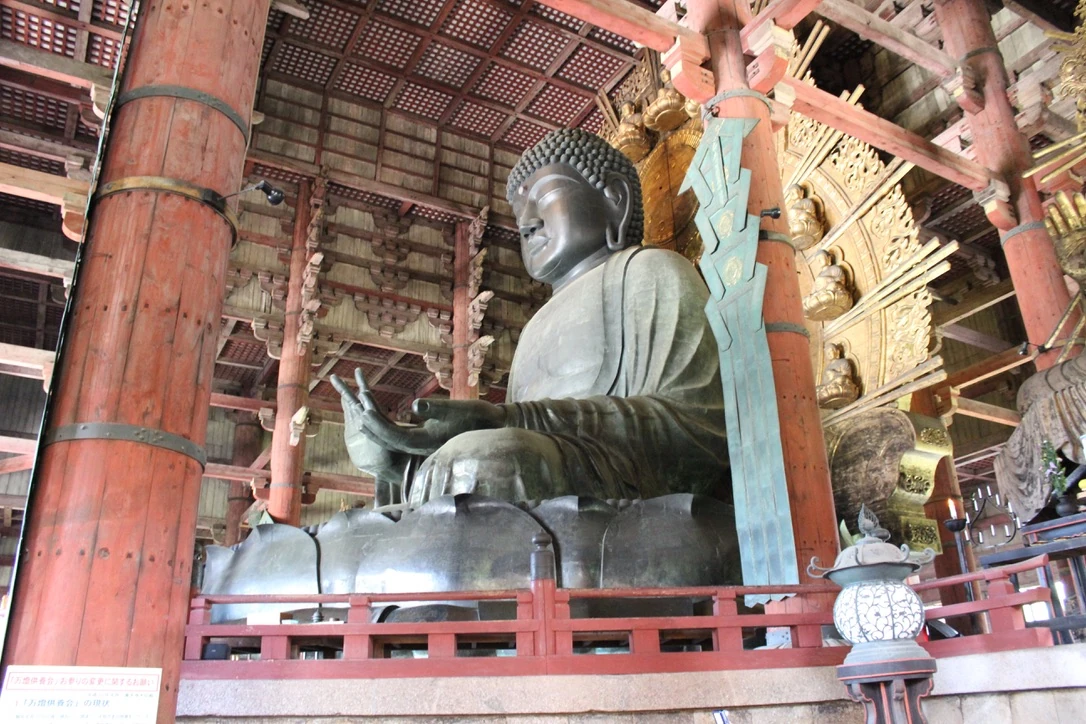
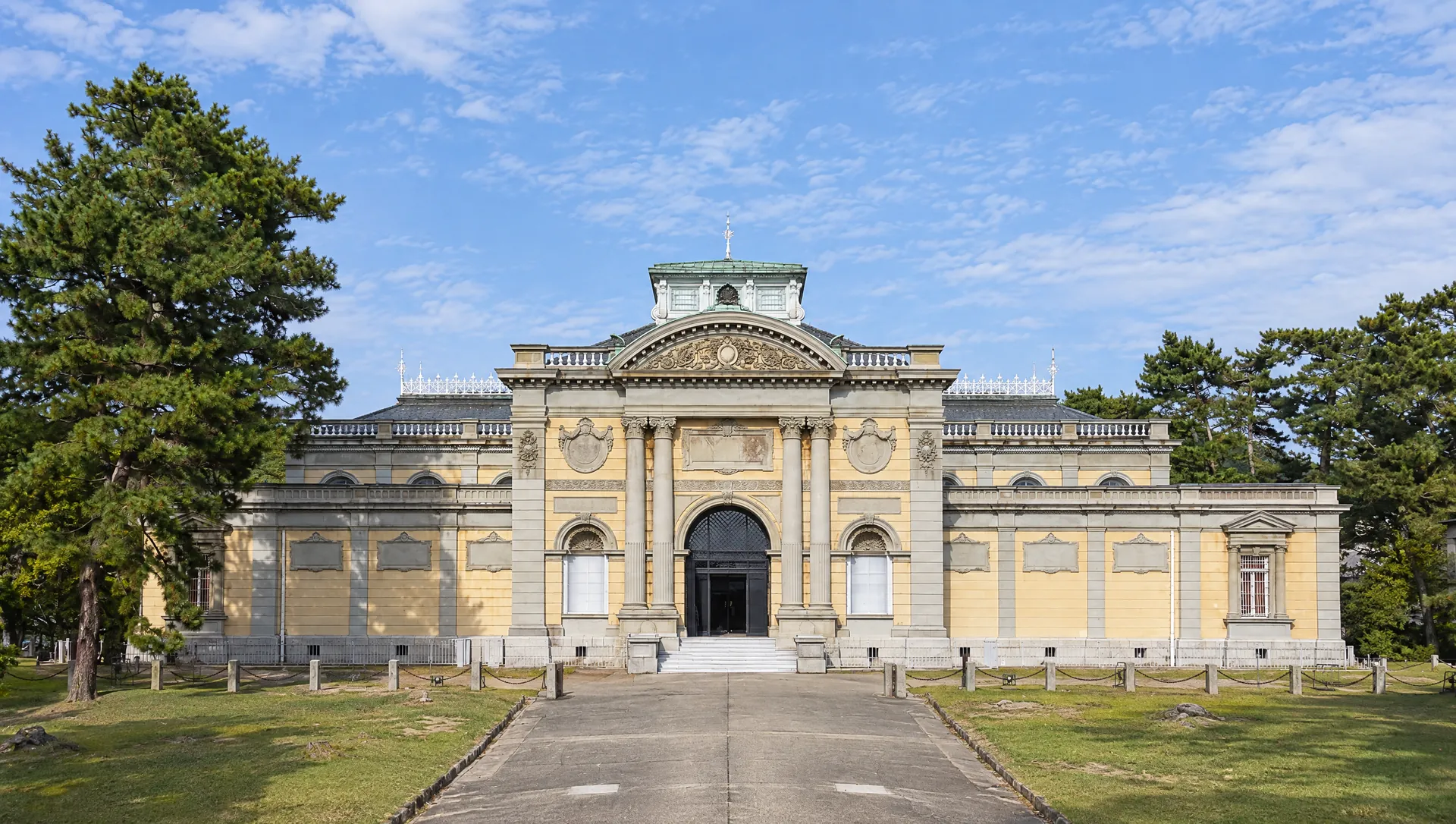
Explore guides close to this map point, then check the actual route before travelling. Distances below are straight lines, not walking distances or travel times; map points may not be entrances.
Sources & editorial status
Original MyNara draft based on the linked sources. Sources reviewed 24 October 2026. Opening arrangements, prices and offers may change; use the operator's current information before travelling.
- Nara Prefecture — park scope, 1880 opening, 24-hour free access, parkland areas, deer and prohibitions (updated 9 October 2026)
- Nara Prefecture — walking, route-time, mountain and toilet map downloads
- Nara Prefecture — photography permit guidance and management boundary
- Nara City Tourism Association — free/open status, station access, litter and deer caution
- Nara City Tourism Association — deer history, wild behaviour and cracker-only etiquette
- Visit Nara A00489 — prefectural tourism listing and nearby cultural context
- Nara Prefecture Visitors Bureau — Nara Yaezakura, approximate bloom season and distribution around Mount Wakakusa's foothills