Former Daijō-in Temple Garden: A Restored Monzeki Landscape
Walk the surviving and reconstructed garden of Kōfuku-ji's former Daijō-in, with a pond and bridge near Naramachi; the adjacent heritage centre is suspended.
 Verified site photographs are being prepared.
Discover Former Daijō-in Temple Garden: A Restored Monzeki Landscape
The garden below Nara Hotel is a rare way to see the vanished Daijō-in, a Kōfuku-ji monzeki temple whose buildings disappeared after the Meiji-era suppression of Buddhism. Its pond and paths were recovered through archaeology and historical images rather than preserved unchanged since the Middle Ages. The site is still open for garden visits in 2026, but its adjoining heritage centre stopped normal use in April. Read the layers of temple history, restoration and present-day operations separately, then enter through the centre doorway only for the garden and the permitted toilet access.
Trace the temple that no longer stands
Daijō-in was founded in 1087 as a Kōfuku-ji monzeki institution, a temple associated with high-ranking aristocratic clergy. After the 1180 destruction of Nara's major temples it moved to this area, and it remained here into the nineteenth century. The compound disappeared during the early Meiji changes to Buddhism; part of its former ground later became Nara Hotel. Nothing here should be labelled a complete surviving Heian-period temple. The garden is the visible clue to a much larger political and religious precinct whose buildings and users changed over centuries.
Understand Zen'ami and the restored water landscape
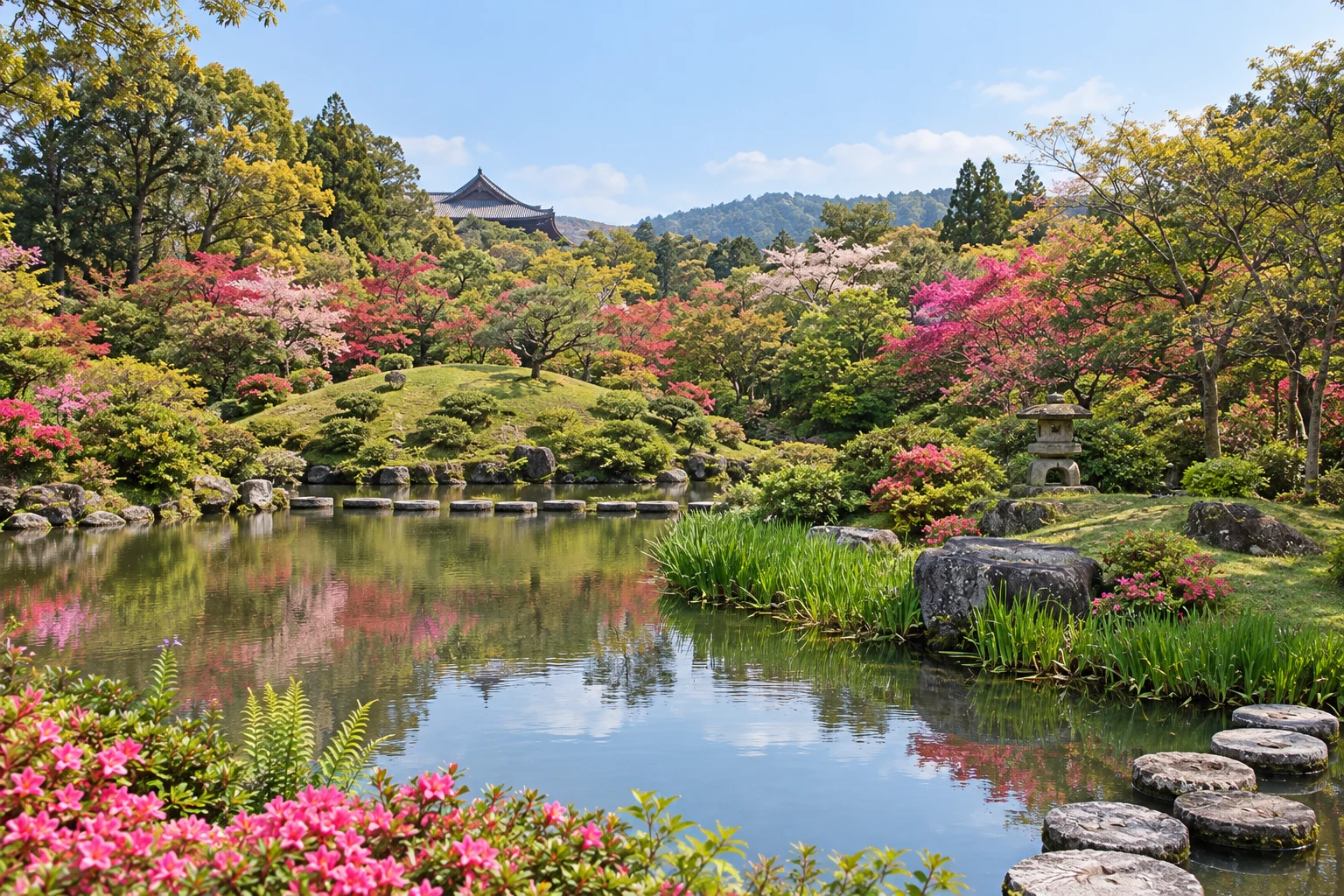
The Nara National Research Institute for Cultural Properties traces the fifteenth-century garden to the diary of monzeki Jinson, who commissioned the renowned gardener Zen'ami to repair it. It records older east and west ponds and explains that later landscaping altered the site again. After modern uses including hotel recreation, excavations begun in 1995 informed restoration guided in part by the late-Edo 'Daijō-in Shiki Shinkei-zu' image. Walk the pond edge and bridge knowing that what you see is a careful interpretation of historical layers, not a frozen fifteenth-century original. The red bridge and pine-framed pond are useful visual anchors, but seasonal planting and water levels change the photograph.
Separate the open garden from the paused heritage centre
Nara City announced that the Daijō-in Garden Heritage Center's meeting, tea, Japanese-style and exhibition rooms stopped ordinary use from April 2026 while it reviews the building's function. Crucially, the city explicitly kept the garden open and instructs visitors to enter via the heritage-centre entrance; a toilet in the building remains available to garden users. Older English listings still describe a working visitor exhibition and rest area. Do not plan a museum visit or tea-room session from those older descriptions. Check the city's notice for any later reopening before travel.
Use the city's current entrance terms
The city's 2026 notice gives garden entry 9:00–17:00, Monday closure unless Monday is a holiday, closure on the following day in that case, the day after a national holiday unless it is Saturday or Sunday, and 26 December–5 January for year-end. Admission is ¥200 for high-school age and older and ¥100 for primary and junior-high pupils; preschoolers, people aged seventy or more with proof, and eligible disability-certificate holders enter free. Visit Nara's older descriptive text says 'just ¥100', while its data table says ¥200/¥100; the city and current Nara Hotel operator page support the latter. Payment methods and the exact last-entry cutoff are not confirmed in the current city notice, so bring a way to pay at the gate and arrive well before 17:00.
Fit the garden into a Takabatake and Naramachi walk
Nara Hotel's visitor page places the garden immediately to its south at 1083-1 Takabatake-chō. It gives a bus from JR or Kintetsu Nara toward Tenri or Shimoyama to the Nara Hotel stop and about 100 metres south on foot; the garden has no parking. This is a short reflective stop beside a hotel and old town, not an alternative entrance to Nara Park's main deer lawns. Paths, steps and accessible surfaces require an on-site check; a city listing of one accessible toilet does not prove an entirely step-free loop. Ask staff which path is suitable before entering with a wheelchair or stroller, and keep to the marked route around planted and preserved features.
What to look for
Pond and red bridge on the restored grounds of Kōfuku-ji's former monzeki temple
Archaeology and a late-Edo painted record informed the modern landscape
Garden open in 2026; adjacent heritage-centre exhibition and rooms suspended
Photo notes
The bridge and pond provide possible outdoor compositions, but planting and access can change. No photograph or illustration of the actual garden is licensed to MyNara. Ask the operator before tripod, commercial or drone work; do not enter closed centre rooms, planted sections or protected garden fabric to make an image.
Make a day of it
Explore guides close to this map point, then check the actual route before travelling. Distances below are straight lines, not walking distances or travel times; map points may not be entrances.
Sources & editorial status
Original MyNara draft based on the linked sources. Sources reviewed 24 October 2026. Opening arrangements, prices and offers may change; use the operator's current information before travelling.
- Nara City — current garden opening, admission and heritage-centre suspension
- Nara Hotel operator — temple and garden history, access and 2026 status
- Nara Prefecture Tourism Association — current garden access, bus stops and no parking
- Nara National Research Institute — excavation and Jinson/Zen'ami history
- MLIT multilingual heritage text — landscape and restoration context
- Visit Nara — directory identity and older visitor description